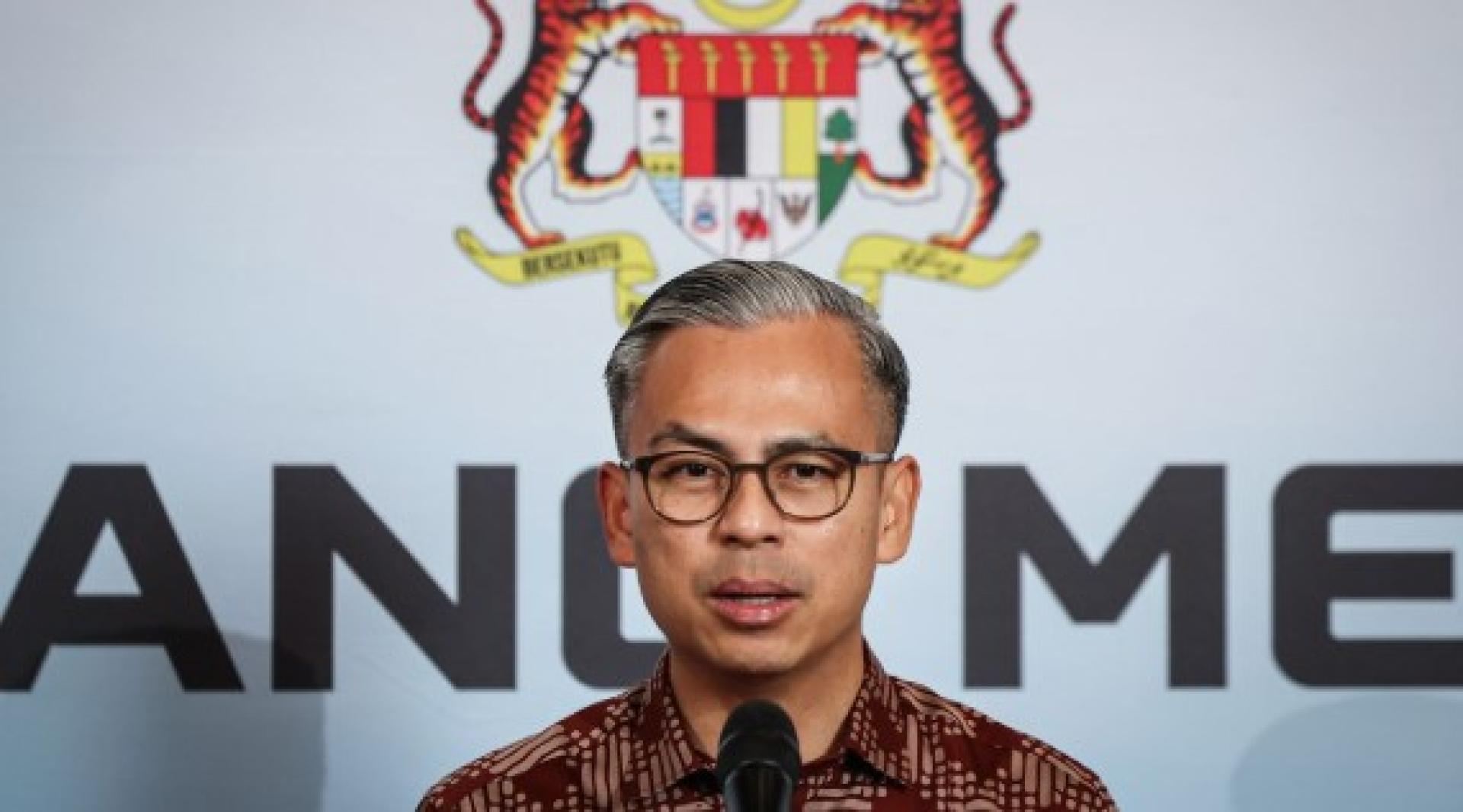
(Kuala Lumpur, 21st) The Ministry of Communications will focus next year on strengthening cybersecurity and improving government information delivery to be more efficient and meet the needs of target groups, in line with the Madani government's emphasis on justice and the welfare of the people.
Communications Minister Datuk Fahmi said his ministry will launch the Cybersecurity Campaign (KIS) 2.0, targeting not only children and teenagers but also parents and the general public.
"If we only succeed in providing fast and affordable internet services, but they are not safe, I would feel it is not enough. Therefore, we will double down on promoting the Cybersecurity Campaign 2.0."
He said this in an exclusive interview with Bernama Editor-in-Chief Arul Rajoo, Acting Deputy Editor-in-Chief (National News) Mohamad Sukri, and Executive Editor for Economic News Sharawati.
Fahmi said the Ministry of Communications will conduct a series of nationwide roadshows to roll out the Cybersecurity Campaign 2.0 on a large scale, offering the public comprehensive understanding of digital security, including the role of parents in protecting children from cyberbullying, online scams, and risks of digital platform abuse.
He pointed out that the ministry will also focus on user protection through the Malaysian Communications and Multimedia Commission's integrated mobile communications system for radio and internet (PRIME), as well as the development of the National Address System (NAS) to support public services, logistics, and the digital economy.
On the other hand, Fahmi mentioned that the Madani government's intended achievement is to establish a stronger legal framework to protect people, especially children and families, from digital threats.
In view of this, he said, the government accomplished several important outcomes this year, including amending communications-related laws that had been put on hold for more than 10 years, with one being the Communications and Multimedia Act 1998 (Act 588) Amendment Bill, which came into effect on February 7.
He explained that the amendment allows authorities to take tougher actions against online misbehaviors such as cyberbullying, online scams, doxing, and the creation of fake accounts, reflecting the government's determination to ensure that the legal framework keeps pace with the times, remains balanced, and is capable of addressing new challenges in an increasingly complex digital ecosystem.
He candidly admitted that the suicide of influencer Esha, who could not withstand cyberbullying, was the most heartbreaking incident during his tenure, but the tragedy also became a catalyst for system reform.
"Sadly, system reform has come at the cost of a life. But now we have the Criminal Code (Amendment) (No. 2) Act 2024, which includes a clause named the 'Esha Clause' and an anti-bullying tribunal. Now, victims have the space to seek justice."
Fahmi also said that the move to issue licenses to providers of online instant messaging and social media platform services as of January 1 this year is a major reform, although not all platforms have fully cooperated.
"We have seen some platforms agree and comply, while others stubbornly refuse to cooperate. But the government must act firmly to ensure public safety."