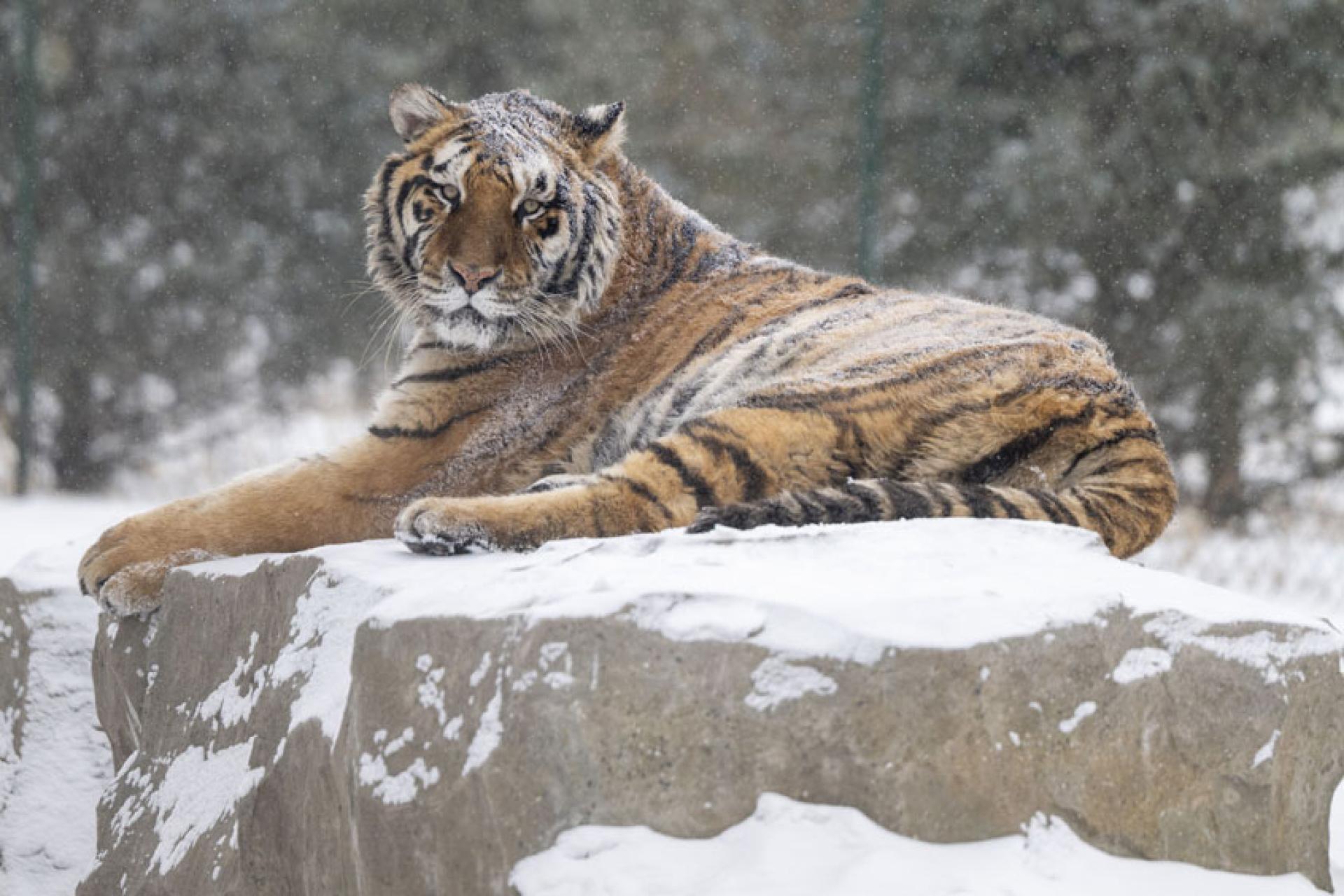
This July 29 marks the 16th 'Global Tiger Day', and the number of wild Amur tigers in China has increased from 27 in 2017 to 72.
According to the latest monitoring data released by the National Forestry and Grassland Administration of China, over the past decade, wild populations of Amur tigers and leopards in Northeast China have been steadily recovering. Within the Northeast Tiger and Leopard National Park, the number of wild Amur tigers has grown from 27 in 2017 to 72, and wild Amur leopards have increased from 42 to 115, achieving a doubling in number. Significant progress has been made in the protection of these flagship species.
In recent years, China has accelerated the construction of a nature reserve system with national parks as the mainstay, implemented endangered species rescue projects, and strengthened the monitoring network and rescue system for wild animals. The habitats of flagship species such as wild Amur tigers and leopards have been effectively improved, greatly promoting the breeding, survival, and recovery of these populations.
Especially since the official establishment of the Northeast Tiger and Leopard National Park five years ago, comprehensive efforts have been made in ecological protection, scientific research and monitoring, law enforcement supervision, livelihood support, and cross-border cooperation. A total of 600,000 mu of forest has been replanted, pilot projects on artificial forest transformation have been implemented, and more than 190,000 mu of forestry pest control has been carried out. Five wildlife migration corridors have been opened, effectively repairing fragmented habitats and significantly enhancing regional ecological connectivity. An integrated sky-to-ground smart monitoring system has been created, capable of accurately identifying more than 30 species of wild animals, with species identification accuracy for Amur tigers and leopards exceeding 90%. Amur tiger activities have been monitored over 30,000 times, and Amur leopard activities over 40,000 times.
In addition, cross-border conservation cooperation has been continuously promoted, with the establishment of a regular collaboration mechanism with Russia's Land of the Leopard National Park for joint population monitoring, cross-border patrols, and information sharing. Together, they have created nearly 17,000 square kilometers of transboundary protected area, with 21 Amur tigers and 27 Amur leopards now routinely crossing the border.