In response to criticism from Europe and the United States regarding China's export of excess capacity, the Chinese government issued a rebuttal, emphasizing that protectionism will disrupt the global economic and trade order and bring long-term risks to world economic growth.
The website of China's Ministry of Commerce on Tuesday released a document titled "China's Position on the So-called 'Overcapacity' Issue."
The document states that in recent years, certain countries and economies have become increasingly concerned about their own industrial competitiveness and market position, politicizing economic and trade issues, accusing Chinese capacity of impacting the world market, and using this as an excuse to intensify restrictive measures against China, resulting in "a surge in protectionism."
The document reviews the historical evolution of the global capacity landscape since the First Industrial Revolution, pointing out that there is not yet a broad consensus on the concept of "overcapacity" worldwide. It proposes that the issue of "overcapacity" in different economies and industries should be assessed based on their respective stages and levels of development.
"China has always believed that a comprehensive, objective, and fair attitude should be adopted when considering the capacity issue," the document points out, and that pursuing protectionism will only disrupt the global economic and trade order, harm the security and stability of global production and supply chains, and hinder healthy and orderly industrial cooperation.
The document refutes, one by one, foreign accusations against China, including industrial subsidy policies, trade surplus phenomena, and criticism such as "China's insufficient domestic demand causes overcapacity" and "unfair competition."
The document states that there is no inevitable link between industrial subsidies and overcapacity; reasonable industrial subsidy policies are conducive to correcting market failures and promoting technological innovation and environmental protection. It also affirms that China has always strictly complied with WTO rules and is committed to building a sound subsidy system in line with international practices.
The document emphasizes that China's modern industrial development does not constitute a "China Shock 2.0" for the world, but rather a "China Opportunity 2.0," which will help promote global innovation cooperation and technological progress, accelerate the global green and low-carbon transition, and assist industrialization in developing countries.
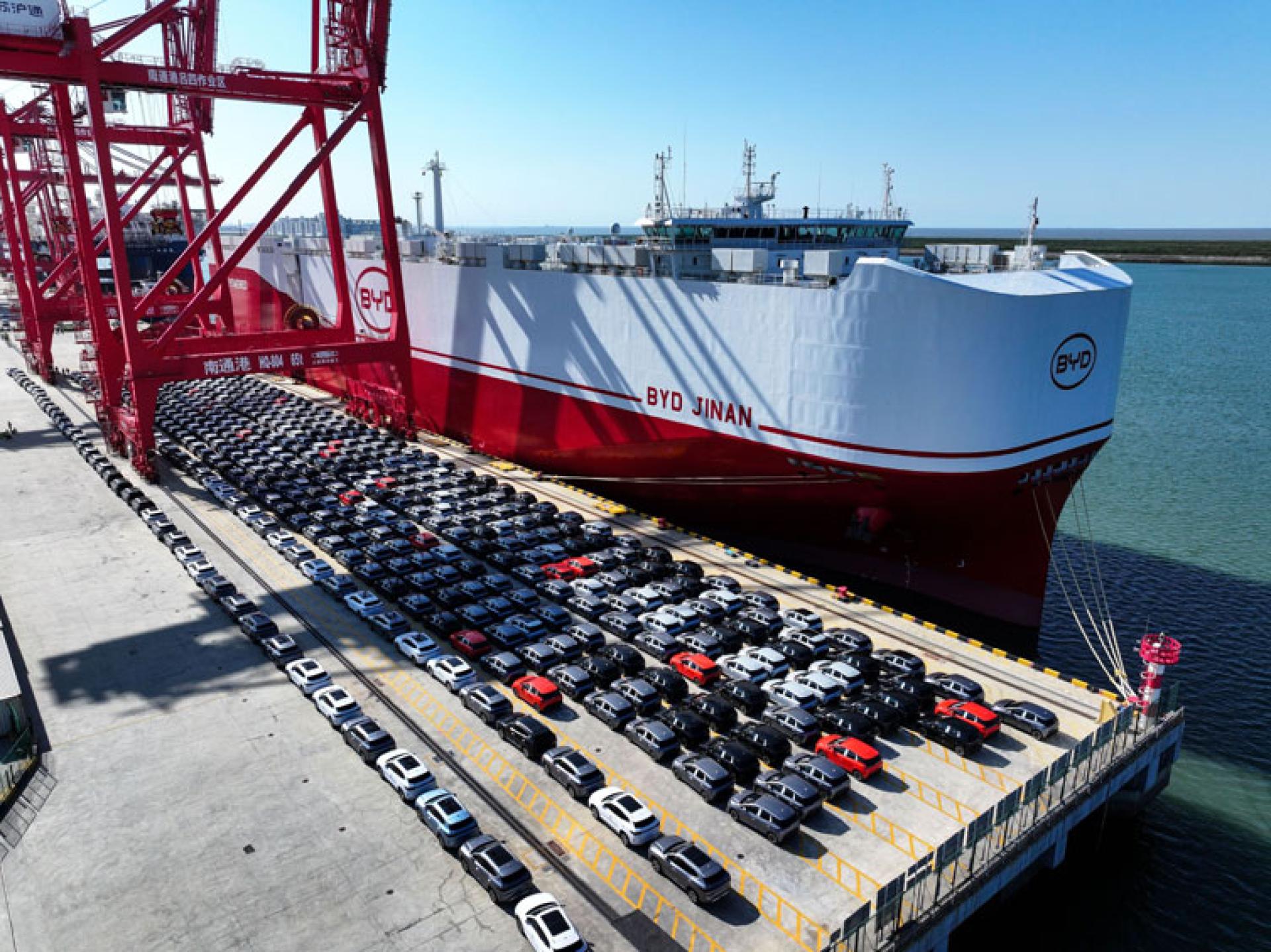
With the recent surge of Chinese products such as photovoltaics and new energy vehicles into international markets, external concerns about China exporting excess capacity have grown, with claims that China's support policies for certain industries have created massive capacity, reduced export prices, and impacted domestic industries.