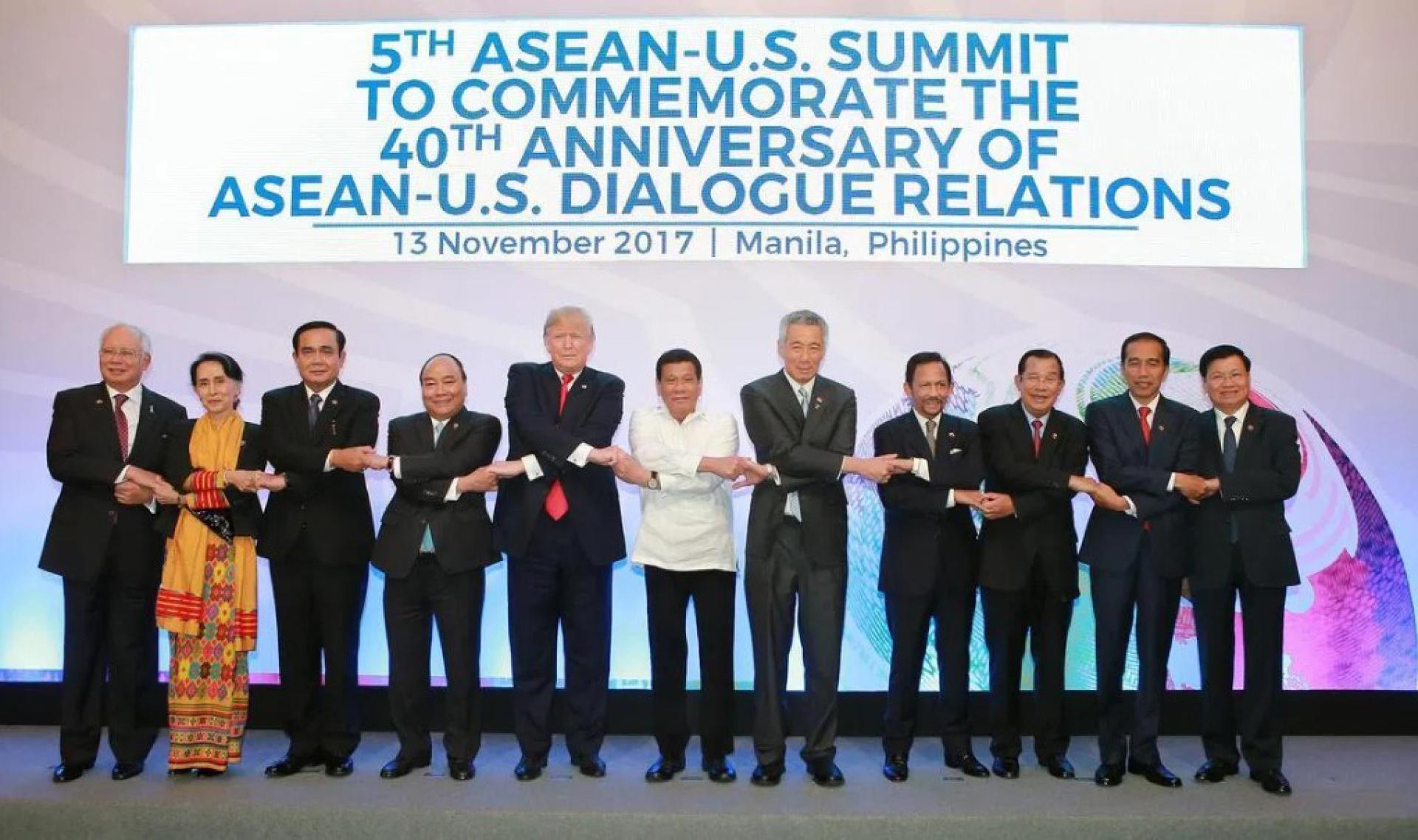
(USA, 6th) The ‘transactional diplomacy’ of U.S. President Trump’s second term has become more aggressive, with a clear policy shift towards Southeast Asia. Scholars point out that, compared to traditional diplomacy—built on values and long-term strategies—Trump emphasizes ‘calculable and visible’ exchanges of interests. This makes policies more unpredictable and also undermines the trust that regional allies and partners have in the U.S.
In his first year in office, the Trump administration’s diplomatic maneuvering in Southeast Asia was high-profile but ambiguous. On one hand, Washington intentionally deepened bilateral relations with key partners such as the Philippines, Vietnam, and Indonesia, and even proactively engaged Cambodia, which has a controversial human rights record, facilitating a ceasefire between Thailand and Cambodia in October last year. On the other hand, it aggressively imposed tariffs on goods imported from several countries, applying economic pressure.
Derek Grossman, professor of Political Science and International Relations at the University of Southern California, believes that the core issue of Trump’s foreign policy is: what immediate and visible benefits Southeast Asia can provide the United States. This is essentially transactionalism.
At a recent forum entitled ‘How Should We View Trump’s Southeast Asia Strategy?’ hosted by Singapore’s ISEAS–Yusof Ishak Institute, he pointed out that, in the ‘U.S. National Security Strategy’ released last December, Southeast Asia was only regarded as a channel for the United States to achieve its economic and strategic objectives, and its value was primarily reflected in ‘critical shipping lanes, important mineral resources, and its role in emerging technology supply chains.’
This shift is related to the diplomatic strategy of the Trump administration.
Lin Weileng, Head of ASEAN Studies Programme at ISEAS–Yusof Ishak Institute, told Lianhe Zaobao that Trump practices a ‘Western Hemisphere first’ approach, with the Indo-Pacific’s importance mainly tied to U.S.-China competition, trade, and maritime security issues.
‘This means that Southeast Asia is viewed as part of America’s strategic contest. Tariffs, market access, technology controls, and even security cooperation are all closely linked to U.S. direct interests.’
The foundations for relations between ASEAN countries and the United States are not the same, leading to varying views on Trump’s foreign policy. To some extent, Trump’s ‘cold realism’ is seen by some governments as transparent and pragmatic.
James Borton, Senior Fellow at the Johns Hopkins School of Advanced International Studies, said in an interview that for governments not inclined to lead with values in their foreign policy, Trump’s model somewhat alleviates pressure on issues like human rights and governance, and provides more room for interest-driven cooperation: such as in infrastructure construction and energy cooperation.
However, for U.S. allies and broader partners, transactional diplomacy makes Washington’s stance harder to predict and may deepen the strategic gap between the U.S. and its allies on security issues.
‘If the U.S. takes an ad hoc approach to intervening, it is inevitable that allies will question whether the U.S. will really step in when they fall into crisis. This is especially sensitive for countries on the frontlines of the South China Sea disputes.’
Take the Philippines as an example. According to the U.S.-Philippines Mutual Defense Treaty, assisting in safeguarding Philippine interests in the South China Sea has always been regarded as in America’s interests; but transactional diplomacy appears to attach more conditions to such support.
Grossman points out that Manila now must ‘prove to Washington that it can deliver direct and specific benefits,’ or risk not receiving enough attention. ‘This tradeoff will inevitably erode mutual trust.’
He predicts this will lead to a fragmented American influence in the region: in security, Washington will remain important to ASEAN; but in economic and regional leadership, countries may increasingly view the U.S. as unstable and unreliable, turning to strengthen cooperation with China and other middle powers.
Lin Weileng says: ‘The likely result is that U.S. influence in Southeast Asia becomes more fragmented. For countries capable of cooperating in areas like FDI, emerging technologies, and critical minerals, U.S. influence will remain significant; but from the perspective of ASEAN as a whole, U.S. influence may relatively decline.’
Against the backdrop of U.S.-China competition for influence over ASEAN, Trump’s policies have also created diplomatic space for China. China can position itself as a relatively stable economic partner, especially in trade, infrastructure financing, and maritime cooperation.
Borton said: ‘Beijing sends signals of stability, non-interference, and long-term cooperation, which stands in sharp contrast to America’s scattered or transactional approach and resonates more strongly.’
However, Southeast Asian countries are not simply swinging toward China. Many governments remain cautious about overreliance on China, feeling uneasy and suspicious about Chinese activities in the South China Sea and its tendency to use economic pressure when their own interests are challenged.
‘Most governments are unlikely to become more dependent on China just because of shifts in U.S. policy, but will instead strengthen hedging strategies: seeking to maximize gains from China without forming an alliance with Beijing.’
For ASEAN countries, this presents both challenges and opportunities. Long accustomed to carefully balancing between great powers, regional nations have learned to cautiously maintain strategic autonomy, remaining flexible and adjusting their strategies to respond to external changes.
Lin Weileng said: ‘ASEAN will continue to pursue hedging, diversified development, and safeguard its own strategic space.’
Derek Grossman, professor of Political Science and International Relations at the University of Southern California, believes that the core issue of Trump’s foreign policy is: what immediate and visible benefits Southeast Asia can provide the United States. This is essentially transactionalism.
At a recent forum entitled ‘How Should We View Trump’s Southeast Asia Strategy?’ hosted by Singapore’s ISEAS–Yusof Ishak Institute, he pointed out that, in the ‘U.S. National Security Strategy’ released last December, Southeast Asia was only regarded as a channel for the United States to achieve its economic and strategic objectives, and its value was primarily reflected in ‘critical shipping lanes, important mineral resources, and its role in emerging technology supply chains.’
This shift is related to the diplomatic strategy of the Trump administration.
Lin Weileng, Head of ASEAN Studies Programme at ISEAS–Yusof Ishak Institute, told Lianhe Zaobao that Trump practices a ‘Western Hemisphere first’ approach, with the Indo-Pacific’s importance mainly tied to U.S.-China competition, trade, and maritime security issues.
‘This means that Southeast Asia is viewed as part of America’s strategic contest. Tariffs, market access, technology controls, and even security cooperation are all closely linked to U.S. direct interests.’
The foundations for relations between ASEAN countries and the United States are not the same, leading to varying views on Trump’s foreign policy. To some extent, Trump’s ‘cold realism’ is seen by some governments as transparent and pragmatic.
James Borton, Senior Fellow at the Johns Hopkins School of Advanced International Studies, said in an interview that for governments not inclined to lead with values in their foreign policy, Trump’s model somewhat alleviates pressure on issues like human rights and governance, and provides more room for interest-driven cooperation: such as in infrastructure construction and energy cooperation.
However, for U.S. allies and broader partners, transactional diplomacy makes Washington’s stance harder to predict and may deepen the strategic gap between the U.S. and its allies on security issues.
‘If the U.S. takes an ad hoc approach to intervening, it is inevitable that allies will question whether the U.S. will really step in when they fall into crisis. This is especially sensitive for countries on the frontlines of the South China Sea disputes.’
Take the Philippines as an example. According to the U.S.-Philippines Mutual Defense Treaty, assisting in safeguarding Philippine interests in the South China Sea has always been regarded as in America’s interests; but transactional diplomacy appears to attach more conditions to such support.
Grossman points out that Manila now must ‘prove to Washington that it can deliver direct and specific benefits,’ or risk not receiving enough attention. ‘This tradeoff will inevitably erode mutual trust.’
He predicts this will lead to a fragmented American influence in the region: in security, Washington will remain important to ASEAN; but in economic and regional leadership, countries may increasingly view the U.S. as unstable and unreliable, turning to strengthen cooperation with China and other middle powers.
Lin Weileng says: ‘The likely result is that U.S. influence in Southeast Asia becomes more fragmented. For countries capable of cooperating in areas like FDI, emerging technologies, and critical minerals, U.S. influence will remain significant; but from the perspective of ASEAN as a whole, U.S. influence may relatively decline.’
Against the backdrop of U.S.-China competition for influence over ASEAN, Trump’s policies have also created diplomatic space for China. China can position itself as a relatively stable economic partner, especially in trade, infrastructure financing, and maritime cooperation.
Borton said: ‘Beijing sends signals of stability, non-interference, and long-term cooperation, which stands in sharp contrast to America’s scattered or transactional approach and resonates more strongly.’
However, Southeast Asian countries are not simply swinging toward China. Many governments remain cautious about overreliance on China, feeling uneasy and suspicious about Chinese activities in the South China Sea and its tendency to use economic pressure when their own interests are challenged.
‘Most governments are unlikely to become more dependent on China just because of shifts in U.S. policy, but will instead strengthen hedging strategies: seeking to maximize gains from China without forming an alliance with Beijing.’
For ASEAN countries, this presents both challenges and opportunities. Long accustomed to carefully balancing between great powers, regional nations have learned to cautiously maintain strategic autonomy, remaining flexible and adjusting their strategies to respond to external changes.
Lin Weileng said: ‘ASEAN will continue to pursue hedging, diversified development, and safeguard its own strategic space.’