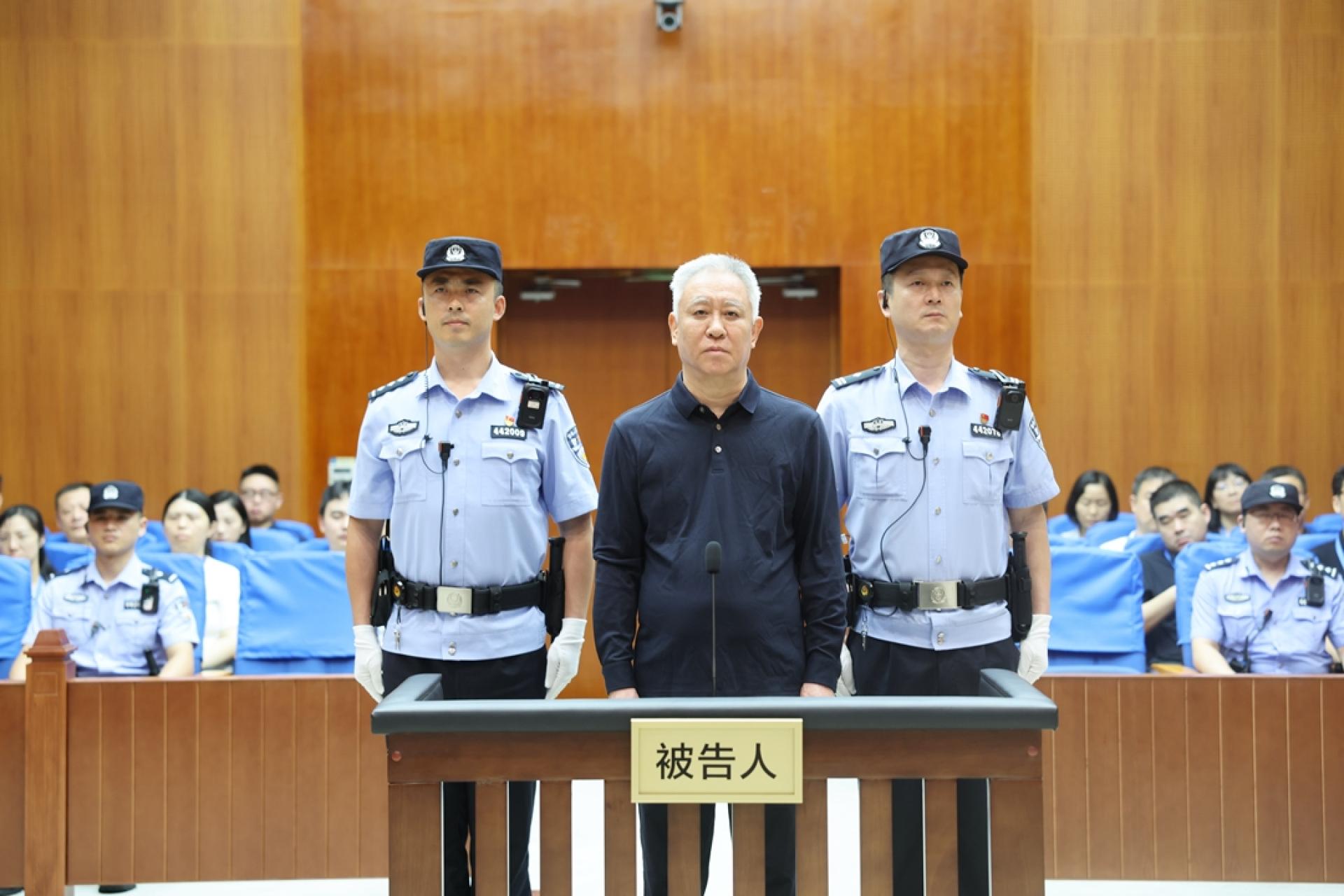
On the 20th, the Shenzhen Intermediate People’s Court in China announced a life sentence for Xu Jiayin, the founder of China Evergrande Group, the world’s most indebted real estate developer, marking a milestone in Evergrande’s bankruptcy saga.
Five years ago, Evergrande’s collapse shocked China’s economy and financial markets. Formerly the richest man in Asia, Xu Jiayin admitted to eight charges this April, including embezzlement of funds, fundraising fraud, illegal absorption of public deposits, illegal issuance of loans, fraudulent issuance of securities, and bribery. On the 20th, Xu appeared in court in a dark blue coat with a head of white hair—a first public appearance since disappearing from view in 2023.
The ‘legendary’ story that once shined so bright
Xu Jiayin founded Evergrande Group in 1996, when China was beginning its urbanization process and massive numbers of people were flooding into cities from the countryside. The company’s success made Xu one of the world’s richest people, after which he expanded his business empire into fields such as football teams and electric vehicle companies. By contracting sales and aggressively leveraging debt, he grew Evergrande into China’s largest property developer. The company was listed on the Hong Kong Stock Exchange in 2009, with its market value once soaring to over $50 billion (about 202.1 billion ringgit) at its peak.
However, by 2020, as property developers like Evergrande borrowed heavily from local governments and banks, China’s government became increasingly concerned that the property boom could create a bubble threatening the financial system. To cool the market, officials began to restrict developers’ borrowing limits, cutting off the lifeline for heavily indebted firms like Evergrande to maintain daily operations. Major developers struggled as cash reserves plummeted and share prices crashed, forcing many projects to halt. Evergrande defaulted in 2021 and was issued a bankruptcy order in 2024. In August 2025, Evergrande was delisted from the Hong Kong Stock Exchange.
From once being lavish and splurging millions at a single banquet as China’s richest man, to now being behind bars with all assets frozen and pursued, Xu’s road to ruin is a poignant one. As liquidators continue to trace assets, extravagant details of his heyday—including three private jets, a luxury yacht, and a personal song-and-dance troupe—have come to light, creating a sharp contrast with the 2.43 trillion yuan of debt and over a million unfinished apartment owners left behind by Evergrande.
The crisis still affects the entire economy today
No other company played as significant a role in China’s real estate boom, and Evergrande’s collapse marked the beginning of an ongoing crisis that continues to impact the entire economy.
The real estate market has long been a key driver of national economic growth in China, so its sudden collapse naturally caused a severe shock.
AFP, quoting Alicia Garcia Herrero from Natixis Asia Pacific, notes: “Evergrande has made things more complicated and highlighted the fragility of the system.”
The persistent debt issues of Evergrande and other property companies like Country Garden and Vanke have also seriously hurt consumer confidence and hindered many potential homebuyers’ plans.
Herrero said there are ‘many’ reasons for the weakness in the property market, such as stagnation in household disposable income and demographic changes. Official data released this week showed that new home prices in July fell even more sharply than in the previous month, suggesting the crisis is ongoing.