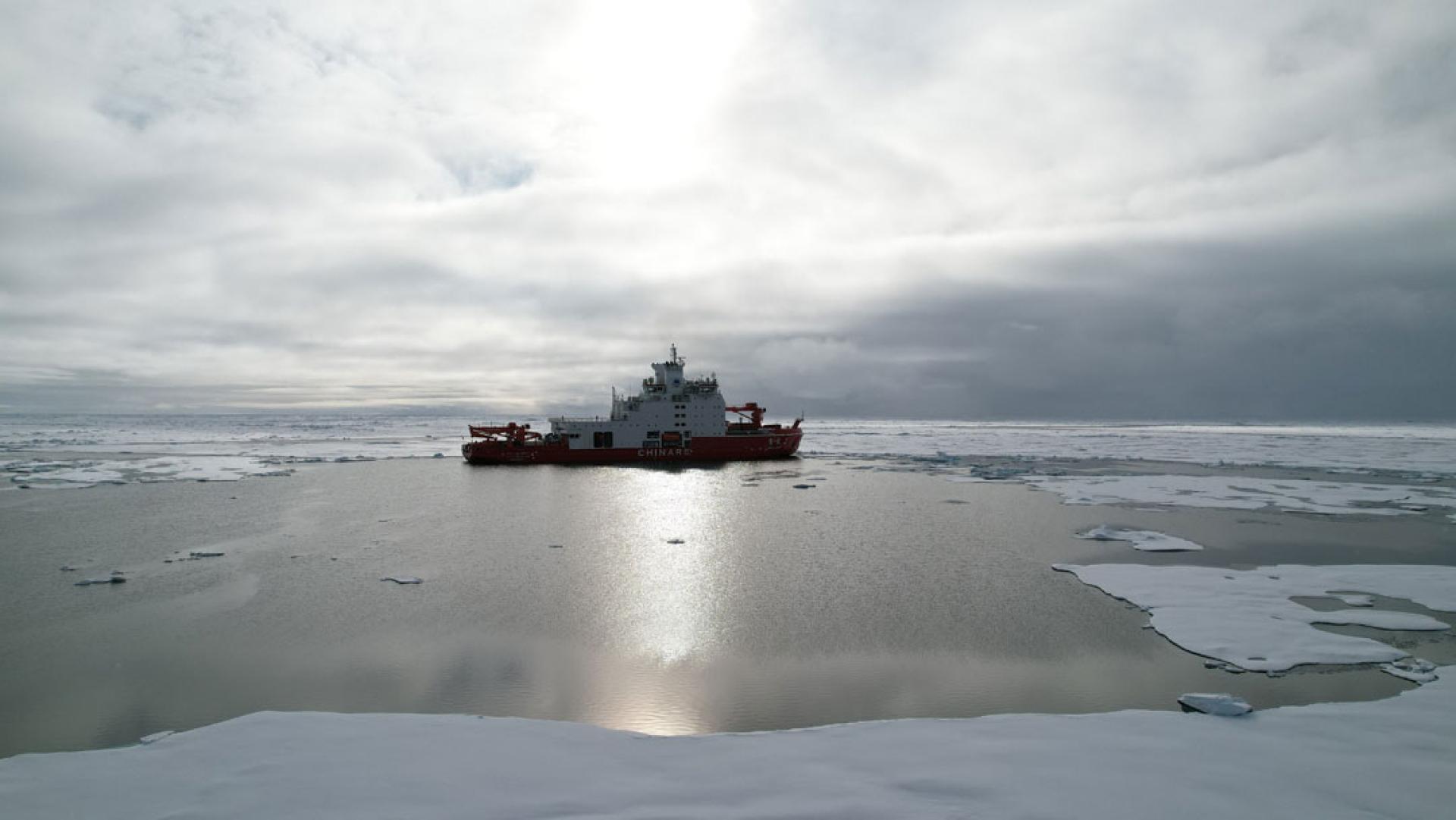
Chinese container shipping company 'Hede Shipping' is set to launch its first regular Arctic container shipping route, the 'Ice Silk Road.' Taking advantage of seasonal summer ice melt that eliminates the need for icebreakers, this route is expected to halve the usual 40-day Eurasian transit time, offering a new shipping option that circumvents geopolitical risks.
According to the UK’s Financial Times, as polar ice melts shortens the distance between Eurasia and ships seek to avoid traditional maritime chokepoints, the Arctic is gradually becoming a viable alternative to conventional shipping lanes.
This new route, with one weekly service, will run along the northern coast of Russia, connecting Ningbo on China’s east coast with Felixstowe in the UK. It is named the 'Ice Silk Road,' echoing the historical Silk Road that once linked China and Europe for silk trade.
Previously, the voyage between these two ports would take up to 40 days using existing sea routes, but the new route could save about half that time, though the actual duration still depends on Arctic climatic conditions. Benefiting from summer sea ice melt, ships can traverse without needing icebreaking capability.
Despite ongoing geopolitical competition over control of the Arctic region, shipping companies are increasingly interested in this route, viewing it as a way to bypass major maritime chokepoints such as the Mandeb Strait.
This Eurasian connection, referred to as the Northern Sea Route, is divided into a total of 28 segments and is supervised by the Northern Sea Route Administration under Russia’s state-owned nuclear enterprise (Rosatom), which issues different transit guidelines and permits based on Arctic ice conditions.
Danish shipping giant Maersk dispatched the first container vessel across the Arctic route between Vladivostok and St. Petersburg as early as 2018, but both Maersk and many European companies later pledged not to use this route to avoid harming the fragile Arctic ecosystem.
Industry demand for Arctic shipping has fueled a surge in orders for ice-class vessels. Data from maritime analytics firm Veson Nautical shows that 167 ice-class vessels were built last year, the highest in more than a decade, with another 164 expected to be constructed this year.
Nevertheless, the Arctic still presents severe challenges for seafarers, who must have experience navigating icy waters. GPS may not function properly at such high latitudes, requiring them to cross ice fields without GPS assistance.