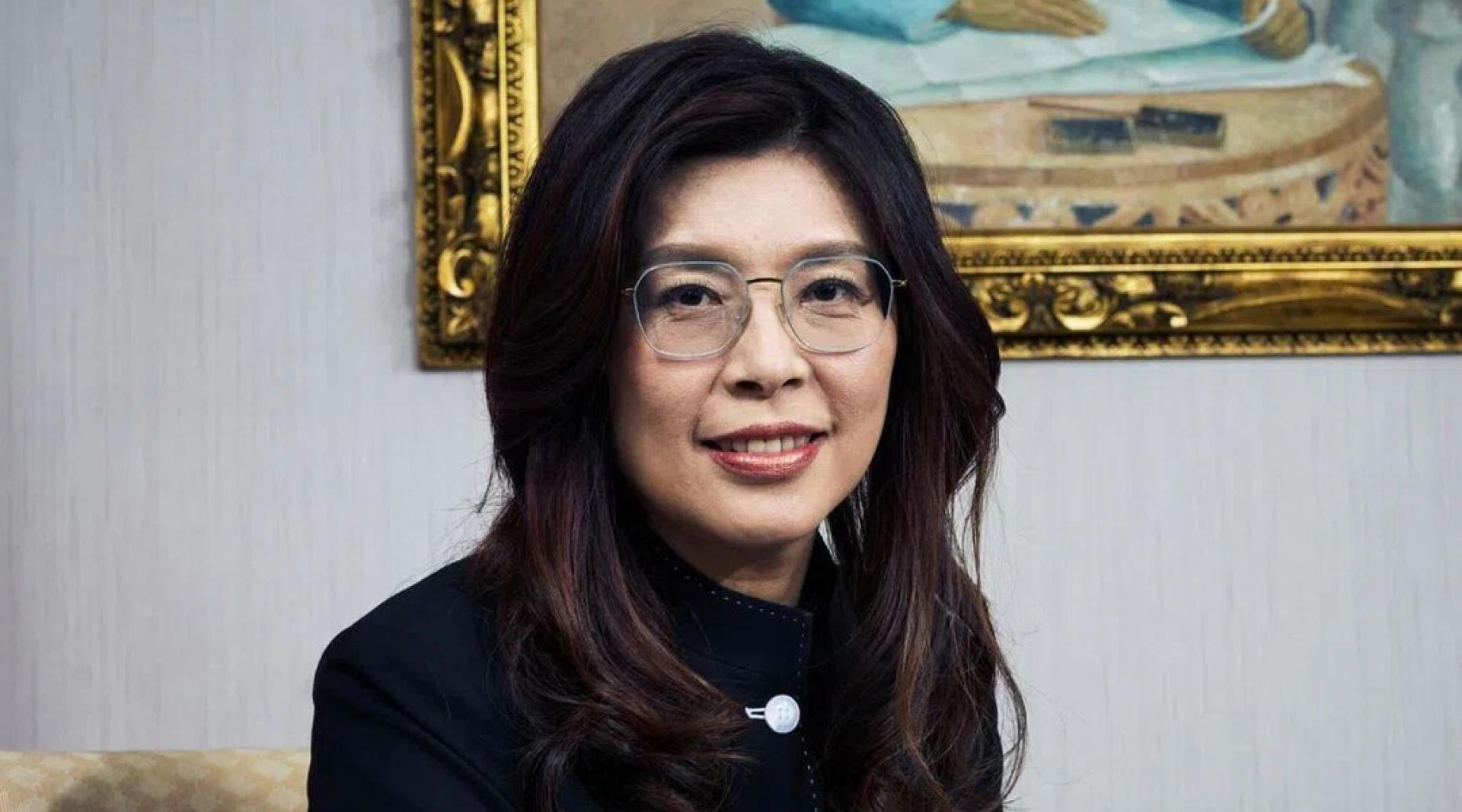
Jessica Zheng, chairman of Taiwan’s largest opposition party, the Kuomintang, said during a media tea talk that on this trip to the U.S. she will share her confidence in peace and put forward the idea of a Pacific Peace and Prosperity Zone.
On Monday, Zheng pointed out that she is expected to visit the United States in early June, planning to visit San Francisco, Los Angeles, Boston, New York, Washington D.C., and is actively contacting and planning whether to visit Texas as well. She hopes the trip will not exceed two weeks.
Zheng emphasized that she hopes to change Taiwan’s position as the first island chain during the Cold War period, as this positioning signifies being at the forefront of war and the confrontation between the Eastern and Western camps.
She hopes that from Japan, South Korea, Taiwan on the southeast coast of mainland China, Singapore, and other regions can become the Pacific Peace and Prosperity Zone, no longer the frontlines of war.
Zheng said: “Therefore, this time going to the United States, I hope to convey confidence in peace and propose practical contributions that East Asia can make toward peace and prosperity. I believe this truly aligns with the national interests of the United States, the interests of all countries in the region, and should be a direction everyone works toward. Reducing hostility, avoiding war, creating peace, and building prosperity—this is the core message I am bringing to the United States this time.”
When asked about the upcoming “Xi-Trump summit” on May 14, Zheng expressed optimism. She looks forward to seeing the U.S. and China develop a positive friendship, achieve reconciliation and cooperation, and hopes that the U.S. and China can jointly make positive contributions to peace and prosperity for the entire region.
Regarding Zheng’s planned U.S. visit in June, Taiwan’s Foreign Minister Joseph Lin said in an interview at the Legislative Yuan on Monday, “We welcome party diplomacy,” but official communication between the U.S. and Taiwan governments should remain the main channel, with party diplomacy playing a supplementary role.