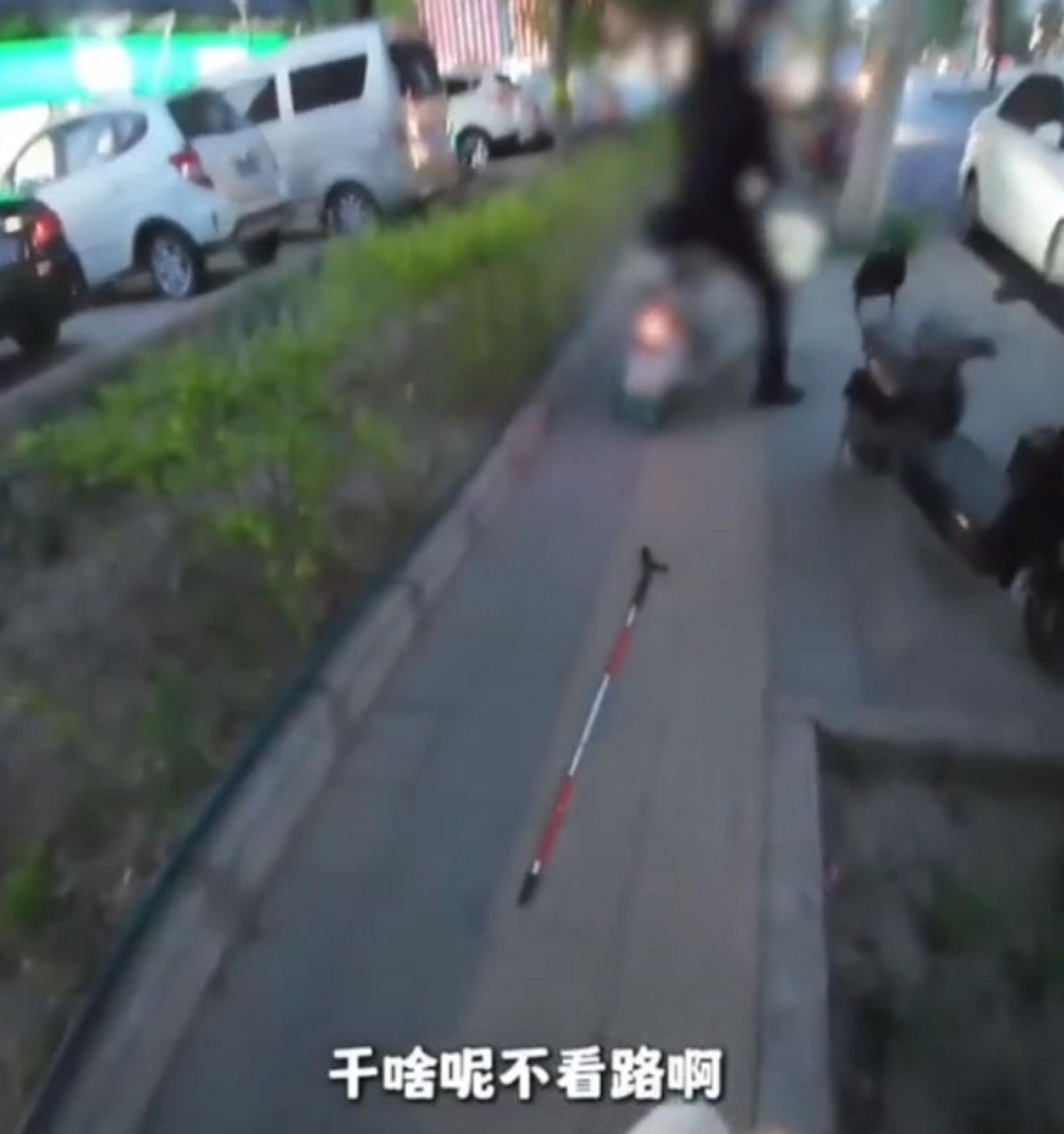
A recent incident in Beijing, China, has sparked intense public debate. A Chinese visually impaired blogger with over a million followers, known as “Baobao Blind Rabbit”, was walking on tactile paving when she was struck head-on by an incoming electric bicycle. Not only did she suffer an injured hand and lost her white cane in the crash, but the rider even blamed her afterwards, asking “Weren’t you watching where you were going?”, showing an appalling attitude!
After the incident came to light, a flood of Chinese netizens criticized the rider for lacking public decency and empathy, reigniting discussions on social safety issues surrounding tactile paving being occupied and overall accessible environments.
According to Chinese media reports, the incident occurred on a sidewalk in Beijing’s Chaoyang District. At the time, “Baobao Blind Rabbit” was walking along the tactile paving when an electric bicycle was ridden the wrong way onto the sidewalk and collided with her head-on.
In the video she posted, you can see her white cane flying at the moment of impact, and her hand swelling from the injury. What’s even more upsetting is that the rider did not apologize right away, but instead asked her, “Can’t you watch where you’re going?” When the woman replied that she was walking on tactile paving, the rider retorted, “What tactile paving?” before immediately leaving the scene.

Beijing traffic authorities later publicly reminded everyone: “Tactile paving is not for bicycles or parking—please return this space to those who cannot see.”
It’s understood that the location where the incident happened actually has a wide designated non-motor vehicle lane as well as street-side roads, making it unnecessary for e-bikes to be on the sidewalk. Local business owners also noted that it’s very rare for e-bikes to drive onto this particular sidewalk.
However, “Baobao Blind Rabbit” later posted that the video was actually recorded some time earlier, her hand injury was already no longer serious, and she had already received an apology from the rider. She also thanked the caring driver, police officer, doctor, and passers-by who helped her at the time.
She admitted that although it was an unpleasant experience, she also felt much kindness from strangers in the process: “I hope that more people with disabilities can feel safer when leaving home in the future.”