Japan will launch what is claimed to be the world’s first seafloor rare earths test mining program on the 11th, aiming to extract resources at a depth of 6,000 meters under the sea, in hopes of reducing its dependence on China.
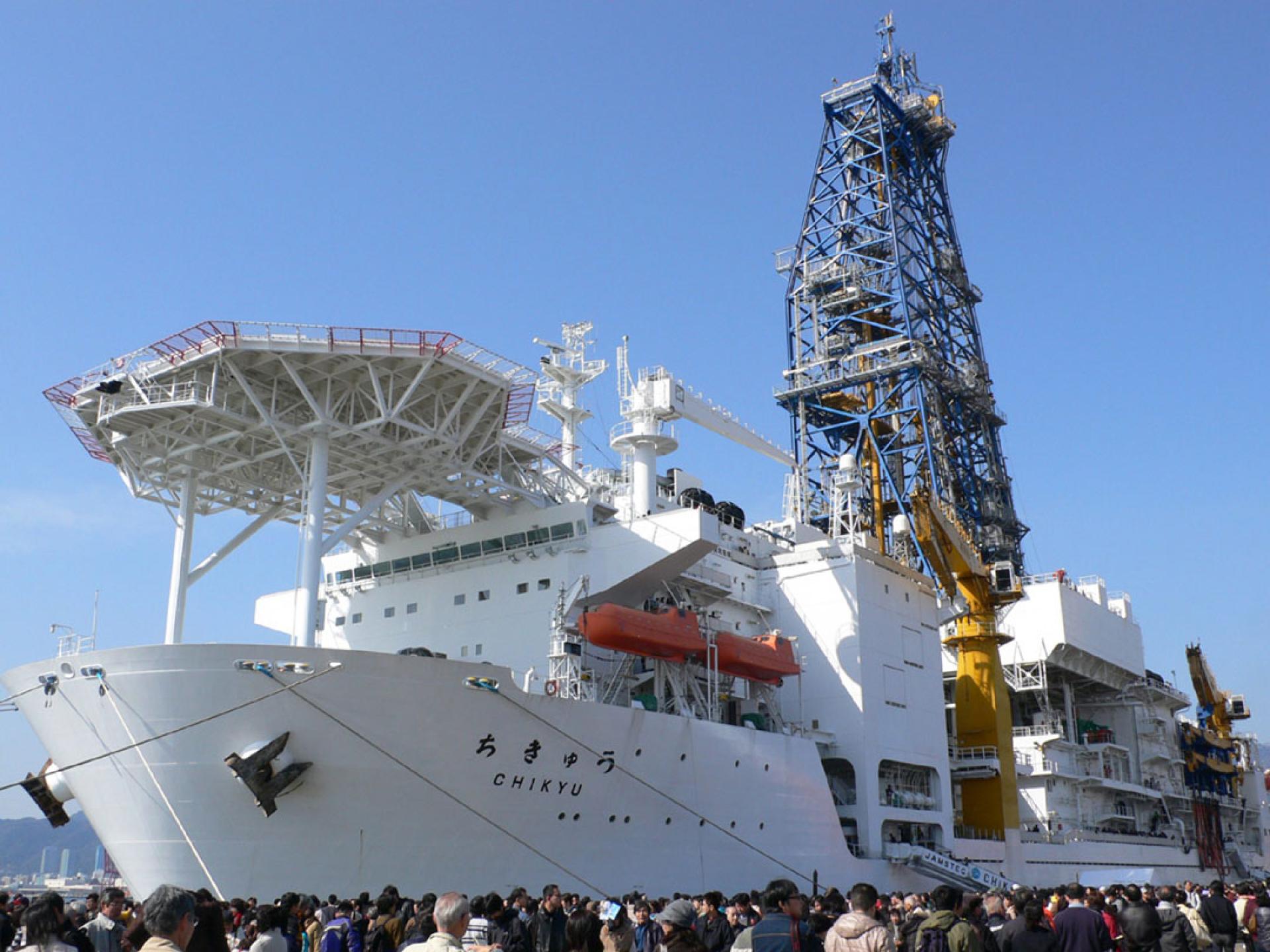
According to AFP, Japan Agency for Marine-Earth Science and Technology (JAMSTEC) will dispatch the deep-sea scientific drilling vessel “Chikyu” to head for Minamitori Island, a coral atoll located about 1,950 kilometers southeast of Tokyo.
Rare earths include 17 metal elements such as samarium, ytterbium, terbium, and are essential for key magnets used in industries like electric vehicles, smartphones, missiles, and wind turbines, with broad implications for industry, technology, geopolitics, and the economy—they are highly strategic resources. China controls about 70% of the world’s rare earth output, and had previously restricted exports as a countermeasure to U.S. tariffs. On the 6th, the Chinese government announced enhanced export controls on dual-use items shipped to Japan.
● Over 16 Million Tons of Rare Earths May Be Hidden in Japan’s Exclusive Economic Zone
JAMSTEC stated in a release last month that the mission of the “Chikyu” is “the first step in realizing Japan’s domestic rare earth industry.” The organization emphasized that conducting test mining at this ocean depth is unprecedented globally.
The area around Minamitori Island is within Japan’s exclusive economic zone and is estimated to contain more than 16 million tons of rare earths. According to Nikkei News, this volume ranks third in the world.
Reports state that the deposits include dysprosium, essential for high-strength magnets in smartphones and electric vehicles, as well as yttrium, used in lasers. It’s estimated these reserves could meet demand for 730 years and 780 years, respectively.
Takahi Uesuna, a researcher at the UK think tank International Institute for Strategic Studies, told AFP: “If Japan can steadily and consistently extract rare earths from around Minamitori Island, it will help ensure the security of local supply chains for critical industries. For the government, this will also be a key strategic asset for greatly reducing supply chain dependence on China.”
According to JAMSTEC, during the test mining operation, the Chikyu will extend pipelines into the water to ensure that the “mining machine” attached to the pipeline's end can reach the ocean floor and collect rare-earth-rich mud. The project is expected to continue through February 14.