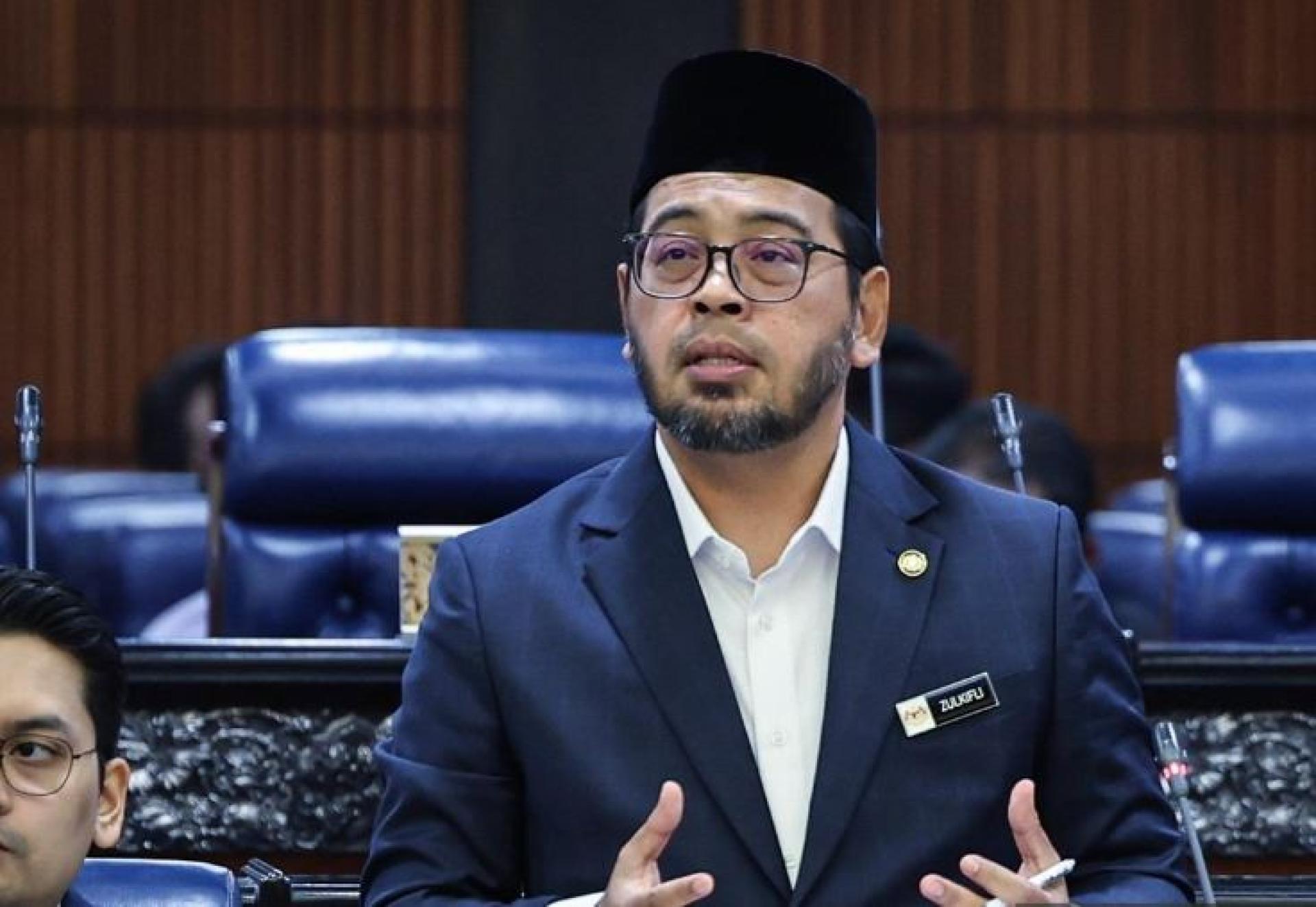
KUALA LUMPUR, Aug 11 (Bernama) -- Minister in the Prime Minister's Department (Religious Affairs), Dr Zulkifli Hasan, used the analogy of a single mother named Mak Cik Senah to explain how Lembaga Tabung Haji (TH) reported high performance and profits, when in reality its true financial position was the opposite.
In his story, Mak Cik Senah saves her money in a kootu (community savings) fund managed by other people. These managers promise to give her a share of the profits at the end of each year if their business makes a profit.
“She is happy because she receives more money back than she put in. However, there is an important legal rule that must be remembered. Dividends can only be paid if the fund's assets, which are what it owns, are greater than its debts, liabilities and other obligations,” he said during the debate following a ministerial briefing today on the Royal Commission of Inquiry (RCI) report on TH.
He continued that the problem arose when the fund managers artificially increased the value of the assets on paper, solely to create the illusion that the fund was making a profit.
On the surface, the scheme looked good because it gave high dividends. But it was only an illusion, because behind the scenes, the savings were steadily shrinking.
In this situation, the managers were actually paying dividends using what can only be called ‘invisible money’, which is a form of fraud, similar to a Ponzi scheme or the well-known Skim Pak Man Telo, he said.
Zulkifli said the analogy reflects the RCI's finding that TH's financial statements before 2018 were manipulated to show high profits, allowing the fund to declare profit distributions that did not reflect TH's true financial performance.
In TH's case, he said the RCI found that the declaration of profit distributions before 2018 did not comply with the requirements of the Tabung Haji Act because TH's assets, including the pool of depositors' funds, did not exceed its liabilities.
Zulkifli explained that one of the methods used was asset valuation conducted outside the audited financial statements, called Realisable Asset Value (RAV), which made the value of assets appear higher than liabilities.
“This manipulation was carried out to allow TH to announce high profit distributions through the use of creative accounting, violate the Malaysian Financial Reporting Standards (MFRS), and make changes to impairment policies that did not present a fair and true picture,” he explained.
He added that this financial manipulation was confirmed by the audit firm PricewaterhouseCoopers (PwC) in a 2018 report.
He clarified that Ernst & Young was not TH's auditor and was not involved in the valuation of its assets. Instead, the audit firm was only appointed to review the pro forma statements prepared by TH.
Meanwhile, PwC found that only RM556 million of the total assets valued at RM4.6 billion were assessed by professional valuers, an action Zulkifli described as taken solely to allow TH to announce high profit distributions, even though the institution was insolvent.
He said the decision to distribute profits while the deficit between assets and liabilities was widening clearly violated the Tabung Haji Act, thereby jeopardising the financial sustainability of the institution for future generations of depositors.
"As in the case of Mak Cik Senah, they cooked the books by inflating the value of assets on paper, just to make it look like the fund was making a profit when in reality it was making a loss and breaking the law.
“Perhaps that fund would even go bankrupt. All of Mak Cik Senah's money would be lost. Even worse, no one would be willing to help or rescue Mak Cik Senah," said Zulkifli.
In TH's case, Zulkifli pointed out that the government was forced to inject over RM10 billion to bail out the institution, which had been brought to the brink of financial ruin by misconduct. The rescue was essential—not only to protect the hard-earned savings of depositors, but also to keep TH alive as an institution that holds deep significance for the Muslim community.
"Just imagine, with this more than RM10 billion, the government could have built dozens or even hundreds of hospitals, schools, mosques, and various other facilities that the people and the Muslim community need," he concluded.
“She is happy because she receives more money back than she put in. However, there is an important legal rule that must be remembered. Dividends can only be paid if the fund's assets, which are what it owns, are greater than its debts, liabilities and other obligations,” he said during the debate following a ministerial briefing today on the Royal Commission of Inquiry (RCI) report on TH.
He continued that the problem arose when the fund managers artificially increased the value of the assets on paper, solely to create the illusion that the fund was making a profit.
On the surface, the scheme looked good because it gave high dividends. But it was only an illusion, because behind the scenes, the savings were steadily shrinking.
In this situation, the managers were actually paying dividends using what can only be called ‘invisible money’, which is a form of fraud, similar to a Ponzi scheme or the well-known Skim Pak Man Telo, he said.
Zulkifli said the analogy reflects the RCI's finding that TH's financial statements before 2018 were manipulated to show high profits, allowing the fund to declare profit distributions that did not reflect TH's true financial performance.
In TH's case, he said the RCI found that the declaration of profit distributions before 2018 did not comply with the requirements of the Tabung Haji Act because TH's assets, including the pool of depositors' funds, did not exceed its liabilities.
Zulkifli explained that one of the methods used was asset valuation conducted outside the audited financial statements, called Realisable Asset Value (RAV), which made the value of assets appear higher than liabilities.
“This manipulation was carried out to allow TH to announce high profit distributions through the use of creative accounting, violate the Malaysian Financial Reporting Standards (MFRS), and make changes to impairment policies that did not present a fair and true picture,” he explained.
He added that this financial manipulation was confirmed by the audit firm PricewaterhouseCoopers (PwC) in a 2018 report.
He clarified that Ernst & Young was not TH's auditor and was not involved in the valuation of its assets. Instead, the audit firm was only appointed to review the pro forma statements prepared by TH.
Meanwhile, PwC found that only RM556 million of the total assets valued at RM4.6 billion were assessed by professional valuers, an action Zulkifli described as taken solely to allow TH to announce high profit distributions, even though the institution was insolvent.
He said the decision to distribute profits while the deficit between assets and liabilities was widening clearly violated the Tabung Haji Act, thereby jeopardising the financial sustainability of the institution for future generations of depositors.
"As in the case of Mak Cik Senah, they cooked the books by inflating the value of assets on paper, just to make it look like the fund was making a profit when in reality it was making a loss and breaking the law.
“Perhaps that fund would even go bankrupt. All of Mak Cik Senah's money would be lost. Even worse, no one would be willing to help or rescue Mak Cik Senah," said Zulkifli.
In TH's case, Zulkifli pointed out that the government was forced to inject over RM10 billion to bail out the institution, which had been brought to the brink of financial ruin by misconduct. The rescue was essential—not only to protect the hard-earned savings of depositors, but also to keep TH alive as an institution that holds deep significance for the Muslim community.
"Just imagine, with this more than RM10 billion, the government could have built dozens or even hundreds of hospitals, schools, mosques, and various other facilities that the people and the Muslim community need," he concluded.