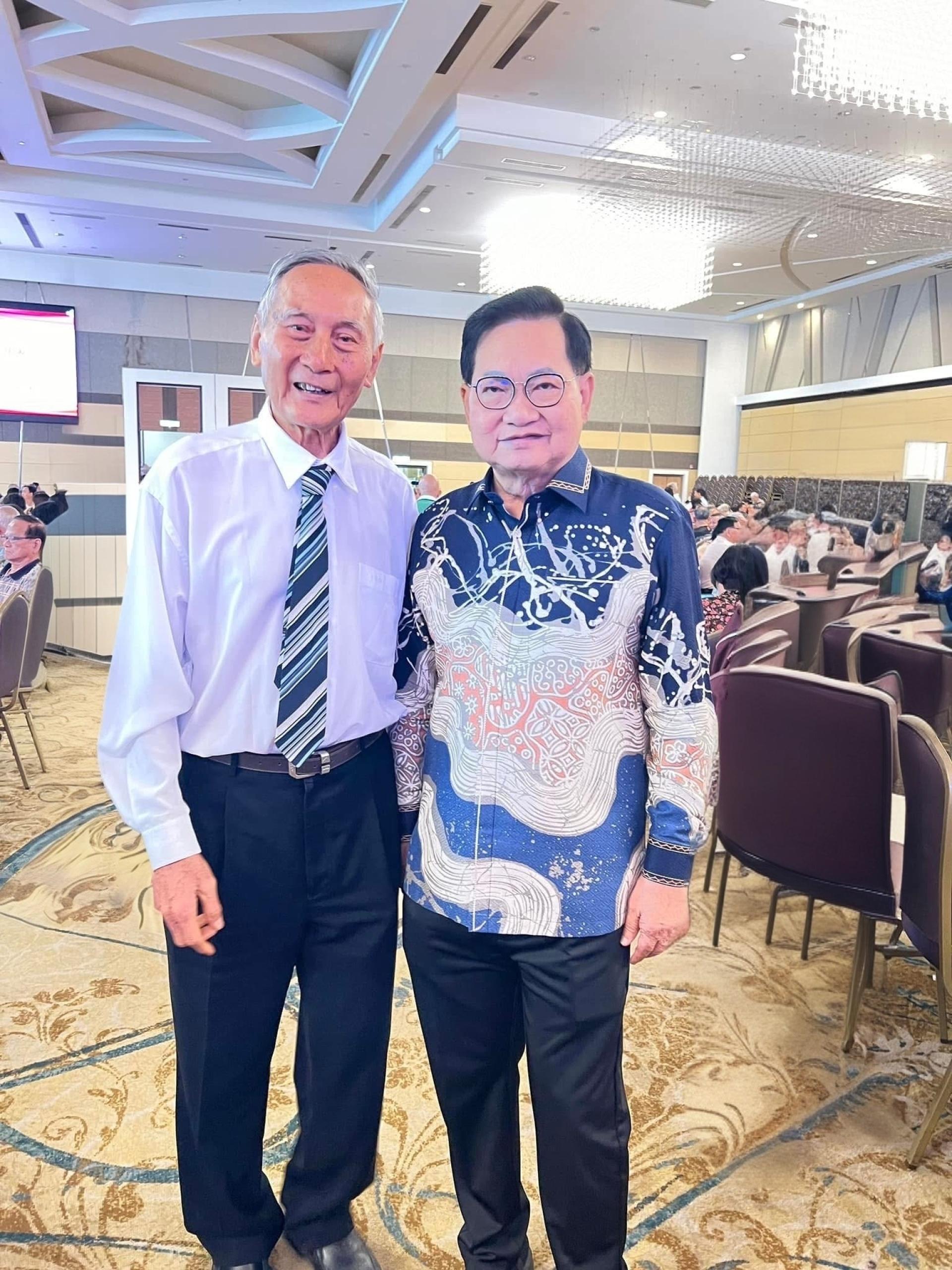
(Sibu, 30th) Sarawak Chinese Association President, Dato' Dr. Wong Biaw Seng, expressed his deepest condolences over the passing of Kenyalang People's Party Permanent Chairman, Mr. Yu Qinglu, and stated bluntly that his death is not only a personal loss, but also marks a major fracture in the Sarawak people's self-determination movement.
He pointed out that Yu Qinglu's passing symbolizes the fading of a generation who paid the price for Sarawak's 'true path to autonomy.' What is more regrettable, he said, is that this chapter of history has to this day been marginalized, and even deliberately avoided, in mainstream narratives.
"This is not just forgetting, but a kind of selective silence."
Wong Biaw Seng said frankly that the road Qinglu Ko (Brother Qinglu) walked back then was never accepted by the mainstream power structure. In the 1960s, against a backdrop of anti-colonial and anti-imperialist struggle, he went from student movements into armed resistance, entering the forests, not for his own ideals, but for a core belief: that Sarawak's fate must be decided by Sarawakians themselves, not put into a predetermined framework and passively accepted.
"That was not radicalism, but resistance when there was no other choice."
He emphasized the need to restore the complexity of history. To simply label the choices of that generation is disrespectful to history, and an evasion of contemporary realities.
"When a society dares not confront its own history, it cannot face its own future."
Wong Biaw Seng pointed out that Yu Qinglu was not just a participant, but an actor at key historical junctures. The path he walked was one that very few dared to pay the price for; it was a conviction verified with the youth and even the lives of a generation.
"They were not bystanders to history, but people pushed to the frontlines by history."
He further noted an unavoidable question: if Sarawak had chosen a path of complete autonomy, or even independence, would today's control over resources, development leadership, and political status still be in the same structure as it stands now?
"History cannot be repeated, but reality must be questioned."
Wong Biaw Seng emphasized that Yu Qinglu's entire life was the most direct and persistent challenge to this question.
After armed struggle ended, Yu Qinglu was not assimilated by the system; instead, he chose another way to persist in his ideals—engaging in community work, founding associations, and participating in political practice. From the Friendship Association to the Kenyalang People's Party, he never wavered from the core position that "Sarawakians should determine Sarawak's future."
"Forms may change, but the position has never retreated."
He also pointed out that Yu Qinglu, by editing the "Friendship Series," left behind for Sarawak a wealth of precious historical materials, filling in the blanks deliberately omitted by mainstream narratives.
"When the official account does not record, the people must record; when the mainstream chooses silence, someone has to speak out."
Wong Biaw Seng bluntly stated that the political arrangements made at Sarawak's critical historical moments still profoundly influence resource allocation, developmental disparity, and power structures today. Yet these issues have long been downplayed, and even concealed for political reasons.
"The problems have never disappeared; they have only been covered up."
He emphasized that Yu Qinglu's life was, in essence, a continual questioning of one core issue—does Sarawak truly possess substantive autonomy?
"If we dare not even face this question, then so-called development and stability are only a surface-level balance."
Wong Biaw Seng also admitted that society's knowledge of this chapter of history remains extremely limited, and even tainted with stereotypes. This cognitive gap is the root cause of why these problems cannot be seriously discussed for so long.
On an emotional level, he said he had a deep bond and frequent discussions of public issues with Yu Qinglu.
"Qinglu Ko often sent drafts intended for the media to me for comments first. This is not only a sign of trust, but also an attitude of rigorous public discourse."
He recalled their last conversation was on March 16 this year.
"He sent me a commentary on the 17th anniversary of the Teoh Beng Hock case for my reference. I replied simply with a 'Like,' to which he earnestly responded: 'Thank you, Brother Biaw Seng, for your recognition and encouragement. Wishing everyone health and peace every day.'"
"I thought nothing of it then, but looking back now, it turned out to be a conversation that cannot continue."
He said that this gentle-yet-firm character was the truest side of Qinglu Ko.
"He was steadfast in his position, but never overbearing; he upheld principles, but always with warmth."
Wong Biaw Seng emphasized that Yu Qinglu's passing should not only remain at the level of mourning, but should become an opportunity for society to reexamine its history and present.
"If even this chapter of history continues to be neglected, then our understanding of Sarawak is doomed to be incomplete."
"And an incomplete understanding cannot lead to the right choices."
He finally pointed out that Yu Qinglu's departure is not the end of an era, but a reminder to contemporary society—that those unanswered questions will ultimately not disappear.
"Qinglu Ko is gone, but the problems remain, and are even more pressing."
"History may be suppressed for a time, but it will never be silent forever."
"Sarawak's future will not be decided by silence; it must be answered by the people themselves."
He pointed out that Yu Qinglu's passing symbolizes the fading of a generation who paid the price for Sarawak's 'true path to autonomy.' What is more regrettable, he said, is that this chapter of history has to this day been marginalized, and even deliberately avoided, in mainstream narratives.
"This is not just forgetting, but a kind of selective silence."
"That was not radicalism, but resistance when there was no other choice."
He emphasized the need to restore the complexity of history. To simply label the choices of that generation is disrespectful to history, and an evasion of contemporary realities.
"When a society dares not confront its own history, it cannot face its own future."
Wong Biaw Seng pointed out that Yu Qinglu was not just a participant, but an actor at key historical junctures. The path he walked was one that very few dared to pay the price for; it was a conviction verified with the youth and even the lives of a generation.
"They were not bystanders to history, but people pushed to the frontlines by history."
He further noted an unavoidable question: if Sarawak had chosen a path of complete autonomy, or even independence, would today's control over resources, development leadership, and political status still be in the same structure as it stands now?
"History cannot be repeated, but reality must be questioned."
Wong Biaw Seng emphasized that Yu Qinglu's entire life was the most direct and persistent challenge to this question.
After armed struggle ended, Yu Qinglu was not assimilated by the system; instead, he chose another way to persist in his ideals—engaging in community work, founding associations, and participating in political practice. From the Friendship Association to the Kenyalang People's Party, he never wavered from the core position that "Sarawakians should determine Sarawak's future."
"Forms may change, but the position has never retreated."
He also pointed out that Yu Qinglu, by editing the "Friendship Series," left behind for Sarawak a wealth of precious historical materials, filling in the blanks deliberately omitted by mainstream narratives.
"When the official account does not record, the people must record; when the mainstream chooses silence, someone has to speak out."
Wong Biaw Seng bluntly stated that the political arrangements made at Sarawak's critical historical moments still profoundly influence resource allocation, developmental disparity, and power structures today. Yet these issues have long been downplayed, and even concealed for political reasons.
"The problems have never disappeared; they have only been covered up."
He emphasized that Yu Qinglu's life was, in essence, a continual questioning of one core issue—does Sarawak truly possess substantive autonomy?
"If we dare not even face this question, then so-called development and stability are only a surface-level balance."
Wong Biaw Seng also admitted that society's knowledge of this chapter of history remains extremely limited, and even tainted with stereotypes. This cognitive gap is the root cause of why these problems cannot be seriously discussed for so long.
On an emotional level, he said he had a deep bond and frequent discussions of public issues with Yu Qinglu.
"Qinglu Ko often sent drafts intended for the media to me for comments first. This is not only a sign of trust, but also an attitude of rigorous public discourse."
He recalled their last conversation was on March 16 this year.
"He sent me a commentary on the 17th anniversary of the Teoh Beng Hock case for my reference. I replied simply with a 'Like,' to which he earnestly responded: 'Thank you, Brother Biaw Seng, for your recognition and encouragement. Wishing everyone health and peace every day.'"
"I thought nothing of it then, but looking back now, it turned out to be a conversation that cannot continue."
He said that this gentle-yet-firm character was the truest side of Qinglu Ko.
"He was steadfast in his position, but never overbearing; he upheld principles, but always with warmth."
Wong Biaw Seng emphasized that Yu Qinglu's passing should not only remain at the level of mourning, but should become an opportunity for society to reexamine its history and present.
"If even this chapter of history continues to be neglected, then our understanding of Sarawak is doomed to be incomplete."
"And an incomplete understanding cannot lead to the right choices."
He finally pointed out that Yu Qinglu's departure is not the end of an era, but a reminder to contemporary society—that those unanswered questions will ultimately not disappear.
"Qinglu Ko is gone, but the problems remain, and are even more pressing."
"History may be suppressed for a time, but it will never be silent forever."
"Sarawak's future will not be decided by silence; it must be answered by the people themselves."