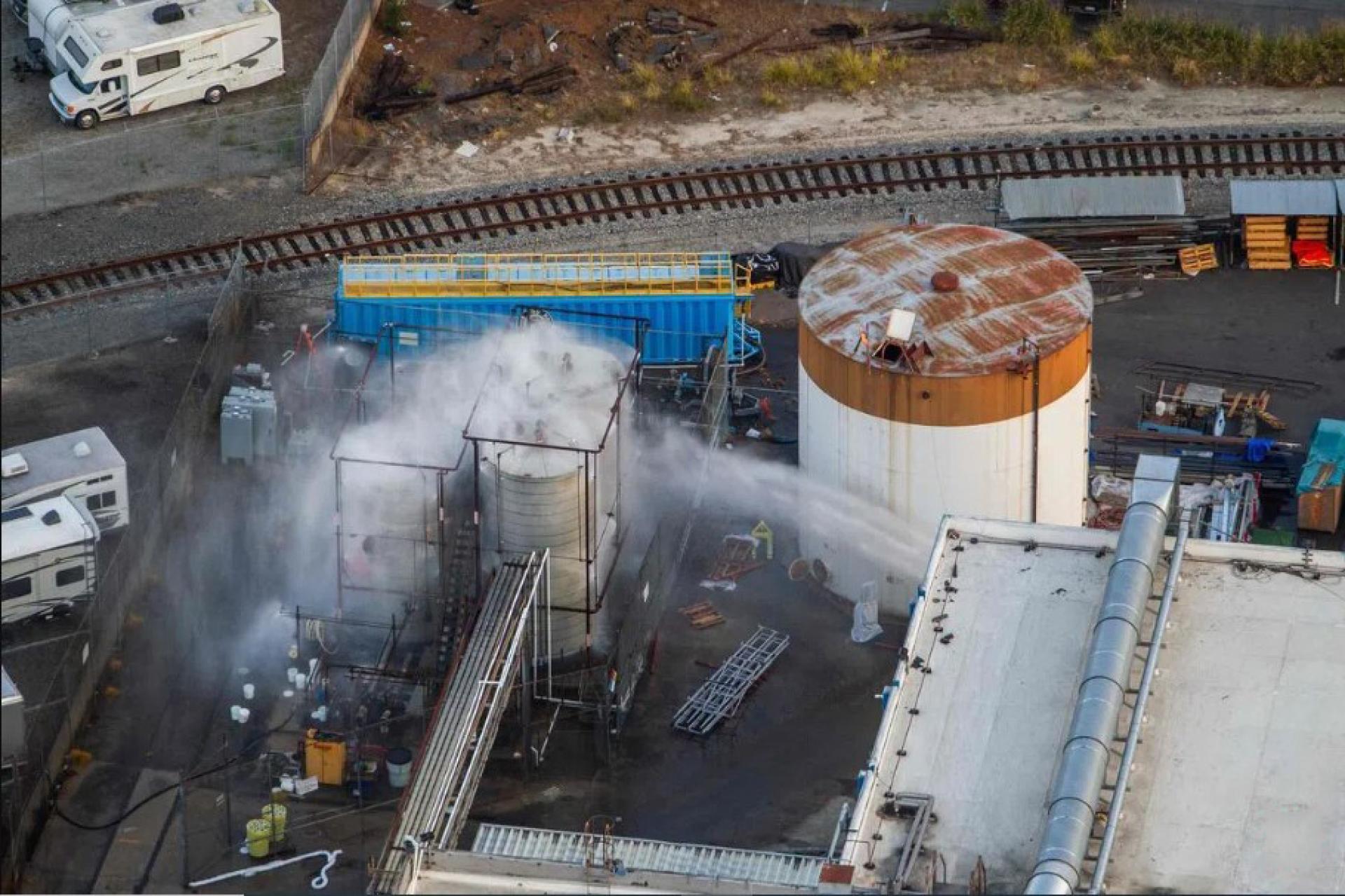
(U.S., 25th) The toxic chemical storage tank leak crisis in Orange County, California, continues. Local officials said Sunday (May 24) that emergency personnel have discovered that a large storage tank may have developed a crack.
The acting chief of the Orange County Fire Department, McGovern, posted on social media that an expert emergency response team conducted a visual inspection of the tank located in Garden Grove on the night of the 23rd and "discovered that there may be a crack on the tank, which might be relieving some of the internal pressure."
Officials are conducting verification and analysis, and this information could impact the direction and response strategy for the incident.
According to Xinhua News Agency, the faulty storage tank is estimated to contain about 7,000 gallons (1 gallon equals 3.79 liters) of methyl methacrylate, which cannot be neutralized or controlled due to a valve malfunction.
Methyl methacrylate is stored in liquid form and is used to make plastic. This industrial chemical is flammable, irritating to skin and eyes, and can cause respiratory and nervous system damage. According to previous officials, the internal temperature of the faulty tank continues to rise, and as pressure increases, it may eventually lead to severe leakage or the risk of explosion.
According to analysis diagrams released by the relevant authorities, if the storage tank explodes, the aerospace manufacturing plant where it is located and surrounding buildings could be severely damaged. The diagram shows that within approximately 335 meters of the tank, the area could sustain severe damage; a further 480 meters out could see moderate damage; about 640 meters out could sustain minor damage.
Local officials stressed that they are making every effort to prevent an explosion and are doing their utmost to cool the chemicals in the tank. Assistance has now been received from experts nationwide.
The head of the U.S. Environmental Protection Agency, Zeldin, said he is optimistic about finding a safe solution. "I am told that the most likely scenario is a small-scale release, in which case local authorities would be able to monitor, neutralize, and control the threat."
On the 23rd, California Governor Newsom declared a state of emergency in Orange County to coordinate resources for the crisis.
According to reports, mandatory evacuation orders in the surrounding areas remain in place, affecting about 50,000 residents. A large number of schools and businesses in the area will continue to be closed. With uncertainty about when they can return home, evacuated residents' dissatisfaction is mounting, and some have launched a class-action lawsuit against GKN Aerospace, the company that owns the affected plant.
Disneyland California, which is about 8 kilometers from the faulty storage tank, is currently outside the evacuation zone. On the 24th, the park said it has not been "directly affected."
Officials are conducting verification and analysis, and this information could impact the direction and response strategy for the incident.
According to Xinhua News Agency, the faulty storage tank is estimated to contain about 7,000 gallons (1 gallon equals 3.79 liters) of methyl methacrylate, which cannot be neutralized or controlled due to a valve malfunction.
Methyl methacrylate is stored in liquid form and is used to make plastic. This industrial chemical is flammable, irritating to skin and eyes, and can cause respiratory and nervous system damage. According to previous officials, the internal temperature of the faulty tank continues to rise, and as pressure increases, it may eventually lead to severe leakage or the risk of explosion.
According to analysis diagrams released by the relevant authorities, if the storage tank explodes, the aerospace manufacturing plant where it is located and surrounding buildings could be severely damaged. The diagram shows that within approximately 335 meters of the tank, the area could sustain severe damage; a further 480 meters out could see moderate damage; about 640 meters out could sustain minor damage.
Local officials stressed that they are making every effort to prevent an explosion and are doing their utmost to cool the chemicals in the tank. Assistance has now been received from experts nationwide.
The head of the U.S. Environmental Protection Agency, Zeldin, said he is optimistic about finding a safe solution. "I am told that the most likely scenario is a small-scale release, in which case local authorities would be able to monitor, neutralize, and control the threat."
On the 23rd, California Governor Newsom declared a state of emergency in Orange County to coordinate resources for the crisis.
According to reports, mandatory evacuation orders in the surrounding areas remain in place, affecting about 50,000 residents. A large number of schools and businesses in the area will continue to be closed. With uncertainty about when they can return home, evacuated residents' dissatisfaction is mounting, and some have launched a class-action lawsuit against GKN Aerospace, the company that owns the affected plant.
Disneyland California, which is about 8 kilometers from the faulty storage tank, is currently outside the evacuation zone. On the 24th, the park said it has not been "directly affected."