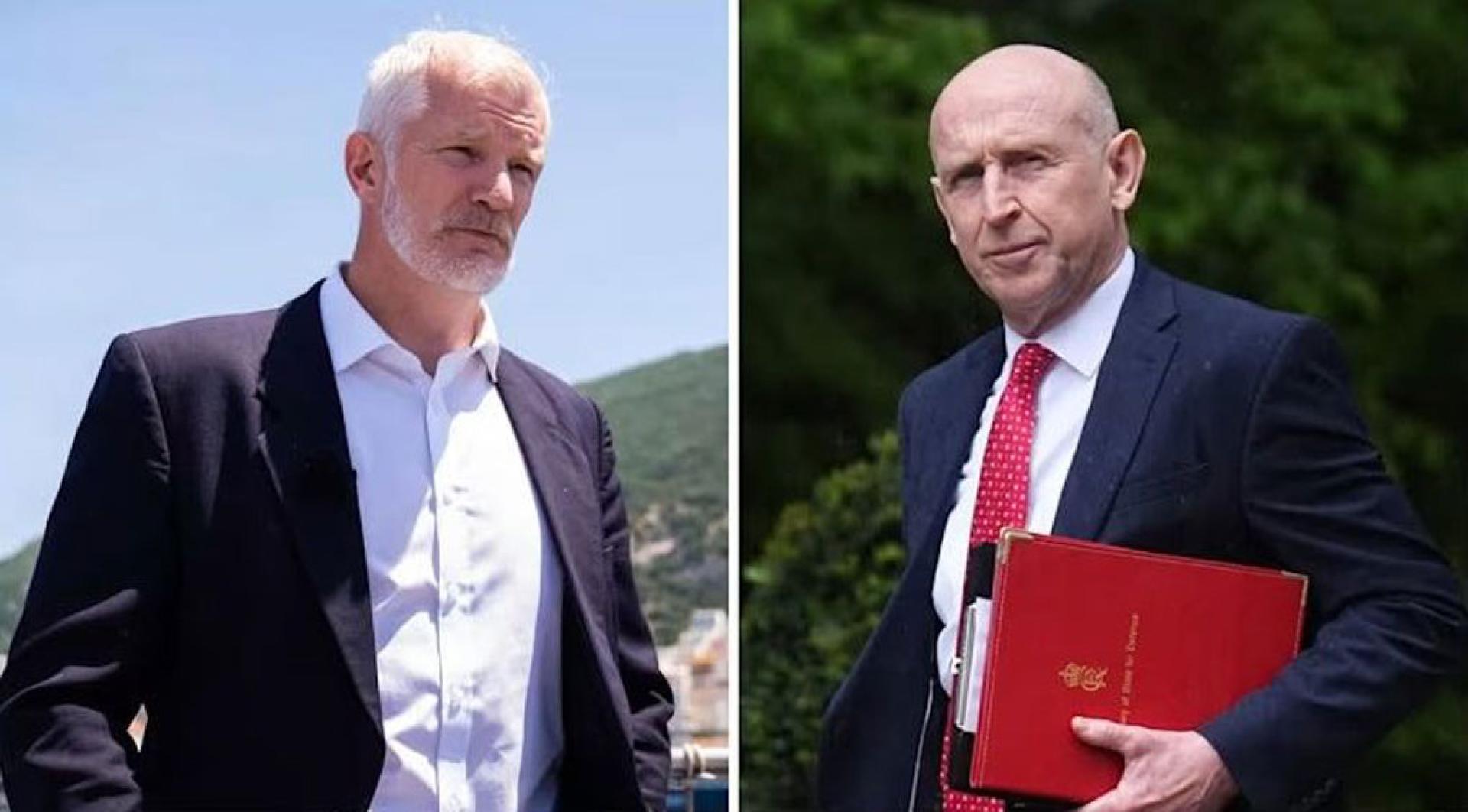
Due to dissatisfaction with the funding plan for the defense investment program, UK Defense Secretary Healy announced his resignation on the 11th.
The British Prime Minister's Office later issued a statement on social media saying that Jarvis has been appointed as the new UK Defense Secretary, succeeding the resigned Healy.
In his resignation letter published on social media, Healy stated that considering the UK's rising defense needs and commitments to allies, by 2030 the UK's defense expenditure should account for 3% of Gross Domestic Product (GDP).
He indicated that in the defense investment funding plan he previously received, the defense expenditure would only account for 2.68% of GDP by 2030, which cannot meet the UK's defense needs.
He pointed out that he cannot accept an investment plan unable to provide the British military with the resources it needs, so he had no choice but to resign as Defense Secretary, though he will continue to support the Labour government.
Minister of State Cairns also resigns
Additionally, due to similar dissatisfaction with the government's defense investment funding plan, Minister of State responsible for Armed Forces Affairs Cairns also announced his resignation.
In a letter to Prime Minister Starmer, Cairns stated that the current government’s proposed defense investment plan lacks both transformative elements and sufficient financial support, making it difficult to respond to increasingly severe security threats and the challenges brought by the rapidly changing nature of modern warfare. The Ukraine crisis has shown that modern warfare is rapidly evolving, yet the UK is still procuring equipment suitable for the warfare models of the past.
He said: “Platforms worth billions of pounds could be defeated by systems worth only thousands of pounds.”
He stated that the current defense investment plan fails to provide the British military with resources that match real threats, and he has therefore decided to resign.
He also criticized the overall inefficiency of the UK government’s decision-making, stating that government departments are in opposition to each other rather than working together to solve problems.
The defense investment plan was originally scheduled to be released in autumn 2025, but due to disagreements between the Ministry of Defence and the Treasury over the scale of funding, grant periods, and funding sources, the plan has been repeatedly delayed. British media report that the plan faces a funding gap of 28 billion pounds (about 15.23 billion ringgit).