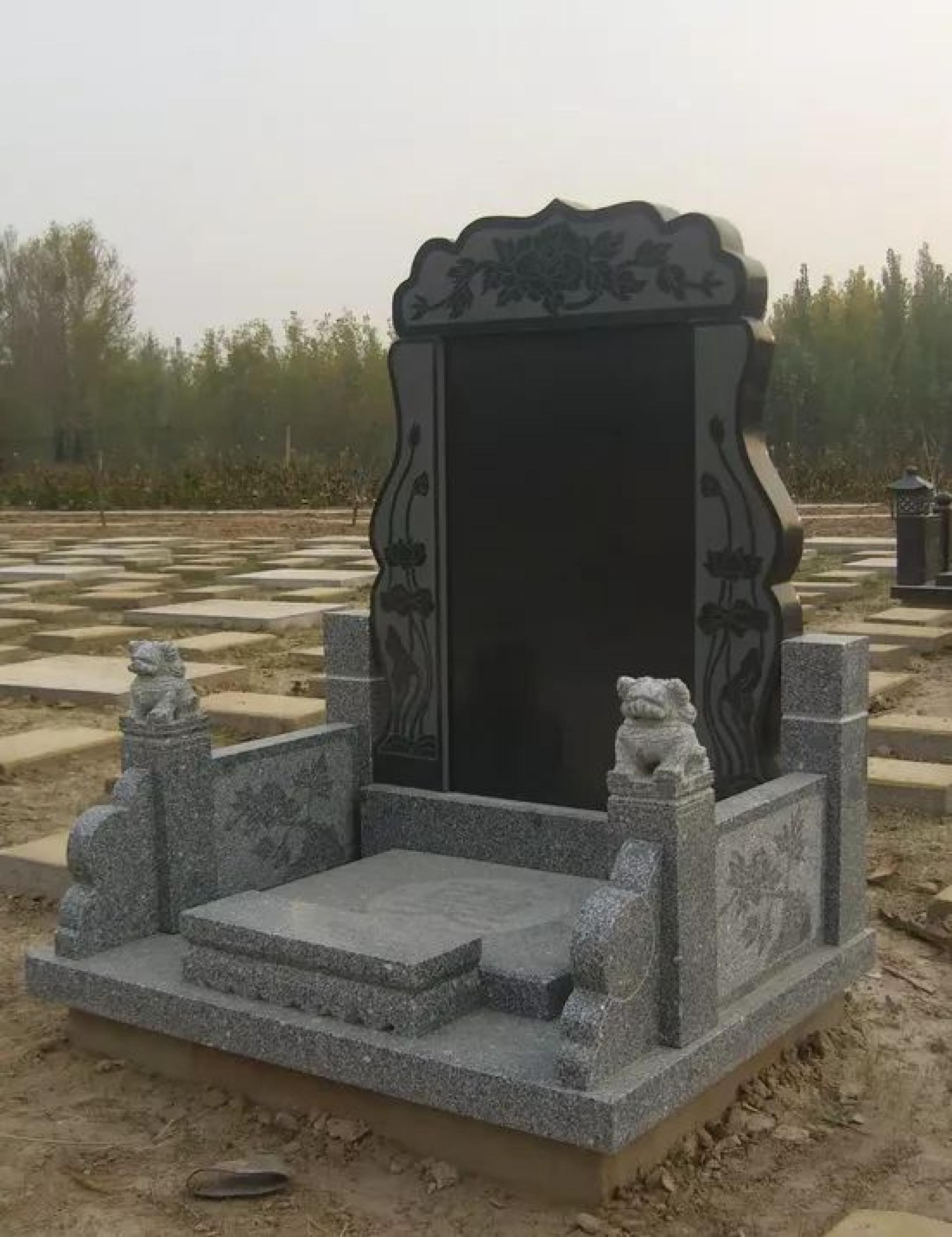
Qingming Festival tomb sweeping is a tradition to express grief, but Amin (pseudonym) from Shaoyang County, Hunan, suffered an unexpected disaster. While paying respects at his parents’ grave, the tombstone suddenly collapsed, crushing him and resulting in a Grade-10 disability. Who should be held responsible for this tragedy? Recently, the People’s Court of Shaoyang County, Hunan Province, concluded a personal injury compensation dispute caused by tombstone quality issues.
In March 2022, Amin wanted to build a tombstone and surrounding walls for his parents’ grave. He found Adong (pseudonym), who was in this business, via WeChat. They agreed on the style, materials, and a total price of 16,500 yuan, with a requirement for completion before Qingming Festival.
After this, Adong passed the construction matters to his relative Anan (pseudonym) to handle. Amin also paid the full amount to Adong through WeChat in two installments.
During the 2024 Qingming Festival, Amin’s family visited the grave as usual. Unexpectedly, just two years after being erected, the main tombstone suddenly toppled, seriously injuring Amin, who was standing in front of the stone. Identification confirmed that Amin had sustained a Grade-10 disability, with total losses amounting to more than 220,000 yuan (about 130,000 MYR). After the accident, Anan, who was responsible for construction, proactively advanced 10,000 yuan (about 5,800 MYR) for Amin’s medical expenses.
During the trial, Adong applied for an expert evaluation. The result showed that the tombstone’s collapse was mainly due to aging and weak adhesion at the cement base, indicating construction quality problems. In addition, continuous rain had increased the weight of the soil and lateral pressure, ultimately causing the accident.
The court held that this case was a liability dispute over the collapse of a structure. According to Article 1252 of the Civil Code, if the collapse of a structure causes damage to others, the construction and contractor units shall bear joint and several liability, unless they can prove there are no quality defects. In this case, Adong was fully responsible for business liaison and payment collection, while Anan was specifically responsible for construction; the two divided the work and shared profits, thus should be identified as joint constructors of the disputed tombstone.
As for the proportion of responsibility, the court found that quality defects in the tombstone were the main cause of the collapse, so Adong and Anan, as constructors, should bear the primary responsibility for compensation. At the same time, the soil mounding was done by Amin himself, and the rainy weather was an external inducement; therefore, the constructors’ responsibility could be reduced appropriately. Considering the whole case, the two defendants were ordered to bear 70% of Amin’s loss, jointly compensating 158,346.73 yuan (the 10,000 yuan already paid by Anan is deducted), while Amin himself bears 30% of the responsibility.
After the first-instance verdict, both defendants appealed, but the second-instance court upheld the original judgment.