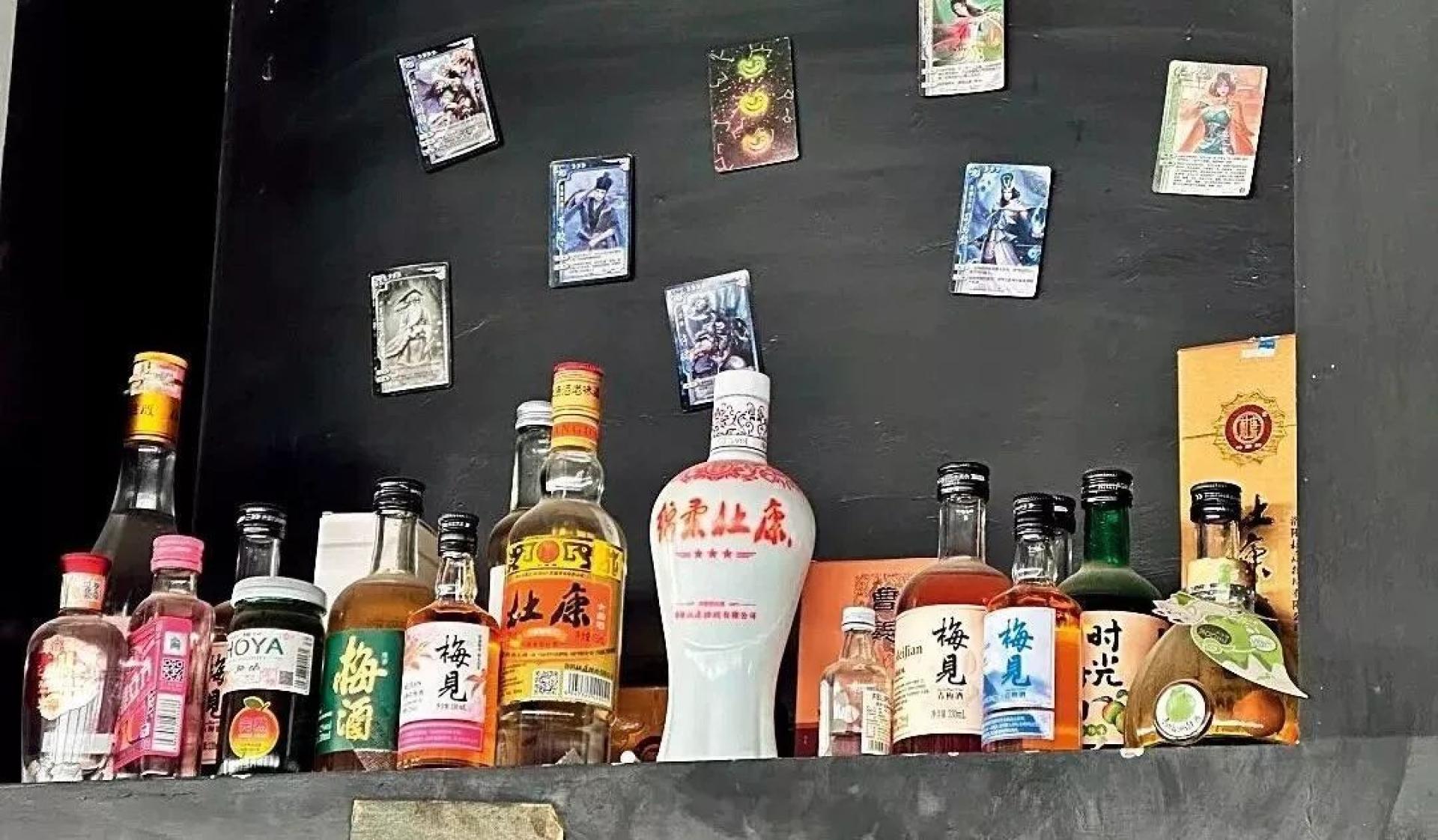
During the Qingming Festival, ancestor worship is usually a solemn affair, but at the Cao Cao Mausoleum Site Museum in Anyang, Henan, a scene both hilarious and touching unfolded. Large numbers of young visitors, while visiting the tomb of the legendary warlord Cao Cao, offered not the traditional flowers or incense, but neat boxes of Ibuprofen painkillers.
According to Jimu News, the craze for placing Ibuprofen before Cao Cao's tomb stems from historical records and folk legends about the cause of his death. It is said that in his later years, Cao Cao suffered long-term from severe migraines (“toufeng”), and even had the famous physician Hua Tuo executed for suspecting he wanted to “open his skull” to treat him. Out of a spirit of “cross-time rescue,” today’s young people bring modern painkillers as tribute.
In addition to Ibuprofen, the offering cabinet also features Qingmei wine, echoing the “heroes discussing over plum wine” tale, as well as “Three Kingdoms Kill” playing cards and banners emblazoned with “Great Wei.” Internet users joked in comments: “Prime Minister, remember you can’t drink alcohol after taking Ibuprofen, or the effects might go haywire!”
The staff at the Cao Cao Mausoleum Site Museum said that the nearly “wall of Ibuprofen” shown in videos is the result of long-term accumulation. “We do not casually clear away gifts brought by visitors, we only arrange them neatly.”
It is understood that this kind of “precisely targeted cyber tomb sweeping” has been seen at ancient tombs of historic figures throughout the country. According to China Newsweek, various historical figures have received tribute with distinctive features. At Wuhou Shrine in Chengdu, Sichuan, a photo of a “Dongfeng” missile was even left under the altar of Zhuge Liang’s statue—clearly a modern tribute to the legend of Zhuge Liang “borrowing the east wind” during the Battle of Red Cliffs.
The most unusual offering before the tomb of Zhang Juzheng, the Ming dynasty statesman and reformer, is “Mayinglong” hemorrhoid ointment. According to unofficial history, Zhang Juzheng died from weakness after surgery for hemorrhoids. In a strange twist, the “Mayinglong” brand was allegedly established the same year, 1582, that Zhang Juzheng died.
In front of the tomb of the famous Western Han general Huo Qubing—who at only 23 intimidated the Xiongnu with his exploits—there is no shortage of snacks like potato chips and spicy sticks. Since this young general died at 23, university students realized he was their age too—the age to love snacks.