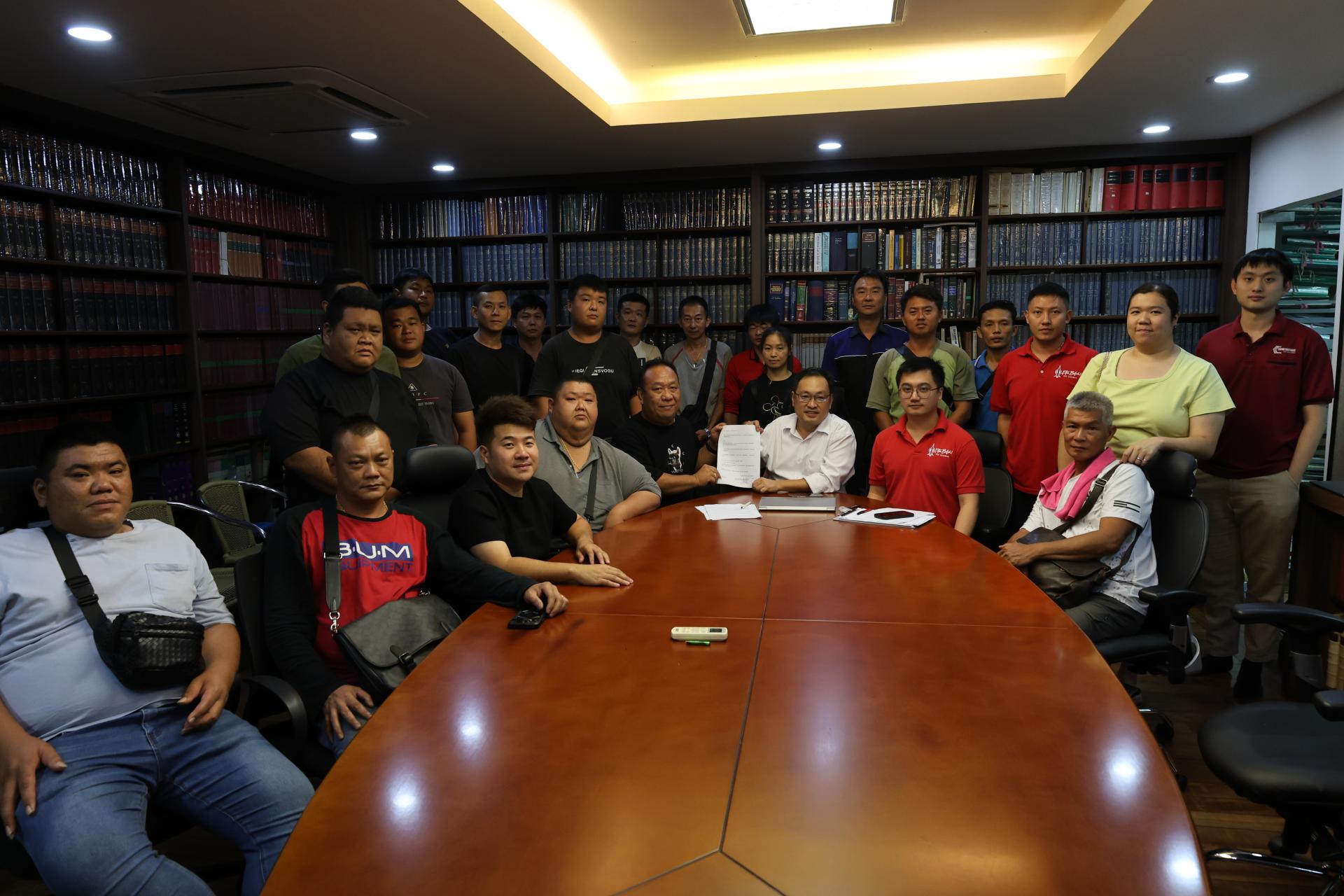
(Kuching, 29th) More than 20 local transport and towing operators jointly visited Sarawak DAP Federal and State Assemblyman Chong Chieng Jen to voice their grievances and petition about the industry's predicaments, earnestly requesting him to help speak up and convey their concerns and demands to the federal government.
The operators pointed out that the industry is currently facing two major burdens: first, the soaring diesel operating costs, as the towing industry is not eligible for diesel subsidies; second, the government requires operators to install speed limiters (SLD), and the high installation costs are making things worse for operators, adding double pressure to business operations.
The operators hope that the government will treat all sectors equally by automatically including the industry in the Subsidized Diesel Control System (SKDS), allowing them to purchase diesel at RM2.15 per liter. Currently, the transportation industry is excluded from the SKDS subsidy, resulting in them having to purchase diesel at market prices, which may ultimately pass on the diesel cost to consumers.
“We want to raise towing fees, but customers bargain or refuse to pay; if we accept the job, we lose money, but if we don't, we're afraid to lose business. Many operators are forced to subsidize from their own pocket just to survive.”
The operators emphasized that Peninsular Malaysia and Sarawak have different geographical circumstances, and the subsidy policy for diesel should not be applied universally.
The operators said that tow truck operators provide services such as towing breakdown vehicles, transporting new cars and building materials, and are not for long-distance, high-speed transportation. Sarawak also does not have many highways, and the typical loaded speed is between 70 and 90km/h, with virtually no chance to speed.
As for the speed limiter policy, the operators complained that the installation fee for the device is around RM2,000–2,500, and they questioned why the government requires installation only through designated companies. Also, the same branded device is only a few hundred ringgit online—not several thousand. Furthermore, recertification is required after two years.
They expressed concern and doubt as to whether this will lead to a monopoly by certain companies, allowing them to profiteer at the operators' expense.
Therefore, they suggested that if the government insists on using designated brands and installation companies, it should at least provide operators with partial subsidies for installation costs to reduce their burden.
The operators continued to say that aside from the speed limiter policy, authorities also prohibit operators from installing GPS systems on their own, and require installation to be done through designated companies, causing widespread resentment.
Suppose a transport company owns 10 vehicles; if each one is fitted with the required speed limiter and GPS system, the outlay could amount to tens of thousands of ringgit—a considerable expense.
The operators admitted that a single towing service is charged about RM120, but after deducting costs for diesel, repairs, insurance, salaries, and car loans, the profit margin is very limited. Many customers try to bargain due to financial pressure, and operators will often accommodate them to maintain their livelihood, as towing is a highly competitive industry.
In addition, operators also complained that some enforcement officers are overly harsh. For example, vehicle inspection regulations do not allow warning lights and work lights to be installed on tow trucks, which greatly increases the risk for those working at night, and there have been incidents where colleagues have been seriously injured by vehicles from behind due to lack of lighting.
“These lights are not for aesthetics, they're for safety. But now, to pass inspection, we have to remove them.”
After hearing their situation, Chong Chieng Jen agreed that while road safety policies are of course important, practical circumstances in different regions should also be taken into account, and that the central government should fully consult industry opinions when formulating policies.
He promised to forward the two major demands of diesel subsidy and speed limiter installation—together with the collective petition signed by the operators—to the relevant ministers, and to reason and fight for policies that truly meet the needs of the operators and people of Sarawak.
The operators pointed out that the industry is currently facing two major burdens: first, the soaring diesel operating costs, as the towing industry is not eligible for diesel subsidies; second, the government requires operators to install speed limiters (SLD), and the high installation costs are making things worse for operators, adding double pressure to business operations.
The operators hope that the government will treat all sectors equally by automatically including the industry in the Subsidized Diesel Control System (SKDS), allowing them to purchase diesel at RM2.15 per liter. Currently, the transportation industry is excluded from the SKDS subsidy, resulting in them having to purchase diesel at market prices, which may ultimately pass on the diesel cost to consumers.
“We want to raise towing fees, but customers bargain or refuse to pay; if we accept the job, we lose money, but if we don't, we're afraid to lose business. Many operators are forced to subsidize from their own pocket just to survive.”
The operators emphasized that Peninsular Malaysia and Sarawak have different geographical circumstances, and the subsidy policy for diesel should not be applied universally.
The operators said that tow truck operators provide services such as towing breakdown vehicles, transporting new cars and building materials, and are not for long-distance, high-speed transportation. Sarawak also does not have many highways, and the typical loaded speed is between 70 and 90km/h, with virtually no chance to speed.
As for the speed limiter policy, the operators complained that the installation fee for the device is around RM2,000–2,500, and they questioned why the government requires installation only through designated companies. Also, the same branded device is only a few hundred ringgit online—not several thousand. Furthermore, recertification is required after two years.
They expressed concern and doubt as to whether this will lead to a monopoly by certain companies, allowing them to profiteer at the operators' expense.
Therefore, they suggested that if the government insists on using designated brands and installation companies, it should at least provide operators with partial subsidies for installation costs to reduce their burden.
The operators continued to say that aside from the speed limiter policy, authorities also prohibit operators from installing GPS systems on their own, and require installation to be done through designated companies, causing widespread resentment.
Suppose a transport company owns 10 vehicles; if each one is fitted with the required speed limiter and GPS system, the outlay could amount to tens of thousands of ringgit—a considerable expense.
The operators admitted that a single towing service is charged about RM120, but after deducting costs for diesel, repairs, insurance, salaries, and car loans, the profit margin is very limited. Many customers try to bargain due to financial pressure, and operators will often accommodate them to maintain their livelihood, as towing is a highly competitive industry.
In addition, operators also complained that some enforcement officers are overly harsh. For example, vehicle inspection regulations do not allow warning lights and work lights to be installed on tow trucks, which greatly increases the risk for those working at night, and there have been incidents where colleagues have been seriously injured by vehicles from behind due to lack of lighting.
“These lights are not for aesthetics, they're for safety. But now, to pass inspection, we have to remove them.”
After hearing their situation, Chong Chieng Jen agreed that while road safety policies are of course important, practical circumstances in different regions should also be taken into account, and that the central government should fully consult industry opinions when formulating policies.
He promised to forward the two major demands of diesel subsidy and speed limiter installation—together with the collective petition signed by the operators—to the relevant ministers, and to reason and fight for policies that truly meet the needs of the operators and people of Sarawak.