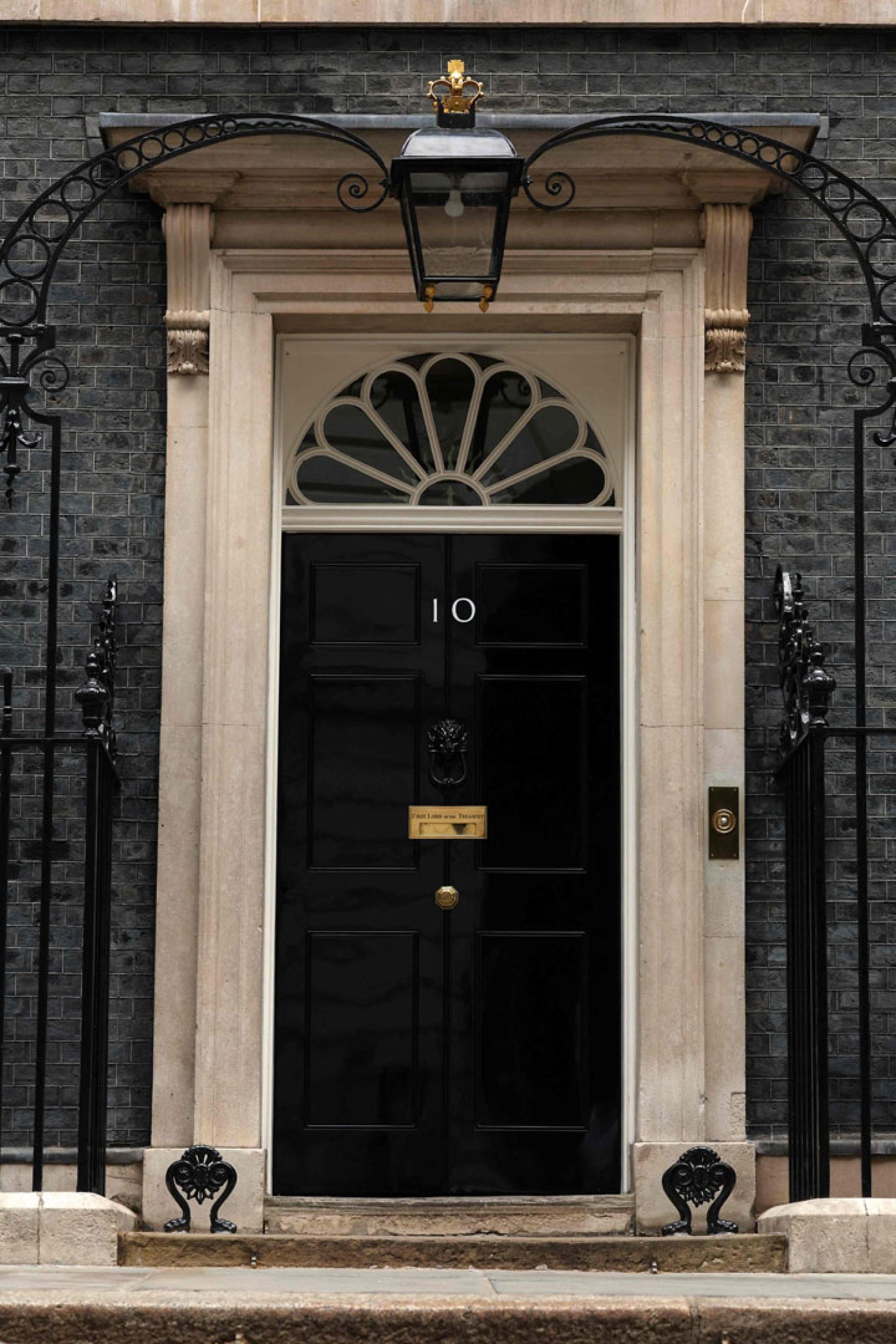
British Prime Minister Starmer's resignation highlights the deep-seated crisis in British politics.
Analysts believe that Beand's recent victory in a parliamentary by-election was the direct cause of Starmer's resignation, but whoever moves into 10 Downing Street will face a series of challenges such as sluggish economic growth and intensifying social divisions.
In recent years, the frequent turnover of British prime ministers is rooted in successive governments' inability to effectively address the country's long-standing economic and social problems.
Support lost in less than two years
In July 2024, Starmer led the Labour Party to victory in the House of Commons election, ending 14 years of Conservative rule, and then formally became prime minister. At that time, Starmer campaigned under the slogan of “change,” pledging to boost economic growth, improve public services, and control illegal immigration. However, in less than two years, he lost party support and became yet another British prime minister unable to complete his term.
Starmer tried to balance strict control of public spending with meeting people's livelihood demands, but continually fell into policy controversies. Measures such as limiting winter heating subsidies for the elderly and pushing for disability welfare reforms sparked opposition from Labour MPs, trade unions, and other groups. Starmer’s government then made adjustments and concessions, but was criticized for lacking clear direction. The Financial Times observed that repeated policy U-turns and intra-party chaos damaged Labour's image of sound administration.
Also calling for reform
Currently, Beand is seen as the front-runner to succeed as Labour Party leader and British prime minister. He advocates reforms in economics, immigration, education, and industrial policy, ending the “trickle-down economics” model, and promoting reindustrialization in northern England.
Public opinion believes that compared to Starmer’s more cautious and technocratic governing style, Beand is better at forcefully expressing his stance and directly communicating with voters. In recent years, the far-right Reform UK party has expanded its influence in northern and central England, directly threatening Labour's traditional vote base. In the recent Markfield by-election, Beand finished far ahead of the Reform UK candidate, further convincing his supporters that he is the best candidate to stop the continued expansion of the Reform UK party.
Wilkes-Higg, an election expert from the University of Liverpool, told reporters that Beand's victory was not unexpected, but such a large lead is highly significant and has given him strong political momentum.
However, analysts believe that even if Beand becomes prime minister, he will face many challenges, such as where to find the massive funds needed for economic transformation, and whether related fundraising initiatives can comply with established fiscal rules.
Deep-seated predicament
If Beand succeeds, he will be the seventh prime minister in the decade following Brexit. Analysts point out that while the revolving door of prime ministers seems to be caused by Brexit disputes, party struggles, political scandals, and policy failures, the root cause is that successive governments have never managed to effectively solve the UK’s long-accumulated economic and social problems.
According to data from the UK Office for National Statistics in June, the country’s GDP shrank by 0.1% month-on-month in April, marking the first monthly contraction since August 2025. British media report that in light of weak economic growth, high public debt, and limited fiscal leeway, the government finds it difficult to drive growth through large-scale investment or to fully meet needs in healthcare, education, housing, and social welfare.
The British think tank Institute for Government believes that, influenced by external crises, population aging, and changes in the global economic structure, the past decade has seen a marked increase in the difficulty of governing the UK. The frequent turnover of prime ministers and senior officials has further undermined policy continuity and the government's administrative capacity, creating a vicious cycle.
The political landscape in Britain has also been changing in recent years. The dominance of the two main parties, Labour and Conservative, in the so-called “two-party system” has been challenged: the far-right Reform UK party is expanding in England, while nationalist parties have been on the rise in Scotland and Wales.
Bromfield, a researcher at Swansea University, said: “In the past two years, support rates for both Labour and the Conservatives have collapsed, and this is largely their own doing.”
He says the Conservatives were dragged down by former Prime Minister Truss's failed economic policies and former Prime Minister Johnson’s political scandals, while Labour was exposed as lacking in leadership capability.
Yang Fang, a researcher at the Institute of European Studies, China Institutes of Contemporary International Relations, believes the contradiction between Britain's political system and party culture and current economic and social needs is intensifying, leading to declining governance efficiency and rising voter dissatisfaction. “Whether Conservative or Labour, the ruling party tends to replace its prime minister when internal divisions widen and power struggles intensify, in order to maintain rule. But in reality, this passive approach is insufficient to solve the UK's deep structural problems and only perpetuates an inefficient cycle.”