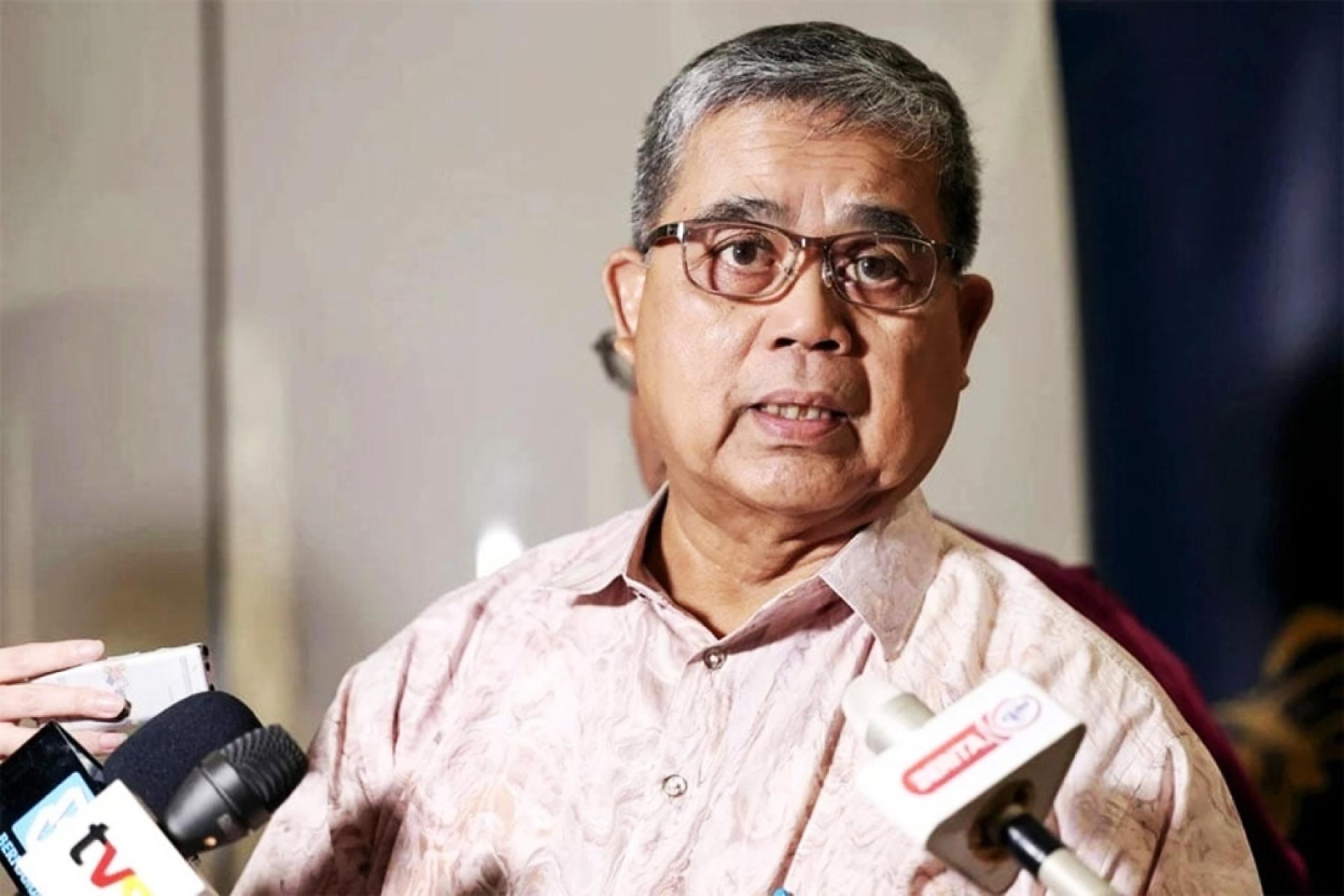
National Unity Minister Datuk Aaron Ago Dagang pointed out that Malaysia's experience in managing religious, cultural, and racial diversity can offer valuable lessons to the international community in promoting understanding, peace, and social harmony among different faiths.
He said that the policies implemented by Malaysia are based on the understanding that diversity should not be seen as a source of division, but should instead be transformed into an advantage through mutual respect, openness, and cooperation.
Speaking today at the 2026 International Interfaith Peace Conference (IIPC), Aaron said that interfaith dialogue plays an important role in strengthening mutual understanding and building more cohesive societies.
The theme of the conference is “Melaka and Malaysia as a Confluence of Faith, Culture, Diversity and Harmony, Advancing Together towards Nation Building in Unity”, providing an important platform for religious leaders, policymakers, and civil society representatives from all over the world to exchange views and strengthen cooperation in the pursuit of peace and social harmony.
The Yang di-Pertua Negeri of Melaka, Tun Mohd Ali, officiated the opening of the conference. Other attendees included board member Professor Hamid of the Doha International Center for Interfaith Dialogue (DICID), the Minister of Foreign Affairs' Special Representative for Peacebuilding and Combating Islamophobia as well as founder of Bait Al Amanah, Datuk Dr. Abdul Razak Ahmad, along with Dr. Mohamad Karawi, Director of the Malaysian Chapter of the Muslim World League.
Aaron highlighted that interfaith dialogue should not be misunderstood as an attempt to blur theological differences or create religious homogeneity, but rather should be viewed as a way to foster accurate understanding between different faith groups.
"Interfaith dialogue is not about changing anyone’s faith or sacrificing religious principles, but about promoting mutual understanding while respecting our differences."
He said that the purpose of interfaith dialogue is not to seek theological consensus or arrive at a final, binding decision, but to provide a platform for disseminating accurate information, sharing knowledge, and exchanging best practices.
"By disseminating accurate information, interfaith dialogue helps eliminate misunderstandings, reduce prejudice, and strengthen mutual respect among people of different faiths."
Aaron said such exchanges also help empower young people to serve as bridges between different communities, encourage cooperation between religious leaders and governments, and reinforce their shared responsibilities in nation-building.
He mentioned that after recently participating in the Harmony Symposium, World Religious Leaders’ Conference, and the roundtable discussion on “Practicing Multi-Faith Partnerships to Promote Human Wellbeing and Dignity,” he became even more aware of the importance of interfaith dialogue.
He said that although the topics and participants of these activities vary, all are united through dialogue, with the common goal of deepening mutual understanding by sharing interfaith information.
"This is exactly why interfaith dialogue remains highly relevant today."