KUALA LUMPUR, July 16 (Bernama) -- The government is considering various interventions to address the rising cost of living, based on data from the Basic Living Expenditure (PAKW) framework, which takes into account the cost-of-living disparities between urban and rural areas.
Deputy Economy Minister Datuk Mohd Shahar Abdullah said the PAKW, developed by the Department of Statistics Malaysia, is designed to help formulate appropriate interventions, given the significant differences in household spending patterns across locations.
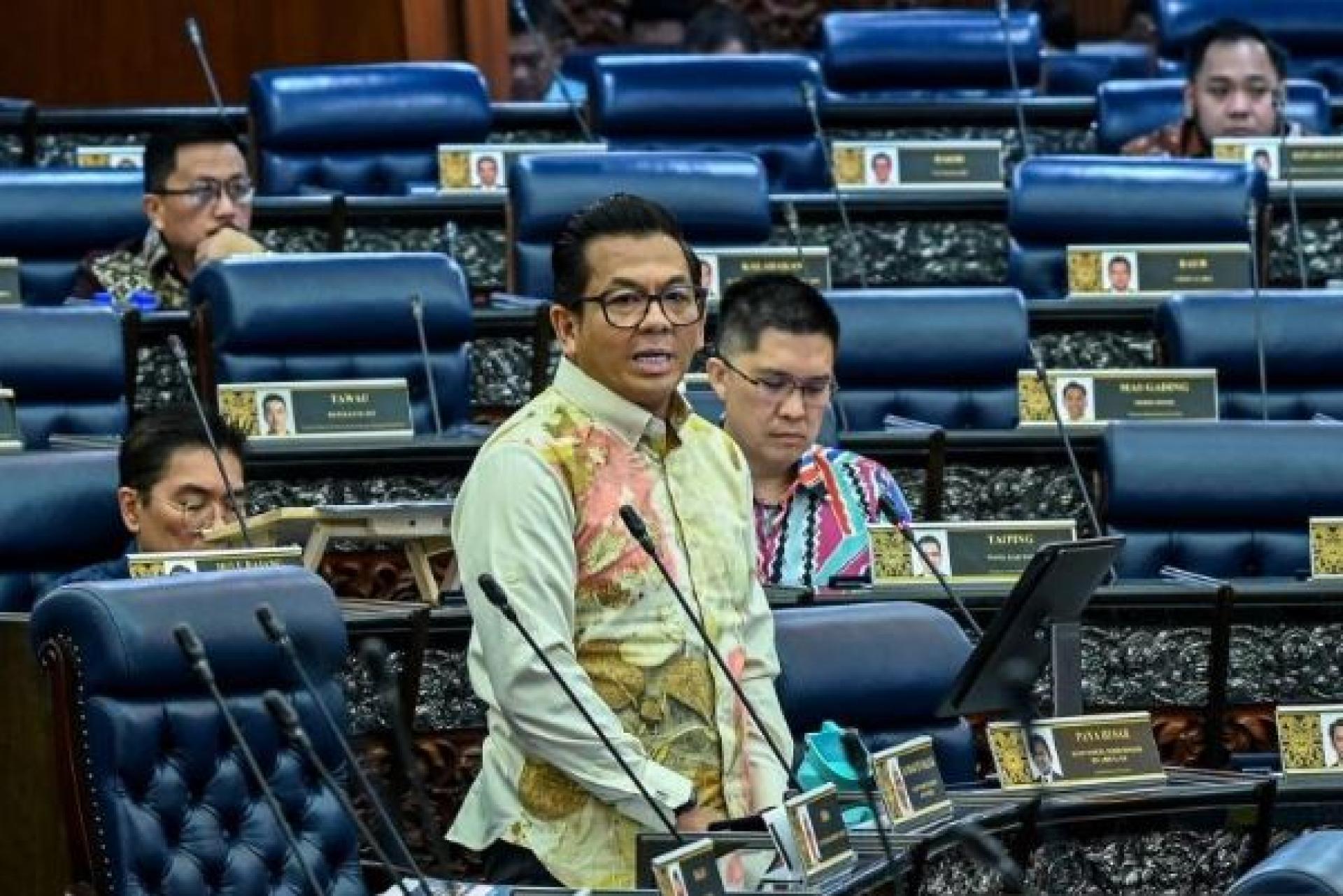
"Household spending patterns are shaped by affordability, needs, and wants. That is why we developed the PAKW and made its calculator available at myPAKW.dosm.gov.my, so Malaysians can track their own spending patterns," he told the Dewan Rakyat during today's question-and-answer session.
He was replying to Wan Hassan Mohd Ramli (PN-Dungun), who asked about a 2023–2025 economist field study to develop solutions for inflation and rising prices, with a focus on the urban-rural cost disparity.
Elaborating on these disparities, Mohd Shahar provided a comparison of PAKW values across several states to demonstrate the need for targeted policy implementation.
"We recognise that urban spending patterns are vastly different from those in Kelantan. To put it in perspective, the PAKW value in Kuala Lumpur stands at RM5,639, compared to RM4,254 in Kelantan and RM4,511 in Sabah. We factor in these disparities to determine the right policy responses.
"To that end, the government runs training programmes to lift both the income floor and ceiling, giving Malaysians the opportunity to earn better wages. This strategy is embedded in each Five-Year Malaysia Plan, with updates carried out twice per cycle," he said.
Mohd Shahar added that these sustained efforts are evident in the shifting Poverty Line Income (PLI), which is revised regularly under the Five-Year Plans, with the national PLI increasing to RM2,705 in 2024, up sharply from RM980 in 2016.
"Household spending patterns are shaped by affordability, needs, and wants. That is why we developed the PAKW and made its calculator available at myPAKW.dosm.gov.my, so Malaysians can track their own spending patterns," he told the Dewan Rakyat during today's question-and-answer session.
He was replying to Wan Hassan Mohd Ramli (PN-Dungun), who asked about a 2023–2025 economist field study to develop solutions for inflation and rising prices, with a focus on the urban-rural cost disparity.
Elaborating on these disparities, Mohd Shahar provided a comparison of PAKW values across several states to demonstrate the need for targeted policy implementation.
"We recognise that urban spending patterns are vastly different from those in Kelantan. To put it in perspective, the PAKW value in Kuala Lumpur stands at RM5,639, compared to RM4,254 in Kelantan and RM4,511 in Sabah. We factor in these disparities to determine the right policy responses.
"To that end, the government runs training programmes to lift both the income floor and ceiling, giving Malaysians the opportunity to earn better wages. This strategy is embedded in each Five-Year Malaysia Plan, with updates carried out twice per cycle," he said.
Mohd Shahar added that these sustained efforts are evident in the shifting Poverty Line Income (PLI), which is revised regularly under the Five-Year Plans, with the national PLI increasing to RM2,705 in 2024, up sharply from RM980 in 2016.