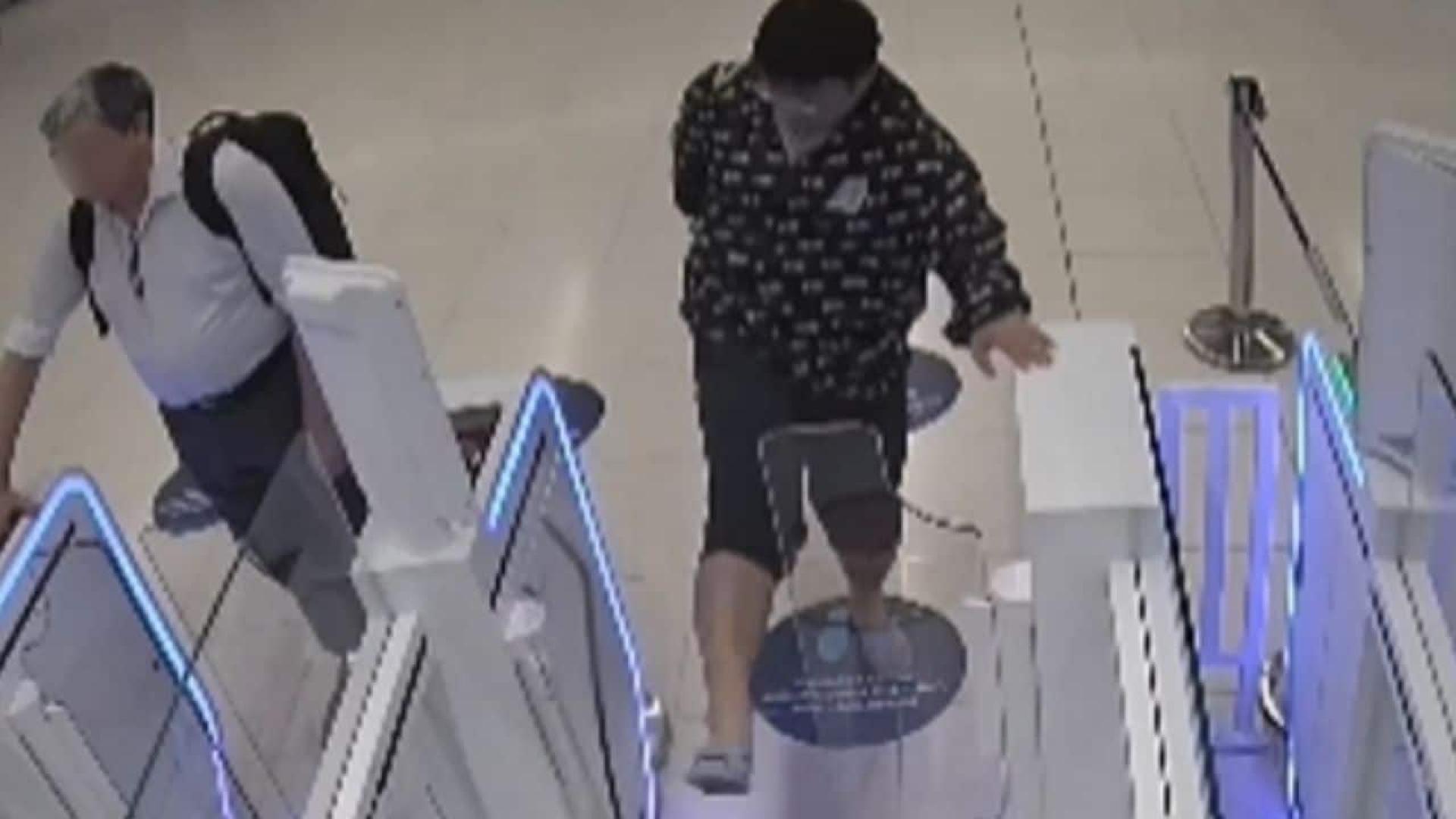
A Chinese man mistakenly placed his boarding pass on the airport E-Gate system scanner to clear immigration. However, since the system could not read the correct credentials, the gate failed to open, infuriating the man who kicked open the gate and verbally abused police officers. He was ultimately arrested by authorities and blacklisted, with a permanent ban from entering Thailand.
According to Thai media reports, the incident happened last Wednesday (13th) at around 2:35 pm at the second departure immigration checkpoint at Bangkok’s Suvarnabhumi Airport. According to an airport police bulletin, the suspect is a 30-year-old Chinese national, Zheng Liwei (LIWEI ZHENG, transliteration). At the time of the incident, he was preparing to board a flight from Bangkok to Shanghai.
According to CCTV footage, Zheng used the airport’s automated border E-Gate and placed his boarding pass, instead of his passport, on the scanner. Since the document did not match, the gate did not open. Zheng became agitated and kicked open the gate.
Zheng then walked to another E-Gate. At the second gate, he again incorrectly scanned his passport, causing the system to reject the document.
Afterwards, the frustrated Zheng kicked open the gate and forcibly passed through without completing the departure procedures. Zheng’s actions alarmed airport security personnel, who detained him shortly after.
During his arrest, Zheng became increasingly aggressive, loudly insulting the officers in both English and Chinese, and even attempted to physically confront them, until his wife intervened to calm him down.
Authorities charged Zheng under Section 358 of Thailand’s Criminal Code for “damage to another’s property.” This offense carries a maximum sentence of 3 years in prison, a fine up to 60,000 baht (about 7,287 ringgit), or both.
In addition to being charged, Zheng must also compensate authorities for the damage to the E-Gate system, estimated at about 450,000 baht (about 54,627 ringgit).
Furthermore, police stated Zheng may face an additional fine for insulting a public officer in performance of their duty. He could face a maximum of 1 year in prison, a fine up to 20,000 baht (about 2,427 ringgit), or both. The case is set to be heard in the Samut Prakan Court today (May 15).
Immigration officials have also placed Zheng on Thailand’s immigration blacklist, permanently barring him from re-entering the country.
Officials have confirmed that before all legal procedures are completed, Zheng must remain in Thailand, though it is unclear whether he is still in custody.
According to CCTV footage, Zheng used the airport’s automated border E-Gate and placed his boarding pass, instead of his passport, on the scanner. Since the document did not match, the gate did not open. Zheng became agitated and kicked open the gate.
Zheng then walked to another E-Gate. At the second gate, he again incorrectly scanned his passport, causing the system to reject the document.
Afterwards, the frustrated Zheng kicked open the gate and forcibly passed through without completing the departure procedures. Zheng’s actions alarmed airport security personnel, who detained him shortly after.
During his arrest, Zheng became increasingly aggressive, loudly insulting the officers in both English and Chinese, and even attempted to physically confront them, until his wife intervened to calm him down.
Authorities charged Zheng under Section 358 of Thailand’s Criminal Code for “damage to another’s property.” This offense carries a maximum sentence of 3 years in prison, a fine up to 60,000 baht (about 7,287 ringgit), or both.
In addition to being charged, Zheng must also compensate authorities for the damage to the E-Gate system, estimated at about 450,000 baht (about 54,627 ringgit).
Furthermore, police stated Zheng may face an additional fine for insulting a public officer in performance of their duty. He could face a maximum of 1 year in prison, a fine up to 20,000 baht (about 2,427 ringgit), or both. The case is set to be heard in the Samut Prakan Court today (May 15).
Immigration officials have also placed Zheng on Thailand’s immigration blacklist, permanently barring him from re-entering the country.
Officials have confirmed that before all legal procedures are completed, Zheng must remain in Thailand, though it is unclear whether he is still in custody.