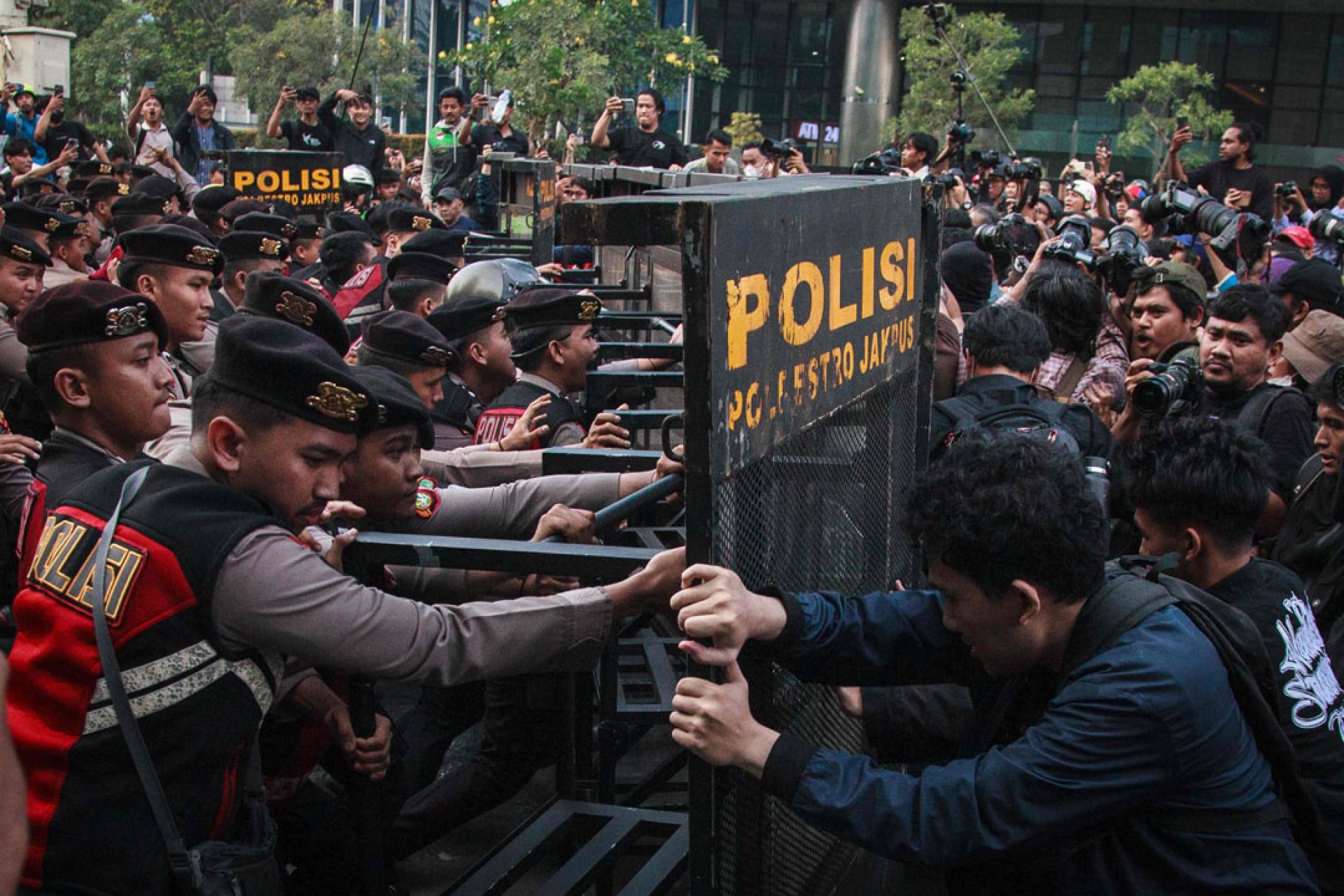
On the 12th, Indonesian university students took to the streets of Jakarta, protesting the government’s fiscal policies and soaring cost of living, clashing with police at the Hotel Indonesia roundabout.
Hundreds of students turned the center of Jakarta into a sea of yellow, using the slogan “Indonesia is heading towards bankruptcy” to voice their dissatisfaction.
According to a statement earlier released by the Indonesian University Student Executive Board, which organized the protest, Indonesia’s economy is worsening and government policies are making the situation worse. They are dissatisfied with government fiscal policy, the weakening of the central bank’s independence, and what they see as poor handling of public relations.
The students have five major demands, including stopping the waste of the national budget, lowering fuel and staple goods prices, ending the free nutrition meal and the Red-and-White Village Cooperatives programs, and opposing military involvement in civil affairs.
The Red-and-White Village Cooperatives program is a key social policy introduced by the Indonesian government, aimed at revitalizing rural economies and stabilizing prices.
Authorities deployed more than 4,000 military and police officers to maintain order. Barricades were set up near the Hotel Indonesia roundabout, preventing students from approaching the area. Students attempted to break through, leading to physical clashes, and some police officers were injured. The protest crowd peacefully dispersed at around 7 PM.
A spokesperson for the Indonesian police said the Hotel Indonesia roundabout area is an economic hub, not a place to express grievances. Authorities tried to ask the protesters to re-route to the parliament building or the National Monument, but the student representatives insisted on demonstrating at the roundabout.
Since the start of the year, Indonesia's stock market has dropped about 40%, the rupiah has depreciated more than 7% to record lows, and with international energy prices rising, the government this week announced a more than 30% increase in non-subsidized gasoline prices, further fueling public discontent.