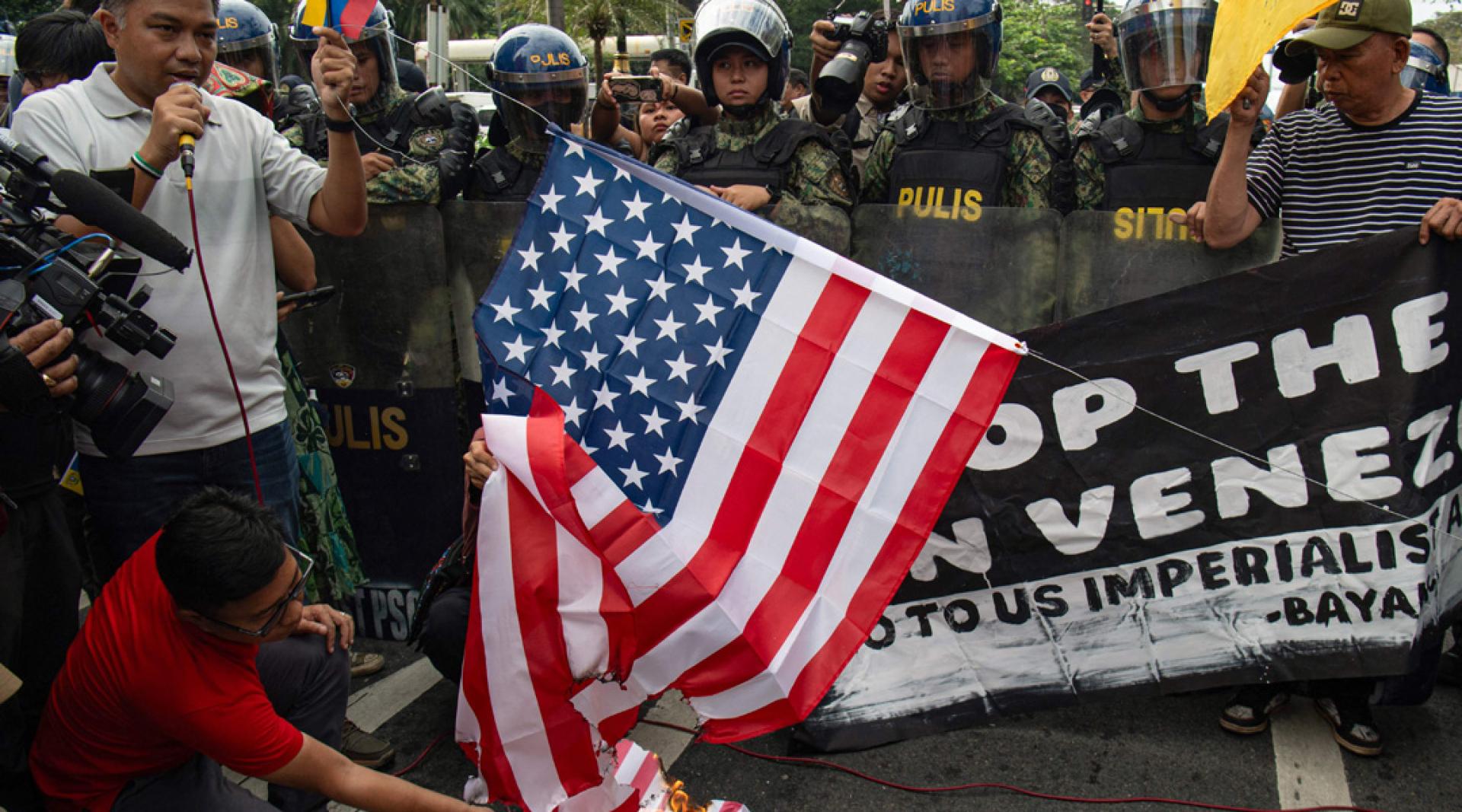
Hong Kong media published an analysis of three major impacts that regime change in Venezuela may have on China, including China’s unrecovered debts in Venezuela, bilateral trade, and Chinese enterprises’ investments in the country.
Hong Kong’s 015 daily stated that Venezuela connects trade routes between the Caribbean Sea and the Atlantic Ocean, making it a natural node in China’s Belt and Road Initiative.
One impact of regime change on China is bilateral trade between the two countries. According to the United Nations Commodity Trade Statistics Database, in 2023 and 2024, China’s exports to Venezuela were USD 3.45 billion and USD 4.8 billion respectively; Venezuela’s exports to China were around USD 739 million and USD 300 million respectively. According to the latest data from the China-Venezuela Chamber of Commerce, bilateral trade volume between Venezuela and China decreased by 12% in the first half of 2025 compared to the same period in 2024.
The decline in China-Venezuela bilateral trade is mainly due to Venezuela’s continued international sanctions, which have affected the country’s oil exports—a main pillar of its commercial relations with China. China’s exports to Venezuela mainly include machinery, electronic products, and consumer goods.
The new government may reduce trade with China
After the new Venezuelan government comes to power, it may reduce trade with China and turn towards the US market in exchange for the lifting of sanctions and economic aid. China’s private refineries and state-owned enterprises, which rely on Venezuela’s heavy crude oil, may be affected, leading to short-term supply chain strains. China will need to seek alternative sources, such as from the Middle East or Russia, but Venezuela’s unique advantages in processing heavy crude are difficult to fully replace.
Another impact is China’s outstanding debts in Venezuela. Since 2007, China, through the China-Venezuela Joint Fund and similar mechanisms, has provided more than USD 62 billion in loans to Venezuela. Venezuela repays these through “oil-for-loan” arrangements. Since 2015, China has refused to provide new credit lines to Venezuela. Currently, about USD 20 billion remains unpaid, most of it oil-linked debt.
The new government may question the legitimacy of some loans
After Maduro is arrested, the new government’s attitude towards these debts becomes a key issue. The new government may question the legitimacy of some loans, accuse Maduro’s regime of corruption and mismanagement, and seek to restructure or forgive parts of the debt in order to obtain support from the International Monetary Fund and from Western countries.
Another impact is Chinese investments in Venezuela. Chinese enterprises have invested in sectors including energy, telecommunications, and infrastructure.