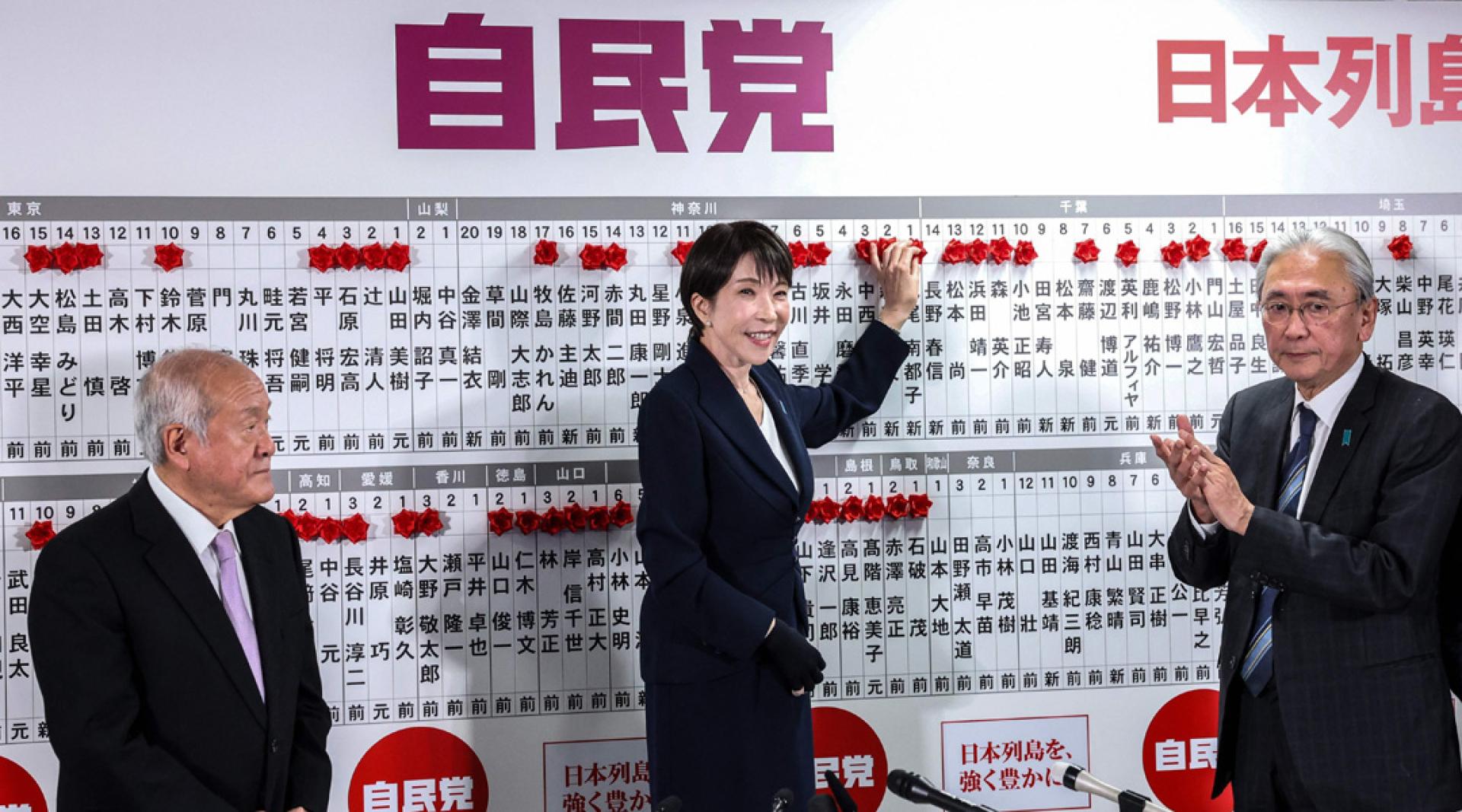
In the 51st Japanese House of Representatives election held on the 8th, the ruling coalition formed by the Liberal Democratic Party (LDP) and Japan Innovation Party won more than half of the seats.
The LDP obtained 315 seats, while the other ruling partner, Japan Innovation Party, won 36 seats.
The LDP's seats not only enable it to govern alone but also surpass two-thirds of the seats (310 seats), making it the first single party since the war to win more than two-thirds of the seats in the lower house.
Although the ruling coalition does not have a majority in the upper house, even if a bill is rejected by the upper house, it can be passed again and enacted with more than two-thirds approval in the lower house.
Before the election, the LDP held only 198 seats in the lower house, while the Innovation Party had 34 seats.
As for the opposition, the new party "Centrist Reform Union" formed by the Constitutional Democratic Party and Komeito won 49 seats, the Democratic Party for the People won 28 seats, the Sansei Party won 15 seats, the new emerging party "Future Team" won 11 seats, and the Japanese Communist Party won 4 seats, among others.
This House of Representatives election started voting at 7 a.m. local time on the 8th (6 a.m. Malaysian time), with polls closing at 8 p.m. A total of 1,284 candidates participated in the election. The House of Representatives has a total of 465 seats.