The film 'A Letter to Grandma' evokes a century-long collective memory among Chinese communities. Recently, several Malaysian Chinese recounted to China News Service reporters their stories about family letters, Qiaopi (remittance letters), and their ancestors’ journeys to Nanyang.
“I have always kept an iron box full of family letters in my study — I treasure them like precious keepsakes,” said Ng Heng Chan, Chairman of the Malaysian Chinese Culture Center. These letters span from the 1960s to the 1980s, a total of 15, all from relatives in Gutian, Fujian, China.
As he leafs through the yellowing pages, Ng Heng Chan sees an entire era. The letters mention hopes for items to be sent; express the joy of receiving things from overseas; and describe how the family scrimped and saved to send money home to care for the elderly.
“When I was a child, I saw my mother receive letters from my maternal grandmother. The delight on her face remains vivid in my memory to this day — I truly understood what ‘a letter from home is worth a thousand pieces of gold’ means,” Ng Heng Chan said.
For Gan Tianlu, Vice President of the Malaysian China Public Relations Association, Qiaopi are more than just family letters; they are important records of the struggles and journeys of overseas Chinese.
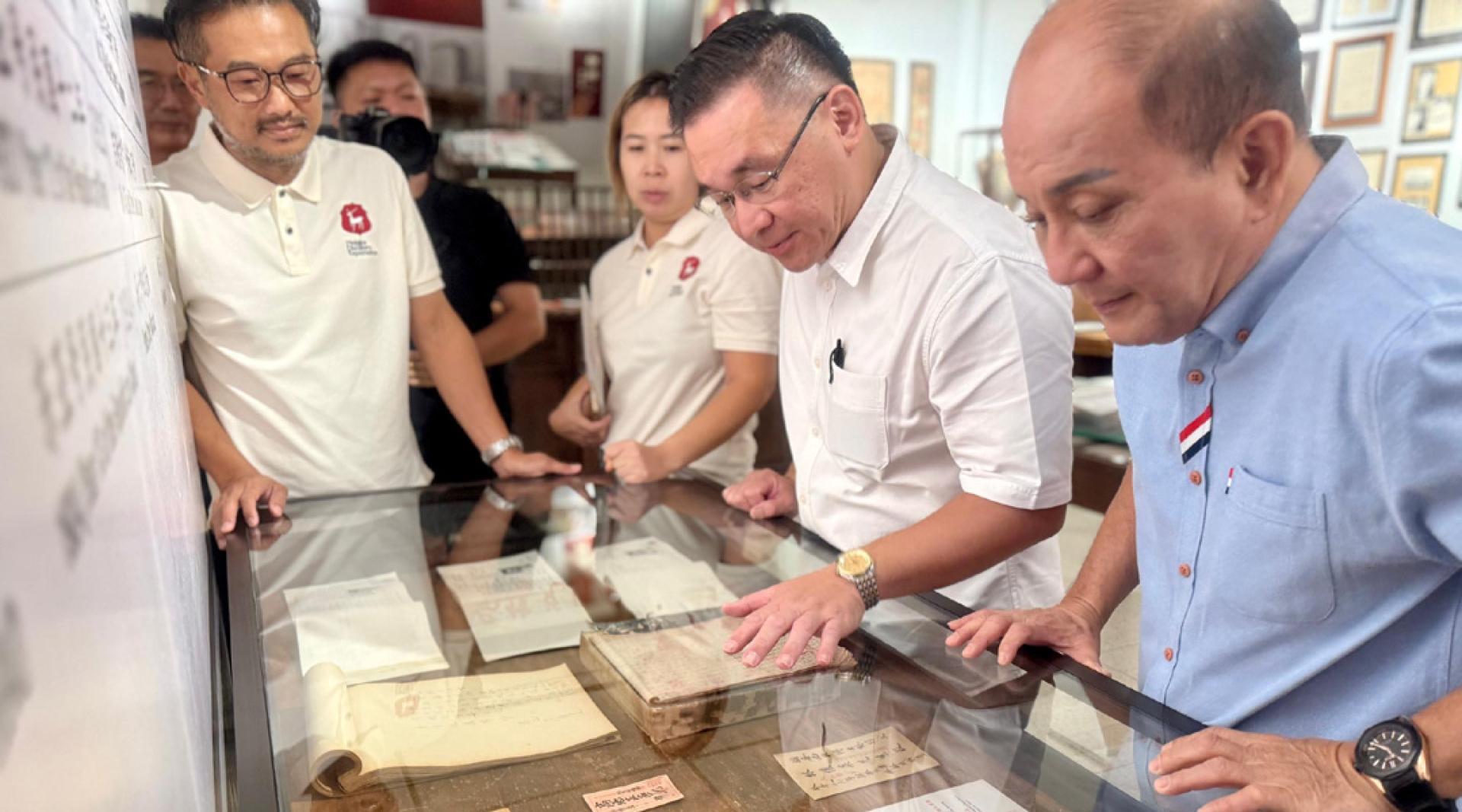
To better understand this history, Gan Tianlu recently visited the newly established experience center at Cheng Jin Yuan, a century-old brewery in Malacca, to read preserved Qiaopi documents up close.
“When the Qiaopi Archives — Overseas Chinese Remittance Letters were inscribed on UNESCO’s Memory of the World Register (June 2013), their significance surpassed that of family letters and became a shared historical memory for Chinese people worldwide,” Gan Tianlu said.
“When the film ended, I found it difficult to leave my seat for a long time.” Khoo Guo Ping, an advisor to the Malaysian SME Association, watched the film during a break while attending a conference in China. The grandma in the movie reminded him of his own family’s stories.
Khoo’s grandfather was born in Rong County, Guangxi, China, and went to Nanyang to seek a livelihood as a child. Years later, he returned to his hometown and brought Khoo’s grandma to Nanyang. The most unforgettable story was about his grandma. As told by family, she gave birth to her first child at home at the age of 17 — there was no hospital, no doctor, only boiling water and a piece of white cloth. This young mother welcomed new life into the world alone in Nanyang.
Khoo Guo Ping said that this urge to trace family memories also inspired him to return to his ancestral homeland, where he wrote the book 'Seeking Roots.'
Liao Zhiguo, Vice President of the Malaysia-China Friendship Association in Sabah, said he saw his grandfather writing Qiaopi when he was young, but never truly understood their significance until after watching the movie. He remembered that the remittance letters recorded amounts sent and also said: “I hope you bring the children to Sabah as soon as possible, so that we can all be reunited.”
Liao Zhiguo said the most moving part of the movie is that “it lets us know where we come from, and that we must not forget how our ancestors persevered.”