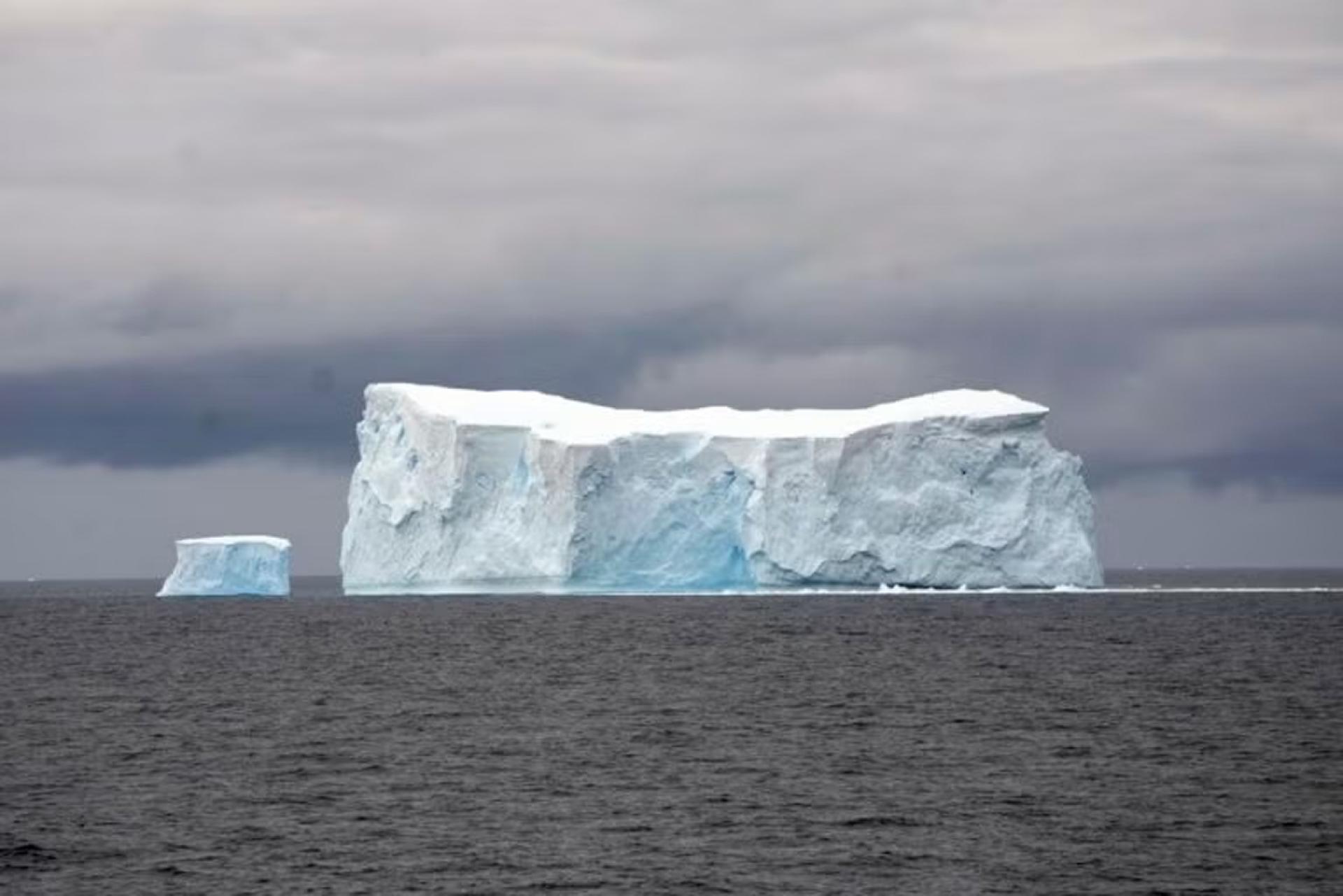
British scientists say that a globally pioneering artificial intelligence (AI) tool is able to catalogue and track icebergs, recording the process by which they break into small pieces. This may help fill a 'major blind spot' in the field of climate change prediction.
When melting in open water, icebergs release vast amounts of freshwater, impacting global climate patterns and altering ocean currents and ecosystems. However, scientists have long struggled to keep track of these massive floating objects. Once they break up into thousands of small ice fragments, their ultimate fate and impact on the climate are largely lost in the ocean.
To address this 'major blind spot,' the British Antarctic Survey has developed an AI system that can automatically identify and name each iceberg, while also tracking their often decades-long journeys until they finally sink to the ocean floor.
This AI system uses satellite images to capture the unique shapes of icebergs as they break off from land glaciers and ice sheets. As the icebergs gradually break up, the system performs a massive puzzle-solving task, linking smaller 'offspring icebergs' back to their 'parent iceberg,' thus constructing an unprecedentedly detailed iceberg genealogy.
On the 5th, the British Antarctic Survey stated that this AI system, tested using satellite observation data from Greenland, provides scientists with 'crucial new information' and improves the accuracy of future climate predictions.
The Antarctic Survey added that, as global warming is expected to accelerate glacier melt, understanding where these massive freshwater ice masses melt into the ocean is especially important.