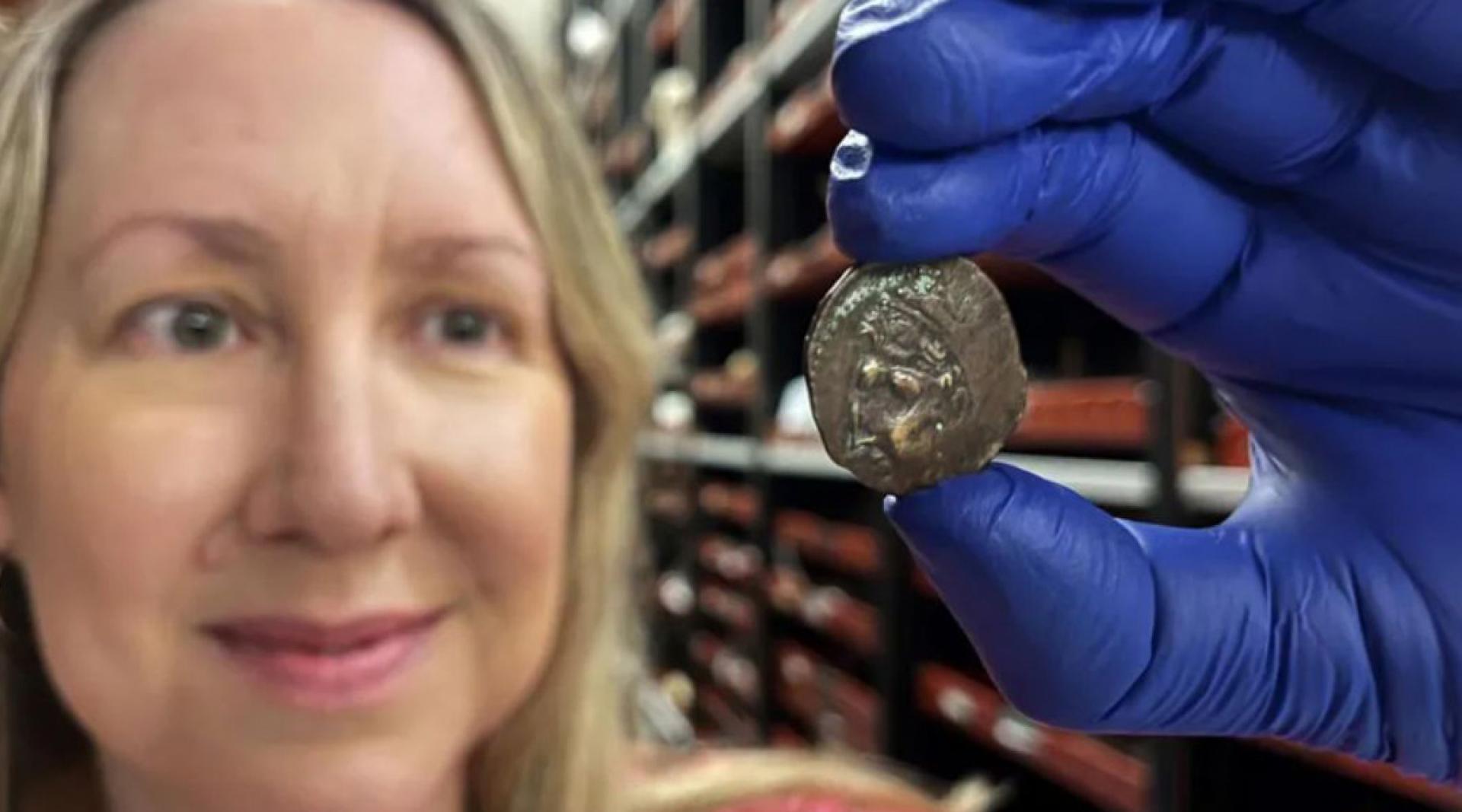
(UK, 15th) — A mysterious foreign coin used by a British citizen to pay for a bus fare in the 1950s, after being kept in private hands for over 70 years, has recently been confirmed as an artifact from an ancient civilization more than 2,000 years old. This coin was first collected by a cashier of the Leeds City Transport Department and passed on to his grandson; it was not until recently, when the now 77-year-old grandson decided to trace its history, that its astonishing origin from 1st century BC Carthaginian civilization was uncovered.
According to the BBC, the coin was first picked out by James, a cashier at Leeds City Transport, while counting bus fares, and given to his grandson Peter as a small toy. Recently, the now 77-year-old Peter was suddenly inspired to investigate the coin’s origin, and was shocked to find that it was actually minted in the city of Cádiz, Spain, by Carthaginians—descendants of the Phoenicians—during the 1st century BC in the ancient Mediterranean world.
Expert appraisal revealed one side of the ancient coin bears the face of the deity Melqart, who is depicted wearing the iconic lion skin headdress, much like the Greek hero Heracles. Reportedly, the Phoenicians at that time deliberately incorporated Greek-style designs on their coins in order to attract international merchants; on the reverse side of the coin are two fish motifs, reflecting Cádiz’s historical status as a major trading port in the ancient Mediterranean.
As for how this 2,000-year-old artifact ended up mysteriously appearing on a 20th-century British bus, Peter speculates that it was most likely brought back as a keepsake by soldiers returning from overseas service after World War II. He recalled, “Just after World War II, soldiers often brought coins from various countries back home. Although neither my grandfather nor I were coin collectors, the unique designs were like rare treasures to me back then.”
Upon learning of the coin’s immense historical value, Peter proactively contacted the Leeds Museum and Art Gallery, and decided to donate it unconditionally.
He said the coin had always fascinated him, and after learning about its astonishing background, his only thought was to hand it over to a professional institution for public research. He firmly believes that if his grandfather could know that the coin finally became a museum treasure, he would be immensely proud. Currently, the coin has officially become part of the ancient currency collection at Leeds Discovery Centre, available for researchers and visitors from around the world.