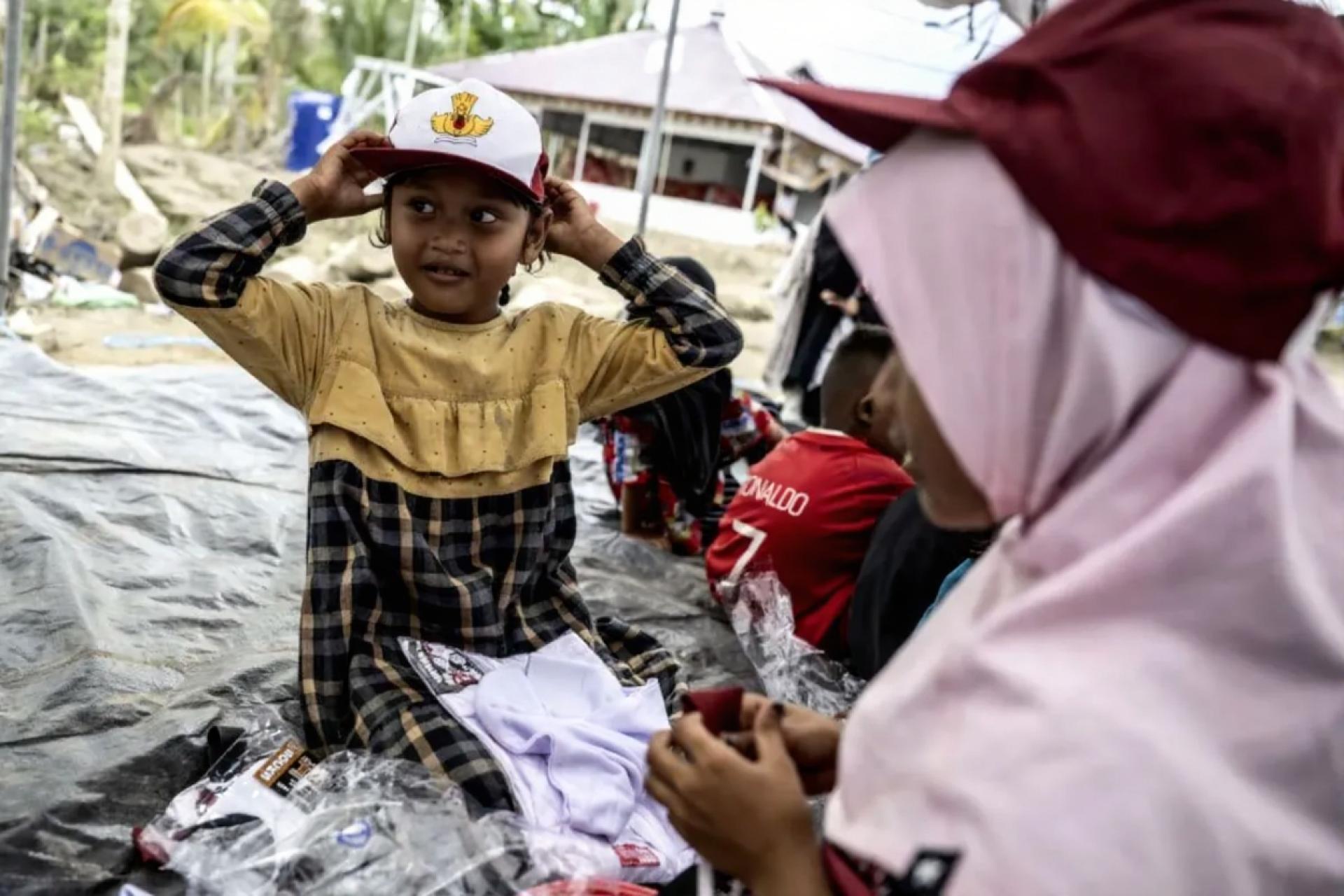
(East Aceh, 28th) The floods and landslides that struck the three provinces of Sumatra at the end of November 2025 not only claimed over 1,200 lives but also had a profound impact on the disaster areas, with education being particularly hard hit. At least 4,800 schools were affected, and many students can only attend classes in makeshift, basic structures.
“Teacher, will we still have class tomorrow?”
This simple question from children in the disaster zone of East Aceh deeply touched the volunteers and changed their original plans.
At that time, volunteers from the Atjeh Connection Foundation were carrying out a mobile emergency school project in several flood-stricken areas, including the villages of Lanto Pangyan Rubeuk in West Judo, East Aceh. These teaching activities were originally planned to be held only once at each location, alongside medical check-ups and medicine distribution.
However, the children's request to continue classes inspired the volunteers to make the program a regular event, in order to safeguard the dreams of the next generation.
Although the flash floods last November destroyed the school building of Lanto Pangyan Rubeuk National Elementary School, the students' passion for learning was undampened. Now, a white tent has replaced the classroom swept away by the floods, serving as a temporary classroom.
Inside the tent, there are no walls to separate different grades, nor are there chairs; the students sit directly on the ground, using small desks donated by volunteers. Simple lines on the blackboard are the only markers distinguishing different lessons.
Despite the basic conditions, these young survivors still harbor big dreams.
“Me! Me! I want to be president!”
A little girl named Nisha shouted, raising both her hands. When a classmate reminded her that she once said she wanted to be a police officer, she smiled and clarified that she wanted to be either a president or a police officer—or even both, if possible.
The other children also eagerly shared their dreams: some wanted to become doctors, astronauts, teachers, soldiers, or entrepreneurs; one aspired to become a “palm oil plantation owner”, as their village is surrounded by plantations and most residents make a living from the palm oil industry.
The mud left by the flood has yet to dry, but the sound of children talking about their dreams echoes all around, demonstrating their remarkable resilience. Even though the school was swept away by the floods, they remain steadfast in pursuing their goals.
Lanto Pangyan Rubeuk National Elementary School teacher Rahmat Shah pointed out that, despite holding classes in emergency tents, students are still full of enthusiasm, partly thanks to donated school supplies.
In order to safeguard students’ passion for learning, the teachers—who are also disaster victims themselves—brave the muddy and rugged roads to reach the makeshift school. The roads are steep and winding, slippery and difficult to traverse when it rains, with vehicles at risk of slipping at any time.
Emergency classes are held from Monday to Saturday each week, from 8 am to 12 noon, with 10 teachers teaching 34 students. However, teaching activities are suspended during Ramadan.
The curriculum includes science and social studies, math, Indonesian, Islamic education, and sports.
Nevertheless, the temporary school is still in urgent need of more facilities and support. Rahmat said that if the school building cannot be rebuilt in the short term, at the very least more whiteboards and textbooks are needed. The floods washed away most of the teaching materials, making it difficult for teachers to conduct lessons.
Currently, the school has only one whiteboard and also lacks classroom dividers, affecting the quality of teaching.
To support the recovery of the disaster-affected areas of Sumatra, Indonesia’s Minister of Primary and Secondary Education, Abdul Mu’ti, proposed an additional budget of 2.4 trillion rupiah (about USD 142.8 million) for post-disaster reconstruction in Aceh, North Sumatra, and West Sumatra.
This budget will be used for school repairs, special teacher allowances, and government-funded equipment distribution. The Ministry of Education has also drawn up a series of work plans in late February, including coordinating meetings with education departments of the three affected provinces to accelerate recovery progress.
In addition, the authorities will sign cooperation agreements to drive the reconstruction of 1,204 schools; continue handling special allowances for 13,000 teachers, totaling 8.33 billion rupiah; and restore government assistance worth 6 billion rupiah, including ICT equipment, laboratory apparatus, sports gear, cleaning tools, and educational toys.
Through the combined efforts of volunteers, teachers, and the government, work is underway to rebuild the education system in disaster-hit areas, ensuring that under the shadow of floods and landslides, children still hold hope for the future.
This simple question from children in the disaster zone of East Aceh deeply touched the volunteers and changed their original plans.
At that time, volunteers from the Atjeh Connection Foundation were carrying out a mobile emergency school project in several flood-stricken areas, including the villages of Lanto Pangyan Rubeuk in West Judo, East Aceh. These teaching activities were originally planned to be held only once at each location, alongside medical check-ups and medicine distribution.
However, the children's request to continue classes inspired the volunteers to make the program a regular event, in order to safeguard the dreams of the next generation.
Although the flash floods last November destroyed the school building of Lanto Pangyan Rubeuk National Elementary School, the students' passion for learning was undampened. Now, a white tent has replaced the classroom swept away by the floods, serving as a temporary classroom.
Inside the tent, there are no walls to separate different grades, nor are there chairs; the students sit directly on the ground, using small desks donated by volunteers. Simple lines on the blackboard are the only markers distinguishing different lessons.
Despite the basic conditions, these young survivors still harbor big dreams.
“Me! Me! I want to be president!”
A little girl named Nisha shouted, raising both her hands. When a classmate reminded her that she once said she wanted to be a police officer, she smiled and clarified that she wanted to be either a president or a police officer—or even both, if possible.
The other children also eagerly shared their dreams: some wanted to become doctors, astronauts, teachers, soldiers, or entrepreneurs; one aspired to become a “palm oil plantation owner”, as their village is surrounded by plantations and most residents make a living from the palm oil industry.
The mud left by the flood has yet to dry, but the sound of children talking about their dreams echoes all around, demonstrating their remarkable resilience. Even though the school was swept away by the floods, they remain steadfast in pursuing their goals.
Lanto Pangyan Rubeuk National Elementary School teacher Rahmat Shah pointed out that, despite holding classes in emergency tents, students are still full of enthusiasm, partly thanks to donated school supplies.
In order to safeguard students’ passion for learning, the teachers—who are also disaster victims themselves—brave the muddy and rugged roads to reach the makeshift school. The roads are steep and winding, slippery and difficult to traverse when it rains, with vehicles at risk of slipping at any time.
Emergency classes are held from Monday to Saturday each week, from 8 am to 12 noon, with 10 teachers teaching 34 students. However, teaching activities are suspended during Ramadan.
The curriculum includes science and social studies, math, Indonesian, Islamic education, and sports.
Nevertheless, the temporary school is still in urgent need of more facilities and support. Rahmat said that if the school building cannot be rebuilt in the short term, at the very least more whiteboards and textbooks are needed. The floods washed away most of the teaching materials, making it difficult for teachers to conduct lessons.
Currently, the school has only one whiteboard and also lacks classroom dividers, affecting the quality of teaching.
To support the recovery of the disaster-affected areas of Sumatra, Indonesia’s Minister of Primary and Secondary Education, Abdul Mu’ti, proposed an additional budget of 2.4 trillion rupiah (about USD 142.8 million) for post-disaster reconstruction in Aceh, North Sumatra, and West Sumatra.
This budget will be used for school repairs, special teacher allowances, and government-funded equipment distribution. The Ministry of Education has also drawn up a series of work plans in late February, including coordinating meetings with education departments of the three affected provinces to accelerate recovery progress.
In addition, the authorities will sign cooperation agreements to drive the reconstruction of 1,204 schools; continue handling special allowances for 13,000 teachers, totaling 8.33 billion rupiah; and restore government assistance worth 6 billion rupiah, including ICT equipment, laboratory apparatus, sports gear, cleaning tools, and educational toys.
Through the combined efforts of volunteers, teachers, and the government, work is underway to rebuild the education system in disaster-hit areas, ensuring that under the shadow of floods and landslides, children still hold hope for the future.