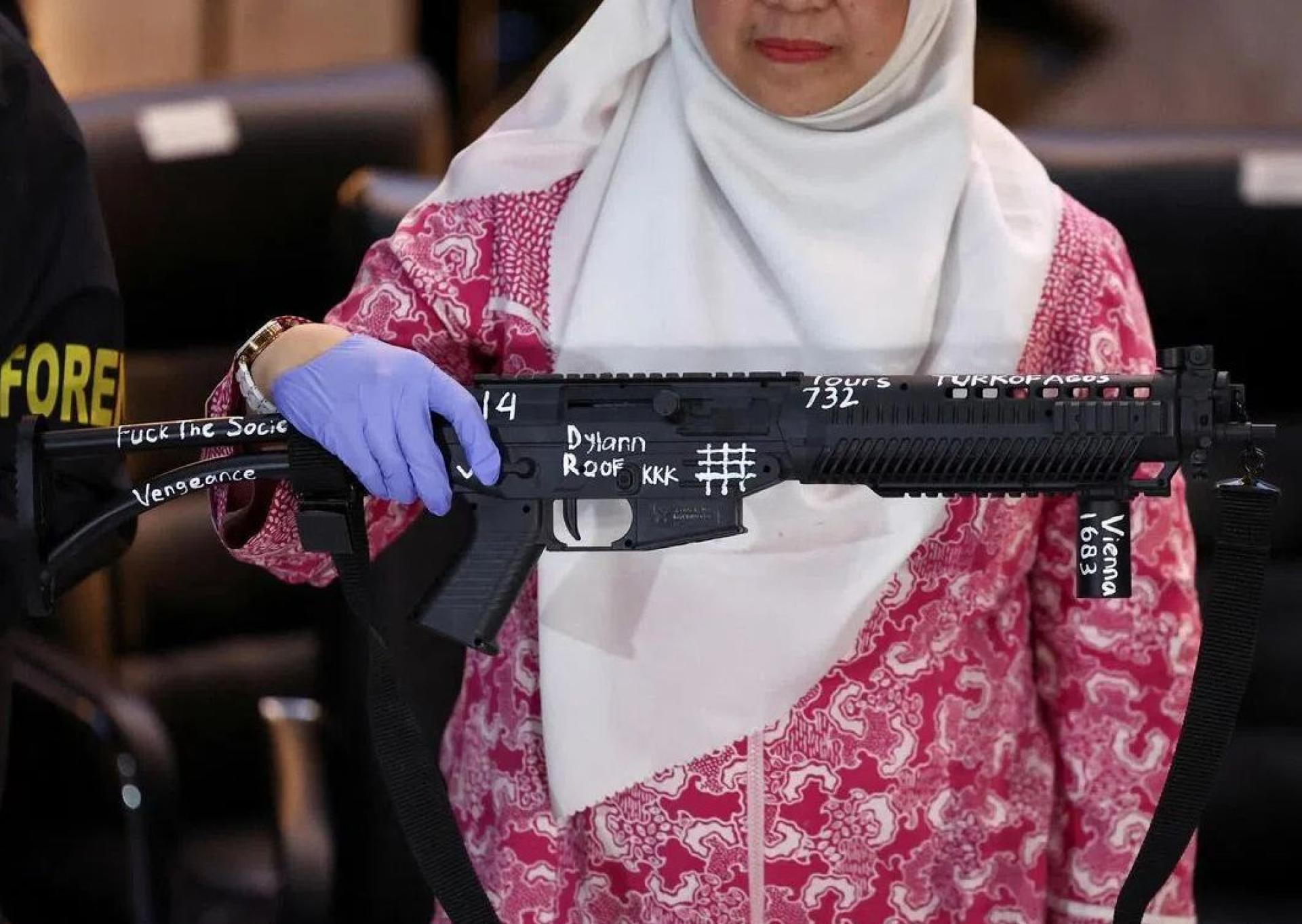
Security departments in many Southeast Asian countries are facing a covert and dangerous challenge: a growing number of non-white youths are being self-radicalized online under the influence of white supremacist and far-right extremist ideologies. Authorities warn that these young people have moved from expressing hateful speech online to plotting real-world violent attacks.
Last November in Jakarta, Indonesia, a high school student allegedly carried out a bomb attack at a campus, injuring 96 people. Police investigations found that this student was evidently influenced by Brenton Tarrant, the perpetrator of the 2019 Christchurch mosque shootings in New Zealand.
Indonesian police said that at least 97 youths have currently been placed under surveillance due to exposure to content that glorifies mass violence and white supremacy, with the youngest being only 11 years old. The content they have accessed is mainly spread through the messaging app Telegram. Police say that at least two people planned copycat attacks after the Jakarta campus explosion.
Security officials in Singapore, Malaysia, Thailand, and the Philippines are also deeply concerned about this rising trend.
Notably, these brainwashed youths are not whites, but rather from local Southeast Asian ethnic groups. According to a statement released by Singapore's Internal Security Department, some detainees had plotted attacks believing that doing so could protect their nation's existing racial and religious structure.
Indonesian security officials revealed that some other suspects, although not holding similar motives, were nevertheless inspired by the violent acts of far-right attackers.
Prakash, a Southeast Asia researcher at the Washington-based Center for the Study of Organized Hate, said many of the young people detained or monitored seem to be disillusioned and lonely individuals, "who, after being radicalized by far-right rhetoric, have turned toward a nihilistic worldview."
Researchers point out that white supremacist content is being "localized" and utilized in Southeast Asia.