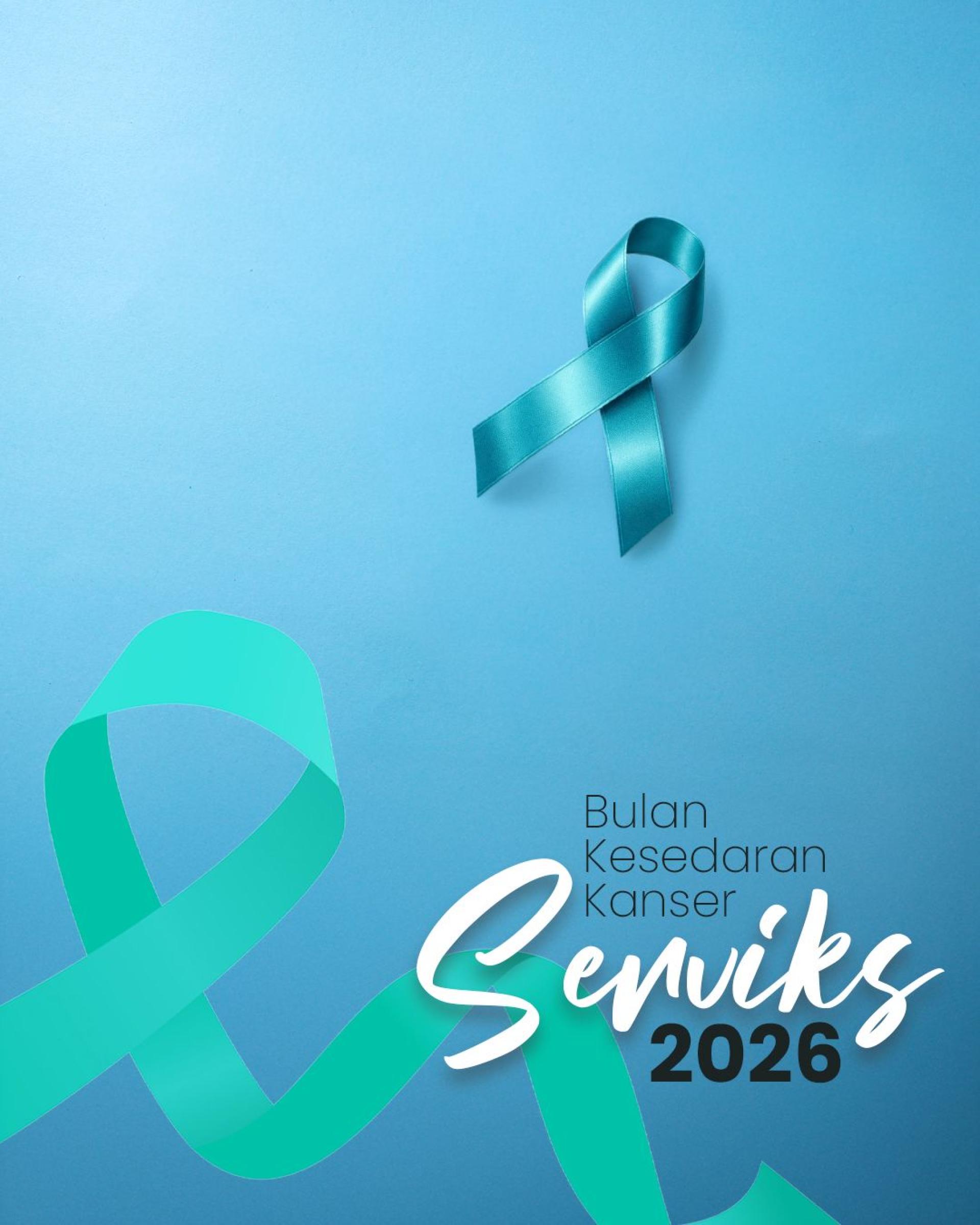
(Bandar Seri Begawan, 23rd) January is Cervical Cancer Awareness Month, an event held annually worldwide to raise public awareness of cervical cancer, its prevention measures, and the importance of regular screening. Cervical cancer is one of the leading causes of death among women globally.
In Brunei, cervical cancer is currently the fifth most common cancer among women, compared to being the second most common in 2009.
The decline in incidence is credited to the launch of the National Cervical Cancer Prevention and Control Program in 2009. The program aims to prevent and reduce the incidence and mortality rate of cervical cancer.
During the 2026 Cervical Cancer Awareness Month celebration, Minister of Health Dato Isham issued a statement noting that one of the key initiatives of the National Cervical Cancer Prevention and Control Program was the establishment of a national Pap smear screening registry in 2011.
Minister: “Through this initiative, the previously fragmented approach to cervical cancer screening has been replaced with a more systematic screening system. This system invites women aged 20 to 65 to undergo regular cervical cancer screening every three years via mailed invitations.”
At the same time, the Human Papillomavirus (HPV) vaccination program was also launched in 2011, providing all women under the age of 45 with access to the HPV vaccine.
The minister stated that in 2012, the program was expanded nationwide to include schools, targeting Year 7 female students. From 2012 to 2021, bivalent and quadrivalent vaccines were used; starting in 2022, the nonavalent vaccine is used.
The minister pointed out that the type and dosage of vaccine is determined by evidence-based practices and vaccine availability. Brunei has a high and stable HPV vaccination rate, exceeding 90% every year, meeting the World Health Organization (WHO) target of 90% HPV vaccination coverage among girls by age 15.
With technological advances, the Ministry of Health announced in August 2024 that HPV testing had begun to be introduced as the primary method of cervical cancer screening, replacing the previously used Pap smear.
"HPV testing is a high-tech method recommended by the World Health Organization (WHO) and is able to detect high-risk HPV infections such as HPV 16 and HPV 18 before cellular changes occur in the cervix."
"Unlike Pap smears, which can only detect changes after they have occurred in the cells, HPV testing enables earlier detection."
Additionally, the minister said: “Women can collect samples themselves without the use of a speculum, providing greater flexibility and privacy for all women and is expected to improve participation rates in cervical cancer screening.”
At the same time, the minister added that the Ministry of Health had updated and released the National Cervical Cancer Prevention and Control Guidelines in January 2025.
The guideline is a comprehensive technical reference document for health professionals and policy-makers, aligned with evidence-based practices and the latest recommendations.
The minister stated that the guideline covers key aspects of cervical cancer prevention, early detection, and clinical management. It serves as a reference for clinical practice and treatment methods for cervical cancer, thereby strengthening disease prevention and control efforts at the national level.
In addition, another new initiative launched through the BruHealth application is the cervical cancer risk assessment feature. Through this function, eligible women can answer several screening questions to determine whether an HPV test is advisable. Those advised to undergo HPV testing can make testing arrangements through the BruHealth app.
According to the Global Strategy to Accelerate the Elimination of Cervical Cancer as a Public Health Problem, WHO has set the target for 70% of women to be screened with a high-tech test by ages 35 and 45.
Before the introduction of HPV testing, the screening participation or coverage rate for cervical cancer using Pap smears in 2018 was about 50%.
According to local research, the three main reasons for not undergoing a cervical smear are: worry about unfavorable results, embarrassment, and being too busy with family matters.
“Since the introduction of HPV testing from August 2024 to August 2025, a total of 9,248 HPV tests have been conducted. This figure is higher than previous annual Pap smear testing numbers, which averaged about 3,505 tests per year during 2009–2024, and about 3,122 for the period of August 2023–August 2024. However, further monitoring and data collection is needed to confirm this upward trend.
“Overall, between 2009 and 2024, a total of 58,884 women have undergone at least one cervical cancer screening in their lifetime, with the target population being 88,080.
“This means Brunei’s cervical cancer screening coverage rate was 66.9% from 2009 to 2024.”
The minister said that with the introduction of HPV testing, the Ministry of Health hopes Brunei’s cervical cancer screening coverage will increase further, as this method is easier for women to accept, especially for those less familiar with using a speculum for screening.
“Increasing screening coverage helps facilitate the early detection of pre-cancerous or cancerous lesions, allowing for timely treatment and reducing the disease burden.”
In view of this, let us work together to improve public awareness of the importance of cervical cancer screening.
In Brunei, cervical cancer is currently the fifth most common cancer among women, compared to being the second most common in 2009.
The decline in incidence is credited to the launch of the National Cervical Cancer Prevention and Control Program in 2009. The program aims to prevent and reduce the incidence and mortality rate of cervical cancer.
During the 2026 Cervical Cancer Awareness Month celebration, Minister of Health Dato Isham issued a statement noting that one of the key initiatives of the National Cervical Cancer Prevention and Control Program was the establishment of a national Pap smear screening registry in 2011.
At the same time, the Human Papillomavirus (HPV) vaccination program was also launched in 2011, providing all women under the age of 45 with access to the HPV vaccine.
The minister stated that in 2012, the program was expanded nationwide to include schools, targeting Year 7 female students. From 2012 to 2021, bivalent and quadrivalent vaccines were used; starting in 2022, the nonavalent vaccine is used.
The minister pointed out that the type and dosage of vaccine is determined by evidence-based practices and vaccine availability. Brunei has a high and stable HPV vaccination rate, exceeding 90% every year, meeting the World Health Organization (WHO) target of 90% HPV vaccination coverage among girls by age 15.
With technological advances, the Ministry of Health announced in August 2024 that HPV testing had begun to be introduced as the primary method of cervical cancer screening, replacing the previously used Pap smear.
"HPV testing is a high-tech method recommended by the World Health Organization (WHO) and is able to detect high-risk HPV infections such as HPV 16 and HPV 18 before cellular changes occur in the cervix."
"Unlike Pap smears, which can only detect changes after they have occurred in the cells, HPV testing enables earlier detection."
Additionally, the minister said: “Women can collect samples themselves without the use of a speculum, providing greater flexibility and privacy for all women and is expected to improve participation rates in cervical cancer screening.”
At the same time, the minister added that the Ministry of Health had updated and released the National Cervical Cancer Prevention and Control Guidelines in January 2025.
The guideline is a comprehensive technical reference document for health professionals and policy-makers, aligned with evidence-based practices and the latest recommendations.
The minister stated that the guideline covers key aspects of cervical cancer prevention, early detection, and clinical management. It serves as a reference for clinical practice and treatment methods for cervical cancer, thereby strengthening disease prevention and control efforts at the national level.
In addition, another new initiative launched through the BruHealth application is the cervical cancer risk assessment feature. Through this function, eligible women can answer several screening questions to determine whether an HPV test is advisable. Those advised to undergo HPV testing can make testing arrangements through the BruHealth app.
According to the Global Strategy to Accelerate the Elimination of Cervical Cancer as a Public Health Problem, WHO has set the target for 70% of women to be screened with a high-tech test by ages 35 and 45.
Before the introduction of HPV testing, the screening participation or coverage rate for cervical cancer using Pap smears in 2018 was about 50%.
According to local research, the three main reasons for not undergoing a cervical smear are: worry about unfavorable results, embarrassment, and being too busy with family matters.
“Since the introduction of HPV testing from August 2024 to August 2025, a total of 9,248 HPV tests have been conducted. This figure is higher than previous annual Pap smear testing numbers, which averaged about 3,505 tests per year during 2009–2024, and about 3,122 for the period of August 2023–August 2024. However, further monitoring and data collection is needed to confirm this upward trend.
“Overall, between 2009 and 2024, a total of 58,884 women have undergone at least one cervical cancer screening in their lifetime, with the target population being 88,080.
“This means Brunei’s cervical cancer screening coverage rate was 66.9% from 2009 to 2024.”
The minister said that with the introduction of HPV testing, the Ministry of Health hopes Brunei’s cervical cancer screening coverage will increase further, as this method is easier for women to accept, especially for those less familiar with using a speculum for screening.
“Increasing screening coverage helps facilitate the early detection of pre-cancerous or cancerous lesions, allowing for timely treatment and reducing the disease burden.”
In view of this, let us work together to improve public awareness of the importance of cervical cancer screening.