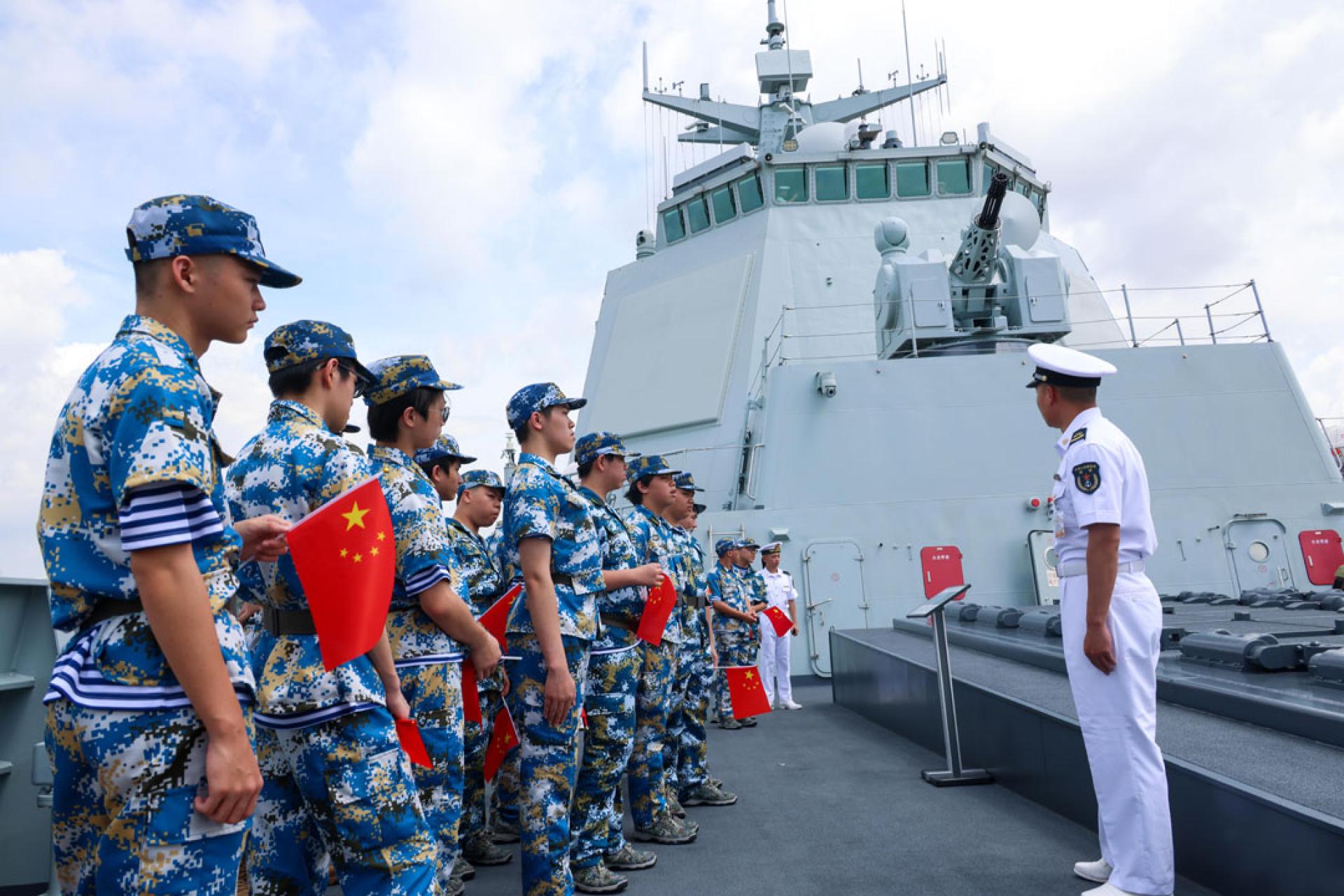
This year's Japan "Defense White Paper" expressed concern over the expansion of Chinese military activities in the Pacific, stating that China's military developments are Japan's "biggest unprecedented strategic challenge."
According to Kyodo News, Japanese Defense Minister Shinjiro Koizumi reported the 2026 edition of the "Defense White Paper" at a cabinet meeting on Tuesday.
The white paper points out that activities by Chinese aircraft carriers and others in the Pacific are continuously expanding, emphasizing that China's military movements "are matters of serious concern and constitute the biggest unprecedented strategic challenge," and proposes that Japan should respond through cooperation with allies and like-minded countries.
Regarding Chinese aircraft carriers, the white paper states that as of the end of May this year, the Liaoning had sailed in the Pacific 13 times, and the Shandong 9 times. In June last year, Japan for the first time detected the simultaneous presence of two aircraft carriers in the Pacific, and in November last year, China's third aircraft carrier entered service. The white paper analyzes that China is enhancing its ability to carry out operations at sea and in the air further from its shores.
Regarding the PLA's exercises around Taiwan, the white paper notes that "these may be part of drills intended for military operations to unify Taiwan," and believes that Chinese military activities are becoming more frequent, "and it cannot be denied that cross-strait tensions could escalate further."
The white paper also expresses serious concern about strengthening cooperation between China and Russia, details the joint flights and navigation exercises conducted by Chinese and Russian bombers and naval vessels, and points out that North Korea may enhance its military capabilities over the medium to long term through cooperation with Russia.
Regarding the U.S. Trump administration's announced "National Security Strategy," the white paper points out that it "shows a posture of prioritizing the United States above all else," and writes that the United States advocates "peace through strength" in its "National Defense Strategy" and calls for allies to increase their share of the burden.
The "new ways of combat"—such as the use of drones and artificial intelligence (AI)—that emerged in the Russia-Ukraine conflict are also a focus of attention in the white paper. To secure defense equipment, the white paper states it is necessary to maintain and strengthen domestic defense production capabilities and technological foundations, and also proposes measures to improve the treatment of Self-Defense Force personnel.