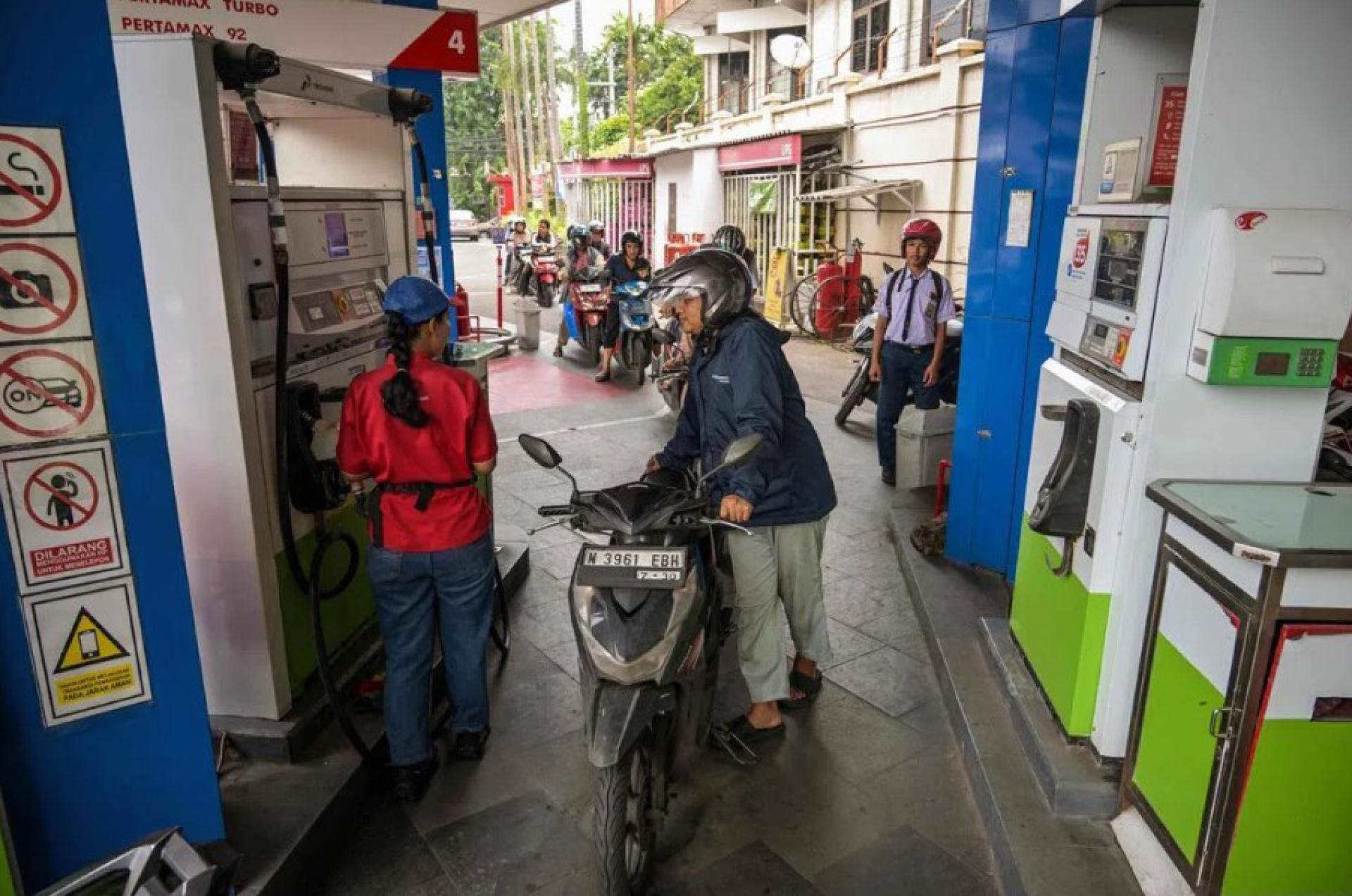
(Indonesia, 15th) The ongoing conflict in the Middle East has pushed up international oil prices, putting the Indonesian government, which already faces tight fiscal space, in a dilemma between continuing to subsidize domestic oil prices and passing on rising costs to consumers. Authorities are now considering relaxing the statutory fiscal deficit ceiling to maintain macroeconomic stability.
Indonesia’s Coordinating Minister for Economic Affairs, Airlangga, stated during a cabinet meeting on Friday (March 13) that, considering current international oil price trends, it may be difficult for Indonesia to maintain the legally mandated deficit ceiling. He has proposed to President Prabowo the issuance of a temporary regulation, similar to those enacted during the COVID-19 pandemic, to relax the deficit limit.
Airlangga said authorities calculated scenarios based on oil prices ranging from USD 86 to USD 115 per barrel (approximately MYR 339 to 453), and in all cases, the deficit would breach the ceiling.
Last year, Indonesia’s deficit already reached 2.92%, leaving almost no buffer. Indonesian law stipulates that the deficit must not exceed 3% of GDP.
During the COVID-19 pandemic, the Indonesian government enacted a regulation permitting the deficit to exceed the statutory limit for three years. This gave the government more room to expand welfare programs and aid measures to keep the economy running, and when reallocating expenditures, the government did not need prior approval from parliament.
Dr. Siwage Dharma Negara, Senior Fellow and Co-coordinator of the Indonesia Studies Programme at Singapore’s ISEAS-Yusof Ishak Institute, noted in an interview that relaxing the deficit restriction would send a signal of weakened fiscal discipline externally.
“Investors have always regarded the 3% deficit ceiling as a key pillar of Indonesia’s macroeconomic stability. If the government makes an exception, borrowing costs and bond yields may rise, and the various rating agencies are currently closely watching Indonesia’s fiscal outlook.”
Indonesia is an oil importer and has long subsidized domestic oil prices through the national budget. This year’s budget earmarked IDR 381.3 trillion (about SGD 28.7 billion) for energy subsidies and transfers to state energy enterprises. According to independent nonprofit think tank Energy Shift Institute, for every 1 USD increase in international oil prices, the Indonesian government must allocate an extra IDR 7 trillion in subsidies.
Finance Minister Sri Mulyani Indrawati stated in the past week that the authorities do not currently plan to increase domestic oil prices, but if international prices remain high, the government may have no choice but to do so.
While the Indonesian government emphasizes that fuel reserves are sufficient, some consumers remain uneasy. After Iran closed the Strait of Hormuz on March 2, panic buying occurred in cities such as Medan, Banda Aceh, and East Java province, causing long lines at many fuel stations. Jakarta, the capital, did not experience similar situations; drivers interviewed there reported nothing unusual.
Siwage noted that raising domestic oil prices is a “politically sensitive” decision and might spark public protests.
“A rise in oil prices directly impacts the cost of living. Transportation costs increase, which in turn pushes up food and daily necessities prices. For many Indonesians, especially lower-income families, this means a decline in purchasing power. More broadly, it will also impact overall consumption.”
M. Rizal Taufikurahman, Head of the Macroeconomic & Financial Center at the Institute for Development of Economics and Finance (INDEF), said that if international oil prices exceed the price assumed in the government budget, the likelihood of a domestic oil price adjustment will increase, which will push up inflation. In the past, every time Indonesia raised domestic oil prices, the inflation rate increased by 0.5 to 1.5 percentage points. But if the government keeps increasing energy subsidies, resources for key areas fostering long-term growth will be reduced.
Sri Mulyani earlier indicated that the government will develop measures to prevent the deficit from expanding, including reallocating spending. Budgets for less important projects may be cut; funding for key programs will remain unchanged but allocations will be adjusted.
As an example, Sri Mulyani said that the budget for the nationwide free nutritious meals program for children will not be affected, but authorities will look to save costs in other procurement, such as motorbikes and computers.
Interviewed scholars suggested that, in order for Indonesia to maintain domestic oil prices, spending on other projects should be cut in the short term, or targeted subsidies and assistance should be provided to low-income and vulnerable groups; over the medium and long term, the country needs to explore energy diversification to reduce its reliance on imported fuel.
Airlangga said authorities calculated scenarios based on oil prices ranging from USD 86 to USD 115 per barrel (approximately MYR 339 to 453), and in all cases, the deficit would breach the ceiling.
Last year, Indonesia’s deficit already reached 2.92%, leaving almost no buffer. Indonesian law stipulates that the deficit must not exceed 3% of GDP.
During the COVID-19 pandemic, the Indonesian government enacted a regulation permitting the deficit to exceed the statutory limit for three years. This gave the government more room to expand welfare programs and aid measures to keep the economy running, and when reallocating expenditures, the government did not need prior approval from parliament.
Dr. Siwage Dharma Negara, Senior Fellow and Co-coordinator of the Indonesia Studies Programme at Singapore’s ISEAS-Yusof Ishak Institute, noted in an interview that relaxing the deficit restriction would send a signal of weakened fiscal discipline externally.
“Investors have always regarded the 3% deficit ceiling as a key pillar of Indonesia’s macroeconomic stability. If the government makes an exception, borrowing costs and bond yields may rise, and the various rating agencies are currently closely watching Indonesia’s fiscal outlook.”
Indonesia is an oil importer and has long subsidized domestic oil prices through the national budget. This year’s budget earmarked IDR 381.3 trillion (about SGD 28.7 billion) for energy subsidies and transfers to state energy enterprises. According to independent nonprofit think tank Energy Shift Institute, for every 1 USD increase in international oil prices, the Indonesian government must allocate an extra IDR 7 trillion in subsidies.
Finance Minister Sri Mulyani Indrawati stated in the past week that the authorities do not currently plan to increase domestic oil prices, but if international prices remain high, the government may have no choice but to do so.
While the Indonesian government emphasizes that fuel reserves are sufficient, some consumers remain uneasy. After Iran closed the Strait of Hormuz on March 2, panic buying occurred in cities such as Medan, Banda Aceh, and East Java province, causing long lines at many fuel stations. Jakarta, the capital, did not experience similar situations; drivers interviewed there reported nothing unusual.
Siwage noted that raising domestic oil prices is a “politically sensitive” decision and might spark public protests.
“A rise in oil prices directly impacts the cost of living. Transportation costs increase, which in turn pushes up food and daily necessities prices. For many Indonesians, especially lower-income families, this means a decline in purchasing power. More broadly, it will also impact overall consumption.”
M. Rizal Taufikurahman, Head of the Macroeconomic & Financial Center at the Institute for Development of Economics and Finance (INDEF), said that if international oil prices exceed the price assumed in the government budget, the likelihood of a domestic oil price adjustment will increase, which will push up inflation. In the past, every time Indonesia raised domestic oil prices, the inflation rate increased by 0.5 to 1.5 percentage points. But if the government keeps increasing energy subsidies, resources for key areas fostering long-term growth will be reduced.
Sri Mulyani earlier indicated that the government will develop measures to prevent the deficit from expanding, including reallocating spending. Budgets for less important projects may be cut; funding for key programs will remain unchanged but allocations will be adjusted.
As an example, Sri Mulyani said that the budget for the nationwide free nutritious meals program for children will not be affected, but authorities will look to save costs in other procurement, such as motorbikes and computers.
Interviewed scholars suggested that, in order for Indonesia to maintain domestic oil prices, spending on other projects should be cut in the short term, or targeted subsidies and assistance should be provided to low-income and vulnerable groups; over the medium and long term, the country needs to explore energy diversification to reduce its reliance on imported fuel.