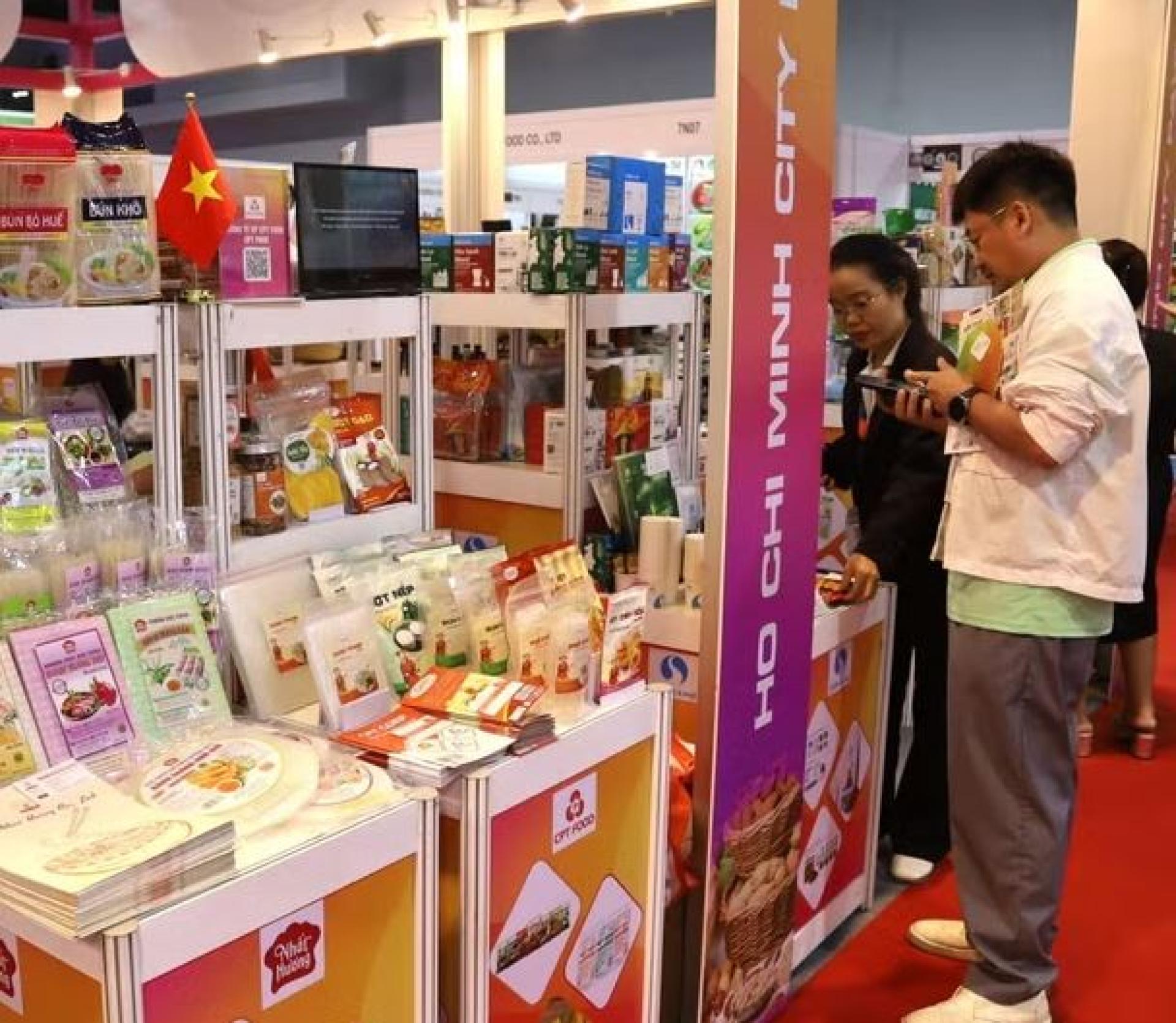
The halal market is opening up vast development space for Vietnamese enterprises. Industry insiders believe that meeting halal standards not only helps expand export markets but also creates more opportunities to attract investors and partners from Islamic countries.
Data show that the halal market currently covers more than 110 countries and regions worldwide, with over 2 billion consumers. In 2024, the Islamic consumer economy reached US$2.6 trillion, and it is expected to grow to US$3.56 trillion by 2029, showing enormous development potential.
Today, the halal economy is no longer limited to the food sector, but has developed into a complete economic ecosystem covering beverages, cosmetics, pharmaceuticals, logistics, tourism, hotels, finance, and a range of service industries.
In Da Nang, as the city’s development space continues to expand, the locality has significant advantages in industrial production, food processing, aquatic products, specialty agricultural products, logistics, ports, aviation, and tourism, and has the potential to deeply participate in regional and global halal value chains.
Huang Xunshan, Deputy Director of Da Nang Department of Industry and Trade, said that gradually establishing a production, business, and service ecosystem that meets halal standards will not only help expand export markets but also attract tourists, investors, and partners from Islamic countries.
Local company Meiphong Food Co., Ltd. specializes in producing roasted coconut cakes and began targeting the halal market four years ago. After nearly three years of completing all certification requirements, the company officially exported its first batch of halal products.
Currently, the company's products have successfully entered the Malaysian and Indonesian markets and are actively expanding into the Dubai and Indian markets.
Company manager Mei Shiyi said that after obtaining halal certification, the company continues to strictly implement quality management processes. The halal market not only opens up sales opportunities but also drives the enterprise to further standardize its overall production and operations system.
In addition, the international distribution group Lulu Group has been operating in Vietnam for 15 years and currently exports over 300 types of products to Islamic markets, including coconuts, packaged fruits, lemons, coffee, seafood, and rice.
Lulu Vietnam General Manager Mirash Basheer stated that Da Nang has many products with market potential, some of which have already obtained halal certification. He has visited local suppliers and manufacturers and will further promote market matchmaking and cooperation in the future.
Experts point out that for companies that have already entered the halal market, halal certification is only the “entry threshold.” To maintain and expand market share in the long term, enterprises must continuously invest resources, improve product quality, and optimize packaging design and product competitiveness according to different market demands.
Today, the halal economy is no longer limited to the food sector, but has developed into a complete economic ecosystem covering beverages, cosmetics, pharmaceuticals, logistics, tourism, hotels, finance, and a range of service industries.
In Da Nang, as the city’s development space continues to expand, the locality has significant advantages in industrial production, food processing, aquatic products, specialty agricultural products, logistics, ports, aviation, and tourism, and has the potential to deeply participate in regional and global halal value chains.
Huang Xunshan, Deputy Director of Da Nang Department of Industry and Trade, said that gradually establishing a production, business, and service ecosystem that meets halal standards will not only help expand export markets but also attract tourists, investors, and partners from Islamic countries.
Local company Meiphong Food Co., Ltd. specializes in producing roasted coconut cakes and began targeting the halal market four years ago. After nearly three years of completing all certification requirements, the company officially exported its first batch of halal products.
Currently, the company's products have successfully entered the Malaysian and Indonesian markets and are actively expanding into the Dubai and Indian markets.
Company manager Mei Shiyi said that after obtaining halal certification, the company continues to strictly implement quality management processes. The halal market not only opens up sales opportunities but also drives the enterprise to further standardize its overall production and operations system.
In addition, the international distribution group Lulu Group has been operating in Vietnam for 15 years and currently exports over 300 types of products to Islamic markets, including coconuts, packaged fruits, lemons, coffee, seafood, and rice.
Lulu Vietnam General Manager Mirash Basheer stated that Da Nang has many products with market potential, some of which have already obtained halal certification. He has visited local suppliers and manufacturers and will further promote market matchmaking and cooperation in the future.
Experts point out that for companies that have already entered the halal market, halal certification is only the “entry threshold.” To maintain and expand market share in the long term, enterprises must continuously invest resources, improve product quality, and optimize packaging design and product competitiveness according to different market demands.