(Bandar Seri Begawan, 12th) Chronic kidney disease (CKD) is one of the major public health challenges facing the world, with its incidence having risen significantly in recent years.
It is estimated that nearly 10% of the global population, or more than 850 million people, suffer from various forms of kidney disease. This makes chronic kidney disease one of the leading causes of death worldwide.
With increasing life expectancy and a rise in non-communicable diseases such as diabetes and hypertension, the number of CKD patients is expected to continue to grow.
The World Health Organization (WHO), through the 78th World Health Assembly, has listed kidney disease as a global health priority. This designation highlights the need for urgent action and coordinated effort at both international and national levels to address the ever-increasing CKD cases.
Chronic kidney disease is a long-term condition in which kidney function gradually deteriorates. In its early stages, the disease often occurs silently without obvious symptoms, leading many patients to remain unaware. If not detected or treated in time, CKD may progress to end-stage kidney disease (ESKD), which is the most severe stage, at which point the kidneys can no longer perform basic bodily functions. At this stage, treatments such as dialysis or kidney transplantation are needed to allow the patient to continue living a quality life.
The Minister of Health Dato Seri Setia Dr. Haji Mohd Isham released a statement in conjunction with World Kidney Day.
In Brunei, chronic kidney disease has become an increasingly serious public health challenge. According to data from the Brunei Dialysis and Transplant Registry (BDTR), a total of 1,163 people are expected to be registered by 2025.
Patients with end-stage kidney disease have increased by 7% compared to 2024. This trend not only shows a rise in cases of kidney failure, but also highlights the number of people affected and
their quality of life.
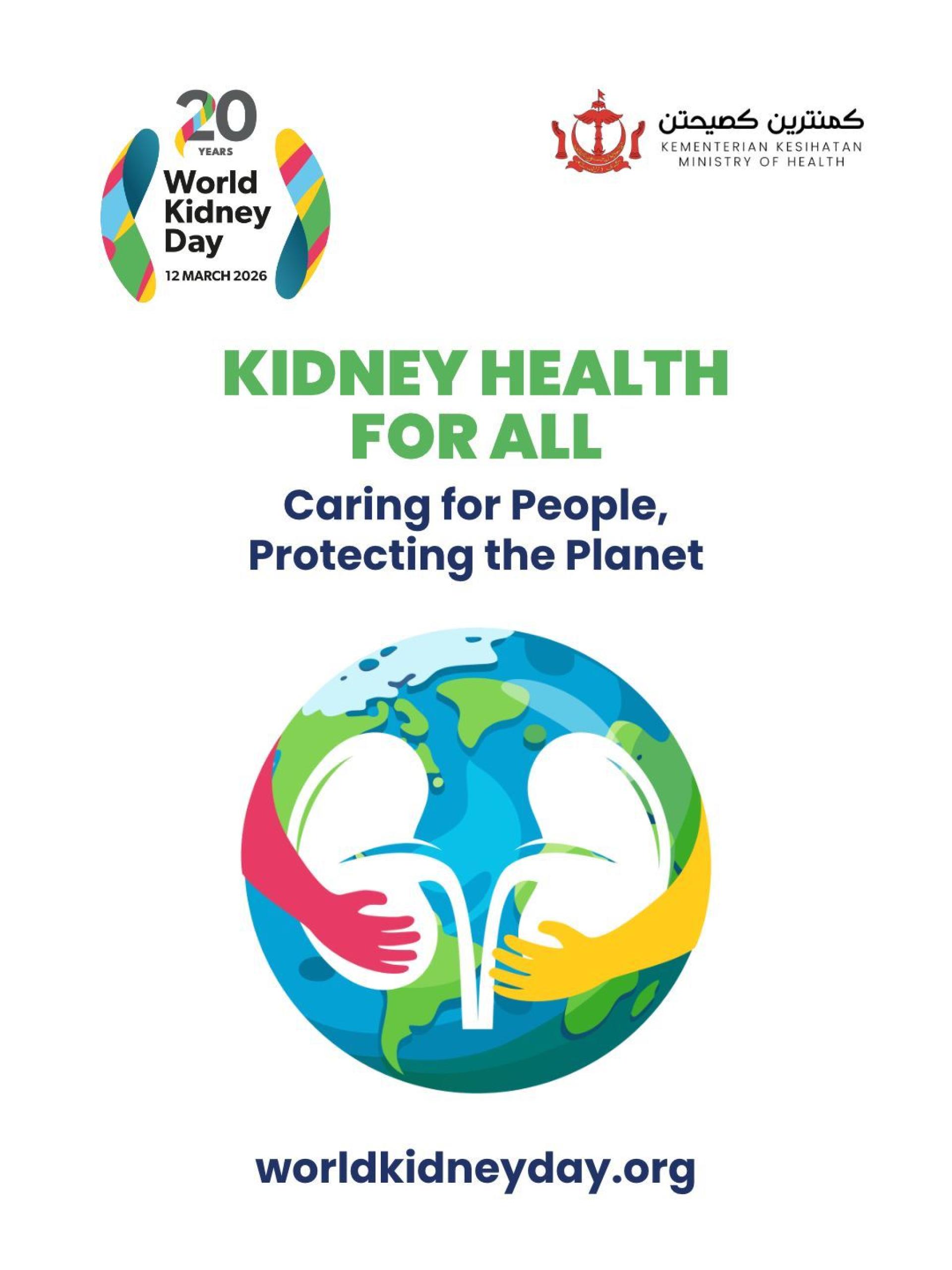
This year’s World Kidney Day (WKD) will be held on 12 March 2026, with the theme “Kidney Health for All: Caring for Humans, Protecting the Planet.” “Caring for Humans” emphasizes the importance of prevention, early detection, and effective management of CKD, especially for high-risk groups such as those with diabetes and hypertension. Early intervention can reduce the risk of progression to kidney failure and extend patient lifespans.
“Protecting the Planet” highlights that end-stage kidney disease (ESKD) patients require significant resources. Hemodialysis is a life-saving therapy for ESKD patients.
However, this therapy is also one of the most resource-intensive treatments in modern healthcare systems. A single hemodialysis session requires large amounts of treated water, significant electricity, and various disposable materials, such as dialysis sets, catheters, and personal protective equipment.
As the number of patients in Brunei requiring long-term dialysis continues to rise, ensuring the sustainability of kidney care has become a major challenge.
In line with this year’s theme, Brunei’s 2026 World Kidney Day celebrations highlight that prevention and early detection are the foundations of sustainable kidney care. The Ministry of Health is strengthening a comprehensive strategy, which includes risk-based screening, close cooperation with primary healthcare institutions, and timely provision of proven essential medicines.
Upholding the concept of “Protecting the Planet,” The Ministry of Health is committed to responsibly strengthening high-quality kidney care practices, including promoting home-based therapies, especially peritoneal dialysis, to ensure patient health while making more efficient use of national resources and contributing to environmental protection.
Compared to receiving treatment at dialysis centers, home-based renal therapy offers significant natural advantages. This approach not only empowers patients, but also helps build a continuous and sustainable long-term healthcare system. The advantages include: i. reducing carbon emissions caused by frequent travel to and from dialysis centers; ii. reducing the burden on dialysis center infrastructure; iii. optimizing the use of center resources; and iv. promoting patient independence and improving quality of life.
Moreover, kidney transplantation remains the most effective and sustainable long-term treatment for kidney failure patients. Compared to ongoing dialysis, transplantation can reduce the long-term use of medical resources and improve patient survival and quality of life. At the same time, the Ministry of Health will continue to:
i. strengthen referral pathways for kidney transplant evaluations; ii. ensure kidney transplant operations meet established performance targets each year at local and regional levels; iii. strengthen cooperation with regional transplant centers;
iv. increase public awareness of organ donation; and v. support long-term post-transplant monitoring and care.
National-level shared responsibility and coordinated action. Through cooperation between healthcare providers, communities, and individuals, we can reduce preventable kidney failure, protect national medical resources, and preserve the health of future generations.
Therefore, take the opportunity to undergo health screening and understand your own health status. Prevention and early detection can only succeed with the joint efforts and cooperation of all relevant parties—medical professionals, patients, families, and the community. Let us work hand in hand to safeguard health and create a healthier, more prosperous future, in line with the national vision of “Together Building a Healthy Citizenry.”
It is estimated that nearly 10% of the global population, or more than 850 million people, suffer from various forms of kidney disease. This makes chronic kidney disease one of the leading causes of death worldwide.
With increasing life expectancy and a rise in non-communicable diseases such as diabetes and hypertension, the number of CKD patients is expected to continue to grow.
The World Health Organization (WHO), through the 78th World Health Assembly, has listed kidney disease as a global health priority. This designation highlights the need for urgent action and coordinated effort at both international and national levels to address the ever-increasing CKD cases.
The Minister of Health Dato Seri Setia Dr. Haji Mohd Isham released a statement in conjunction with World Kidney Day.
In Brunei, chronic kidney disease has become an increasingly serious public health challenge. According to data from the Brunei Dialysis and Transplant Registry (BDTR), a total of 1,163 people are expected to be registered by 2025.
Patients with end-stage kidney disease have increased by 7% compared to 2024. This trend not only shows a rise in cases of kidney failure, but also highlights the number of people affected and
their quality of life.
This year’s World Kidney Day (WKD) will be held on 12 March 2026, with the theme “Kidney Health for All: Caring for Humans, Protecting the Planet.” “Caring for Humans” emphasizes the importance of prevention, early detection, and effective management of CKD, especially for high-risk groups such as those with diabetes and hypertension. Early intervention can reduce the risk of progression to kidney failure and extend patient lifespans.
“Protecting the Planet” highlights that end-stage kidney disease (ESKD) patients require significant resources. Hemodialysis is a life-saving therapy for ESKD patients.
However, this therapy is also one of the most resource-intensive treatments in modern healthcare systems. A single hemodialysis session requires large amounts of treated water, significant electricity, and various disposable materials, such as dialysis sets, catheters, and personal protective equipment.
As the number of patients in Brunei requiring long-term dialysis continues to rise, ensuring the sustainability of kidney care has become a major challenge.
In line with this year’s theme, Brunei’s 2026 World Kidney Day celebrations highlight that prevention and early detection are the foundations of sustainable kidney care. The Ministry of Health is strengthening a comprehensive strategy, which includes risk-based screening, close cooperation with primary healthcare institutions, and timely provision of proven essential medicines.
Upholding the concept of “Protecting the Planet,” The Ministry of Health is committed to responsibly strengthening high-quality kidney care practices, including promoting home-based therapies, especially peritoneal dialysis, to ensure patient health while making more efficient use of national resources and contributing to environmental protection.
Compared to receiving treatment at dialysis centers, home-based renal therapy offers significant natural advantages. This approach not only empowers patients, but also helps build a continuous and sustainable long-term healthcare system. The advantages include: i. reducing carbon emissions caused by frequent travel to and from dialysis centers; ii. reducing the burden on dialysis center infrastructure; iii. optimizing the use of center resources; and iv. promoting patient independence and improving quality of life.
Moreover, kidney transplantation remains the most effective and sustainable long-term treatment for kidney failure patients. Compared to ongoing dialysis, transplantation can reduce the long-term use of medical resources and improve patient survival and quality of life. At the same time, the Ministry of Health will continue to:
i. strengthen referral pathways for kidney transplant evaluations; ii. ensure kidney transplant operations meet established performance targets each year at local and regional levels; iii. strengthen cooperation with regional transplant centers;
iv. increase public awareness of organ donation; and v. support long-term post-transplant monitoring and care.
National-level shared responsibility and coordinated action. Through cooperation between healthcare providers, communities, and individuals, we can reduce preventable kidney failure, protect national medical resources, and preserve the health of future generations.
Therefore, take the opportunity to undergo health screening and understand your own health status. Prevention and early detection can only succeed with the joint efforts and cooperation of all relevant parties—medical professionals, patients, families, and the community. Let us work hand in hand to safeguard health and create a healthier, more prosperous future, in line with the national vision of “Together Building a Healthy Citizenry.”