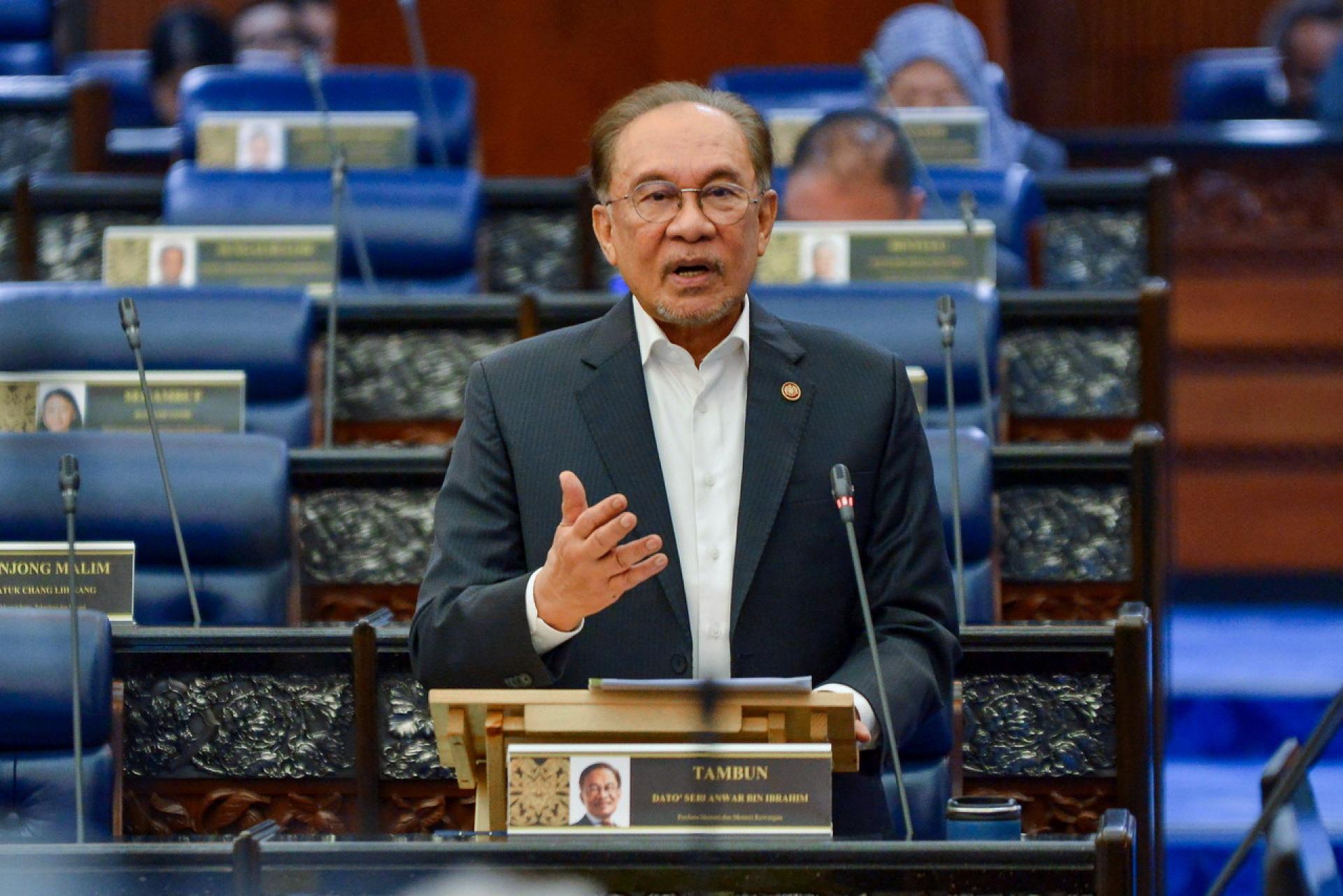
Prime Minister Datuk Seri Anwar stated that Malaysia aims to leverage the Malaysia-Thailand Border Economic Zone to allow the country’s fisheries and agricultural products to enter the markets of Laos, Cambodia, and Vietnam.
He said that the establishment of the Malaysia-Thailand Border Economic Zone is intended to further expand development opportunities. In the past, Malaysian products were restricted by Thai customs, making it difficult to enter the markets of Laos, Cambodia, and Vietnam.
"Now, under the latest agreement between both parties, the Prime Minister of Thailand has agreed to relax the relevant customs restrictions, making it easier in the future for our fisheries and agricultural products to enter those markets."
He made these remarks today (14th) during the Prime Minister's question and answer session in the Dewan Rakyat.
The Prime Minister said that in the past, the government’s development focus was mainly concentrated in the Klang Valley, and gradually extended to Negeri Sembilan, Melaka, and Penang, but now the focus is on the Johor-Singapore Economic Zone.
He added that the government is also simultaneously advancing the RECODA and SEDIA development plans in Sabah and Sarawak, as well as the new growth region of Kerian, Perak, led by national investment institutions and Sime Darby.
"In the Northern region, the government is actively promoting development covering Perlis, Kedah, Kelantan, Penang, and northern Perak."
Additionally, the Prime Minister said he has instructed the Ministry of Transport to explore making better use of the Thai-Malaysian border and Penang port to enhance infrastructure and logistics development in the nation’s border regions.
Anwar said that during his recent meeting with visiting Thai Prime Minister Srettha Thavisin, both sides discussed the topic of utilizing ports as a means of transportation, including new port development plans such as the Songkhla port and the Perlis Inland Port (PIP), covering transport development in ports, railways, and tourism.
He said the development of border areas also requires the improvement of infrastructure, provision of technical and vocational education and training, and supporting the creation of business opportunities for Bumiputera groups to ensure that areas with a Malay majority do not fall behind in the pace of national development.
Anwar also said that the Ministry of Entrepreneur Development and Cooperatives and the National Institute of Entrepreneurship have implemented various entrepreneurial guidance programs to boost participation, allowing local residents and youth to also benefit from job opportunities.
The Prime Minister also suggested that all state governments follow the example of the Kelantan state government by providing similar facilities in major development zones or around the Bukit Kayu Hitam area. The government can provide some funding to create job opportunities for small traders.
In addition, Anwar pointed out that large enterprises need to ensure that local residents receive opportunities for participation, employment, and training.
He gave the example that several large companies, such as Infineon at the Kulim Hi-Tech Park, have already launched training programs with universities to provide students with professional skills. If the companies are satisfied with the students’ performance, they will employ them.
He continued that the government attaches great importance to the development of SMEs. As of June 2026, financing provided through the PowerUp 10K program includes: RM400 million approved for Kelantan entrepreneurs and cooperatives, RM287 million for Kedah, and RM45 million for Perlis.
"We hope to ensure that grassroots people and small Bumiputera businesses can share in the fruits of economic growth and will not be marginalized."
"Now, under the latest agreement between both parties, the Prime Minister of Thailand has agreed to relax the relevant customs restrictions, making it easier in the future for our fisheries and agricultural products to enter those markets."
He made these remarks today (14th) during the Prime Minister's question and answer session in the Dewan Rakyat.
The Prime Minister said that in the past, the government’s development focus was mainly concentrated in the Klang Valley, and gradually extended to Negeri Sembilan, Melaka, and Penang, but now the focus is on the Johor-Singapore Economic Zone.
He added that the government is also simultaneously advancing the RECODA and SEDIA development plans in Sabah and Sarawak, as well as the new growth region of Kerian, Perak, led by national investment institutions and Sime Darby.
"In the Northern region, the government is actively promoting development covering Perlis, Kedah, Kelantan, Penang, and northern Perak."
Additionally, the Prime Minister said he has instructed the Ministry of Transport to explore making better use of the Thai-Malaysian border and Penang port to enhance infrastructure and logistics development in the nation’s border regions.
Anwar said that during his recent meeting with visiting Thai Prime Minister Srettha Thavisin, both sides discussed the topic of utilizing ports as a means of transportation, including new port development plans such as the Songkhla port and the Perlis Inland Port (PIP), covering transport development in ports, railways, and tourism.
He said the development of border areas also requires the improvement of infrastructure, provision of technical and vocational education and training, and supporting the creation of business opportunities for Bumiputera groups to ensure that areas with a Malay majority do not fall behind in the pace of national development.
Anwar also said that the Ministry of Entrepreneur Development and Cooperatives and the National Institute of Entrepreneurship have implemented various entrepreneurial guidance programs to boost participation, allowing local residents and youth to also benefit from job opportunities.
The Prime Minister also suggested that all state governments follow the example of the Kelantan state government by providing similar facilities in major development zones or around the Bukit Kayu Hitam area. The government can provide some funding to create job opportunities for small traders.
In addition, Anwar pointed out that large enterprises need to ensure that local residents receive opportunities for participation, employment, and training.
He gave the example that several large companies, such as Infineon at the Kulim Hi-Tech Park, have already launched training programs with universities to provide students with professional skills. If the companies are satisfied with the students’ performance, they will employ them.
He continued that the government attaches great importance to the development of SMEs. As of June 2026, financing provided through the PowerUp 10K program includes: RM400 million approved for Kelantan entrepreneurs and cooperatives, RM287 million for Kedah, and RM45 million for Perlis.
"We hope to ensure that grassroots people and small Bumiputera businesses can share in the fruits of economic growth and will not be marginalized."