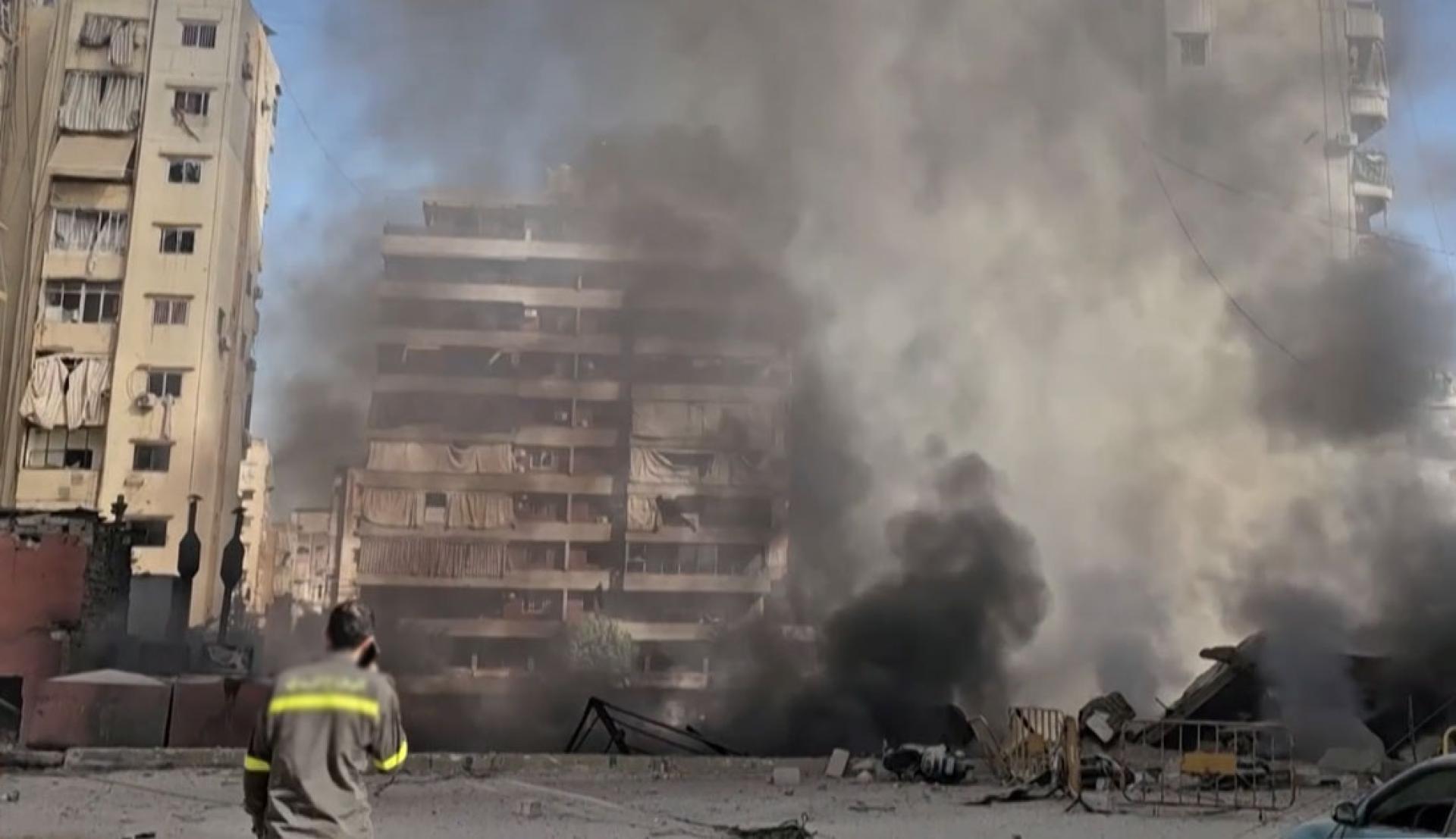
Lebanese Prime Minister Nawaf Salam stated that the government has prohibited Hezbollah from engaging in any military and security activities, requiring its role to be limited solely to the political realm; subsequently, Israel has continued to intensify airstrikes this week in the southern suburbs of Beirut, delivering strong blows to Hezbollah strongholds.
Salam made this announcement after Israel had previously carried out airstrikes on the southern suburbs of Beirut. Prior to this, Hezbollah had launched rocket and drone attacks on Israel, leading to retaliatory Israeli airstrikes.
On Monday (March 2), Salam issued a statement saying that the government will not allow any organization to conduct military or security operations within Lebanon that are not under state institutional control. He emphasized that all military activities by Hezbollah are illegal, and security forces must prevent any attacks launched from within Lebanese territory.
This week, the Iran-backed Hezbollah launched attacks on Israel to commemorate the late Iranian Supreme Leader Khamenei, triggering a strong military response from Israel. This also led to a significant decline in domestic political support for Hezbollah within Lebanon. Even traditionally supportive Shia communities in the south are now increasingly dissatisfied due to being on the front lines of Israeli operations.
Currently, as Israel shifts its air force to strike Hezbollah strongholds, US and Israeli attacks on Iran are entering a new phase as well. Earlier, US ground personnel reportedly met with Iranian Kurds to prepare, under their guidance, to search for Iran's hidden strongholds in remote desert areas, with expected deployment of mechanized units, especially drones. Military analysts believe that once the Iranian military launches missiles, a "grid point-to-point" strategy could be used to locate the relevant launch points.

Hezbollah in Lebanon is a unique organization that participates in politics and also maintains an independent armed force. It is widely believed to receive a certain degree of support from Iran. Therefore, in Middle Eastern geopolitics, Hezbollah is often seen as an important ally of Iran in Lebanon.
On Thursday (March 5), the Israeli military airstruck Dahiyeh and other southern suburbs of Beirut, which are key Hezbollah strongholds. Israel had previously warned residents to evacuate immediately, prompting many to flee their homes. Days of airstrikes, troop incursions into border villages, and evacuation orders have rapidly deteriorated the situation in southern Lebanon.
The Lebanese authorities said on Friday (March 6) that since Monday, Israeli airstrikes have killed at least 217 people and injured 798. UN officials say about 100,000 people have been forced to flee their homes.
Hezbollah Loses Domestic Political Support; Military Activities Declared Illegal
On the political front, the Lebanese government has declared Hezbollah's military activities illegal, a decision that has received support from the Amal Movement. This organization, led by Speaker Nabih Berri, has long been a key ally of Hezbollah. Berri's choice to support the government this time is seen as a sign of Hezbollah's increasing political isolation.
Meanwhile, some Shia residents have also begun to criticize Hezbollah, believing that its actions have once again brought conflict and destruction to the southern region. During Ramadan, many families have been forced to flee, with some refugees from southern Lebanon sleeping in their cars for consecutive days.
Many Lebanese believe that Hezbollah is dragging the country into a war that "Lebanon cannot afford and that does not serve the country’s interests."

Beirut Port Explosion: Public Questions Links to Armed Organizations
On August 4, 2020, a massive explosion occurred at the Port of Beirut when a large quantity of ammonium nitrate stored in a warehouse suddenly exploded, causing a huge shockwave and seriously damaging many areas of the city. The disaster resulted in over 200 deaths, thousands of injuries, and hundreds of thousands displaced.
This catastrophe shocked the world and dealt a heavy blow to Lebanon's economy and society. Following the incident, the local government faced intense domestic and international scrutiny, and citizens took to the streets to demand accountability and political reform.
After the explosion, some public speculation arose suggesting that the ammonium nitrate might be linked to Hezbollah's armed group, but to date, there is no conclusive evidence showing these materials were shipped from Iran to Lebanon or directly used by Hezbollah for military purposes.
Iran is widely regarded as Hezbollah's key ally, providing longstanding financial support, training, and some weapons and equipment. These supplies are usually delivered to Lebanon via Syrian land routes or air transport.