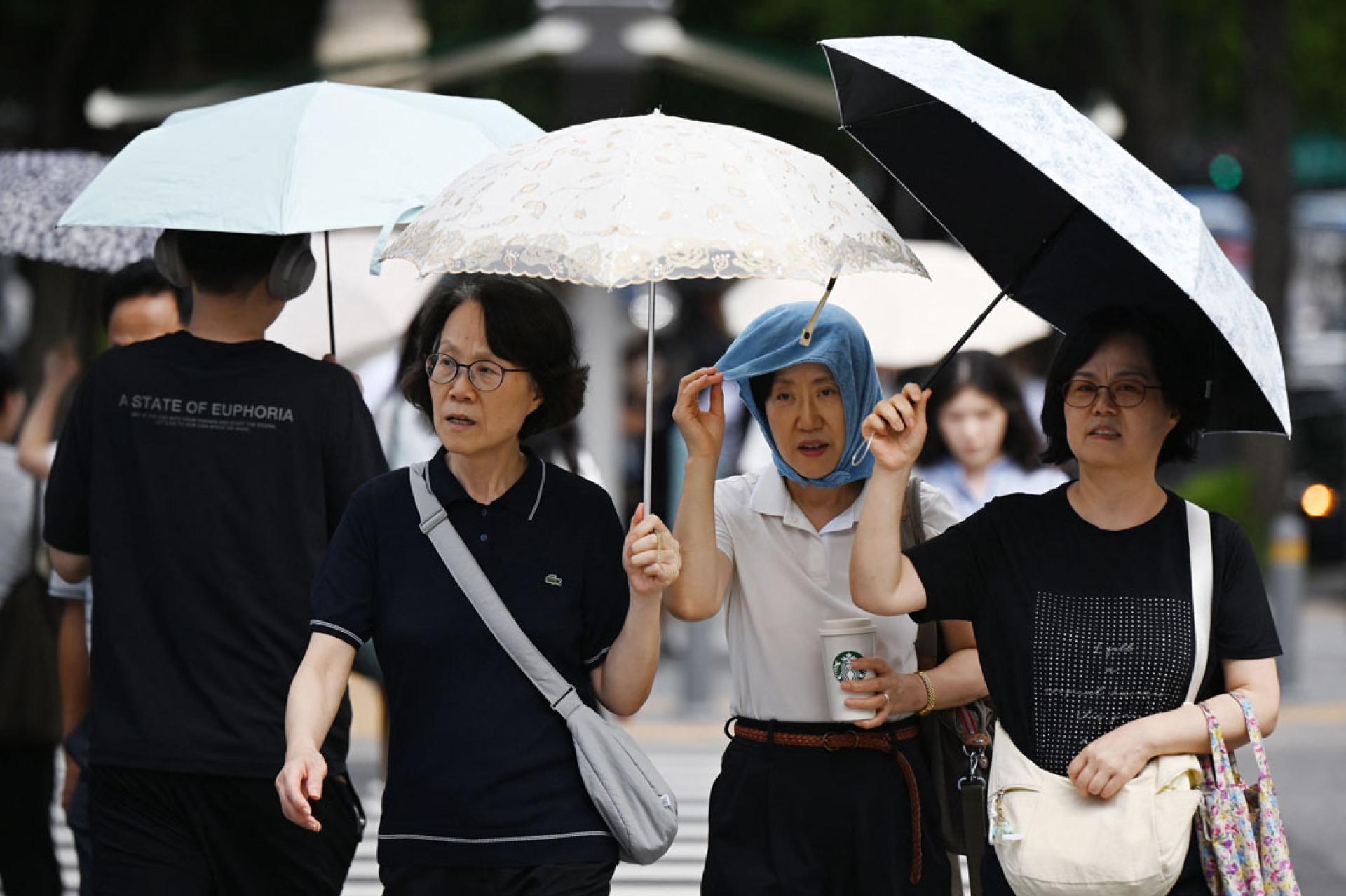
South Korea continues to experience severe heatwave conditions, with maximum temperatures approaching 40°C in many areas nationwide, including the capital region. The persistent high temperatures have resulted in 19 deaths and have had a serious impact on livestock, agriculture, and aquaculture industries. The South Korean government has classified the heatwave as a national disaster and activated a cross-departmental emergency response mechanism.3cbr>
The capital region and other western areas of South Korea continued to face extreme heat on Wednesday, with maximum temperatures in many parts of Gyeonggi-do forecasted to reach 39°C, Seoul and Gwangju at 38°C, and some areas approaching 40°C.3cbr>
According to the Korea Meteorological Administration, the North Pacific High is lingering over the eastern sea, and under the influence of easterly winds at its edge, airflow crossing the mountains creates a foehn effect that is continuously pushing up temperatures in western regions. The previous night, the capital area, Honam (Jeolla Provinces), and inland Yeongnam (Gyeongsang Provinces) once again experienced “tropical nights,” where nighttime temperatures did not drop below 25°C. At the Seoul office area of the Korea Meteorological Administration in Dongjak District, the minimum temperature exceeded 30°C, reaching the standard for an “ultra-tropical night.”3cbr>
The meteorological agency predicts that national high temperatures on the 5th will range between 30°C and 38°C, with hot weather expected to persist for the immediate future.3cbr>
Meteorological agencies in South Korea and Japan forecast that this year’s Typhoon No. 13 “Khanun” will continue moving west toward Shanghai, China, reaching waters about 530 kilometers southeast of Shanghai in the early morning of the 10th. Given its current path, the typhoon is unlikely to bring obvious cooling to South Korea or relieve drought in southern regions.
From the 9th to the 15th, minimum temperatures across South Korea are expected to range between 22°C and 27°C, and maximum temperatures between 29°C and 36°C. Although the extreme heat may ease slightly, temperatures overall will still be significantly above the average for this time of year.
Due to the extreme heat, pursuant to South Korea’s high-temperature weather emergency management regulations, the professional baseball league games scheduled for Tuesday at Jamsil in Seoul and Gwangju were canceled.
According to statistics from the Disease Control and Prevention Agency, just on the 2nd alone, emergency rooms nationwide admitted 108 patients with heat-related illnesses. Since the relevant statistics began on May 15 this year, the country has recorded more than 2,221 heat-related illness cases and 19 deaths.
Recently, outdoor workers have fainted or died from the heat in places such as Yeoncheon-gun and Yangju City in Gyeonggi-do, and Incheon. These cases involve construction workers, delivery riders, and elderly agricultural workers.
With the disaster situation ongoing, President Lee Jae-myung designated the current heatwave as a national disaster at a Cabinet meeting on the 4th, calling on all departments to intensify safety checks for outdoor workers, ensure proper heat protection for the elderly and other vulnerable groups, and comprehensively enhance the response to heatwave disasters.
According to the deployment, Gyeonggi-do has raised its Disaster and Safety Countermeasures Headquarters response level to Stage 2 and requested suspension of outdoor work at public construction sites; Seoul has activated its high-temperature emergency mechanism, increased water-spraying vehicle operations, and expanded the scale of cooling centers open to the public.
The prolonged heat is also having a significant impact on South Korea’s agriculture, forestry, and fisheries. Due to the ongoing high temperatures, many livestock and aquaculture farms across the country have suffered losses, with large numbers of pigs, chickens, and other livestock dying; in places such as Pohang and Jeju, sea farms have also seen mass deaths of temperature-sensitive fish due to rising seawater temperatures.