The Organisation for Economic Co-operation and Development (OECD) released its latest economic outlook report on the 2nd, projecting global economic growth rates of 3.2% and 2.9% for this year and next, respectively, consistent with forecasts made in September.
The report points out that the resilience of the global economy this year has exceeded expectations, but risks such as trade barriers, an artificial intelligence bubble, and fiscal vulnerabilities remain.
The report forecasts that, affected by increased tariffs, a slowdown in private consumption, and a potential federal government "shutdown," US economic growth will decrease from 2.8% in 2024 to 2.0% in 2025, and further slow to 1.7% in 2026. In 2025 and 2026, the Eurozone economy is expected to grow by 1.3% and 1.2% respectively.
The report believes that expansionary macroeconomic policy orientations, positive market expectations for new technologies, and the trade and investment growth driven by artificial intelligence-related sectors together are supporting global demand.
At the same time, the report warns that potential risks to the global economy are accumulating: escalation of trade protectionism could severely damage global supply chains and output; excessive asset valuations based on optimistic expectations for AI development could suddenly correct; countries' fiscal vulnerabilities may hinder economic growth.
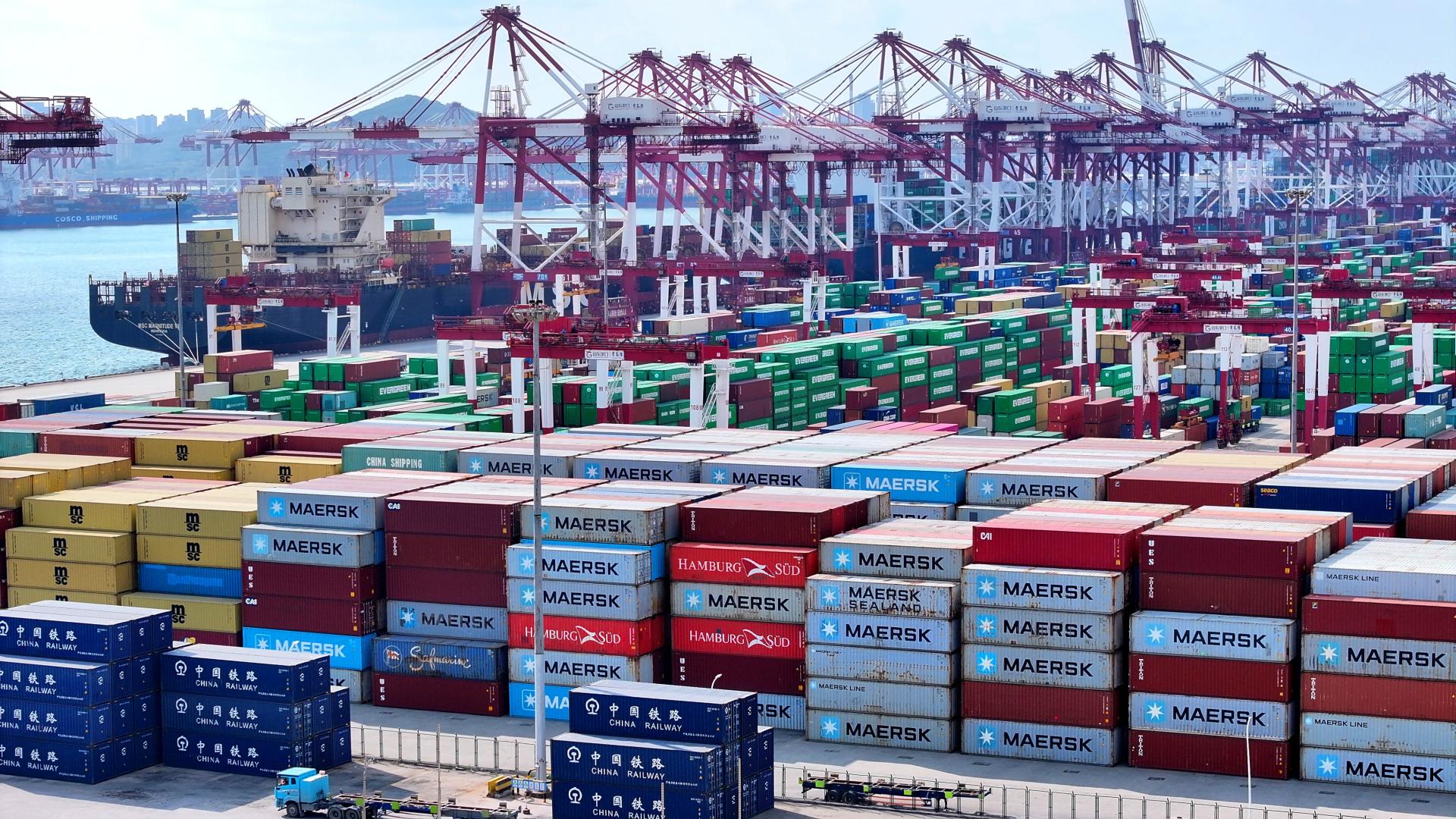
The report contends that the impact of US tariffs on the global economy is becoming more apparent, transmitting to spending choices, business costs, and consumer prices. These effects are particularly pronounced in the US economy.
The report mentions risks facing the US economy, such as demand pressure, sticky inflation, a weakening labor market, and large deficits.
The report shows that the total value of US imported goods subject to additional tariffs has declined significantly compared to non-tariffed imports, indicating tariffs are suppressing overall US demand, and trade volume is expected to remain under pressure. Considering the cooling labor market and the increase in consumer prices due to tariffs, US household consumption growth is expected to continue to slow, inflation may prove more persistent, thereby reducing the room for interest rate cuts.
The report argues that the current US fiscal policy path is unsustainable, and reducing large deficits is an urgent priority. In addition, the cyclically adjusted price-earnings ratio of the US S&P 500 stock index is approaching historical highs, indicating heightened risk of a significant market correction.
The report emphasizes that countries should strive to ease trade tensions, reduce policy uncertainty, curb inflation, manage financial risks, and advance reforms to boost productivity.