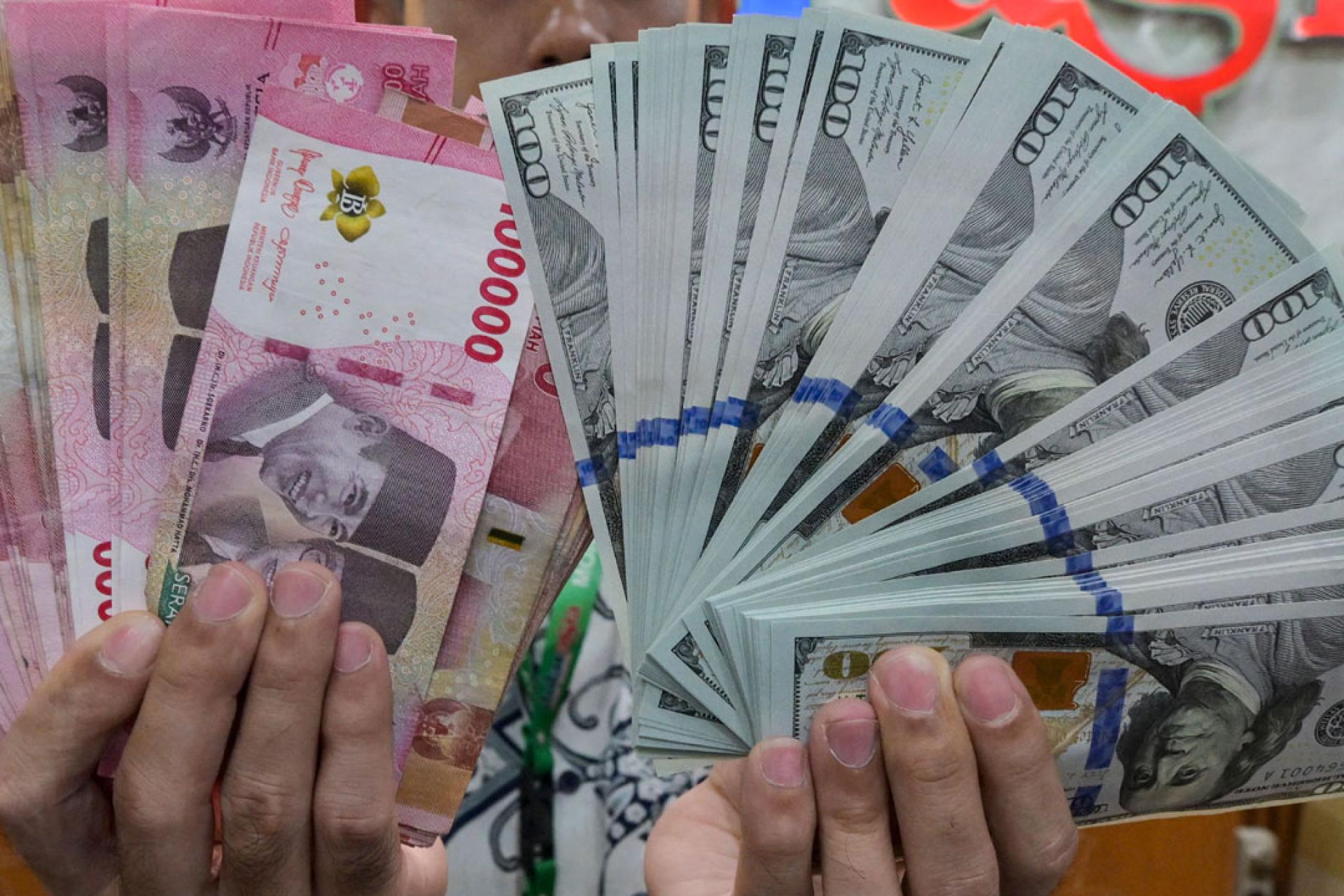
The Indonesian rupiah, Indonesia's local currency, continued its decline, approaching the 17,900 rupiah per US dollar level on the 29th. This marks the fifth consecutive trading day of decline for the rupiah.
According to a report from China News Service, citing data from Refinitiv and Bloomberg, the rupiah traded within a range of 17,800 to 17,885 per US dollar during the day, closing at 17,865 rupiah per US dollar—a 0.51% depreciation and a new low for the rupiah against the dollar.
A week ago, Indonesia’s central bank announced an increase in its benchmark interest rate by 50 basis points to 5.25%, exceeding market expectations. After the announcement, the rupiah briefly strengthened.
On the 29th, Bank Indonesia stated that the current pressure on the rupiah exchange rate continues to be affected by global uncertainty caused by the development of the Middle East conflict. In addition, against the backdrop of limited US dollar inflows, seasonal foreign currency demand is increasing, including for debt repayments.
The statement emphasized that, although the domestic market is closed, the central bank is still “intervening globally and around the clock” to maintain rupiah exchange rate stability. Specific measures include foreign exchange interventions in offshore and onshore markets, stabilizing the exchange rate through forward and spot transactions, and purchasing government bonds in the secondary market.
Bank Indonesia will further tighten regulations on US dollar purchases. Beginning in June 2026, the monthly proof-free purchase limit for individuals or institutions will be reduced from US$50,000 to US$25,000 per month.
Indonesian economists believe that the continued weakening of the rupiah reflects that Indonesia’s economy is facing both tightening external financial conditions and domestic structural pressures. The depreciation of the rupiah not only increases import raw material costs, but may also exacerbate imported inflation and weaken people’s purchasing power.