Chinese state media People’s Daily published an article criticizing and questioning the Philippines: “How can you blatantly violate your neighboring country’s interests, yet expect them to help you at critical moments? Where in the world does such logic exist?”
On Tuesday (April 21), the People’s Daily published an article under the byline 'Zhong Sheng' entitled 'The Philippines Should Create Conditions for Deepening Cooperation,' stating that the Philippines has recently been frequently expressing its desire to restart oil and gas cooperation with China. “However, even as it talks up ‘cooperation,’ the Philippine side’s infringements and provocations in the South China Sea have not stopped; in fact, they have intensified. On the one hand, it seeks economic help from China in times of need, while on the other, it stirs up trouble on issues concerning China’s core interests.”
The article urges that if the Philippines truly considers the interests of its own people and wishes to improve relations with China, it needs to fundamentally rethink its position, strategically align itself to the overall orientation of China-Philippines relations, and cease provocations and troublemaking through its actions.
The article emphasizes that China values the Philippines’ expressed desire for stable relations and strengthened dialogue, and hopes the Philippines will move forward together with China and take concrete actions to create the necessary conditions and atmosphere for the stability and improvement of bilateral relations.
Last month, Philippine President Ferdinand Marcos Jr. said during an interview with a Bloomberg TV anchor that he is open to resuming negotiations with China over joint oil and gas exploration projects in disputed areas of the South China Sea.
Subsequently, on March 26, Marcos Jr. signed an executive order adopting Filipino names for 131 maritime features in the disputed Kalayaan Island Group in the South China Sea, and directed that government documents and official maps be updated accordingly to strengthen administrative management and governance of these areas, and to support the Philippines’ efforts to uphold its sovereign rights. This move drew displeasure from China.
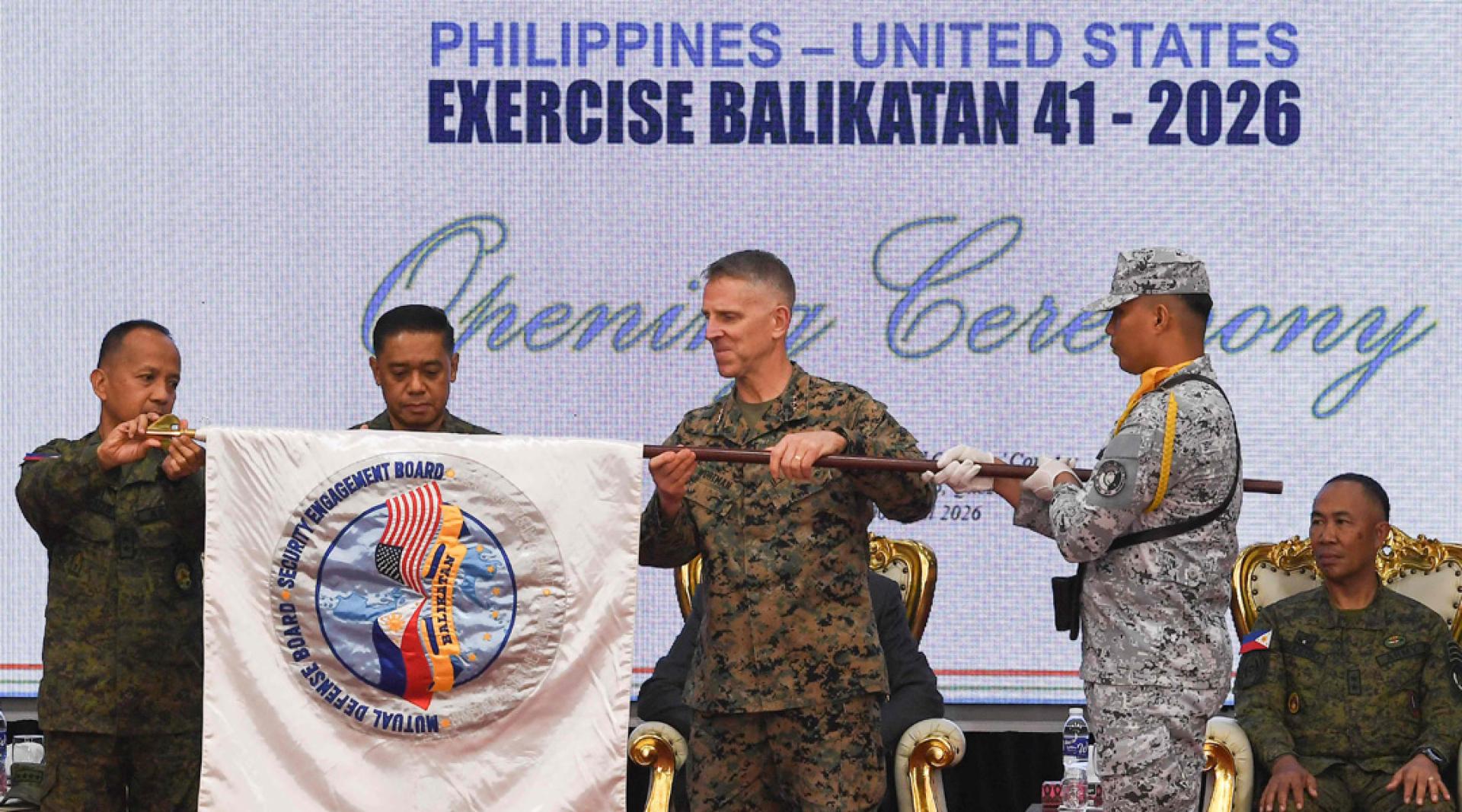
In addition, on Monday (April 20), the U.S. and the Philippines launched the 19-day annual large-scale joint military exercise “Balikatan,” with Japan participating in a large-scale capacity for the first time. In response, the Chinese Foreign Ministry stated that what the Asia-Pacific region needs most is peace and stability, and least needs the introduction of external forces to create division and confrontation. Military and security cooperation between countries should not harm mutual understanding and trust among regional countries, should not undermine regional peace and stability, and should not target, or harm, the interests of third parties.
On Monday, Chinese Foreign Ministry Spokesperson Guo Jiakun said at a regular press conference: “We would like to remind relevant countries that blindly tying themselves together for security reasons will only bring disaster to themselves and backfire.”