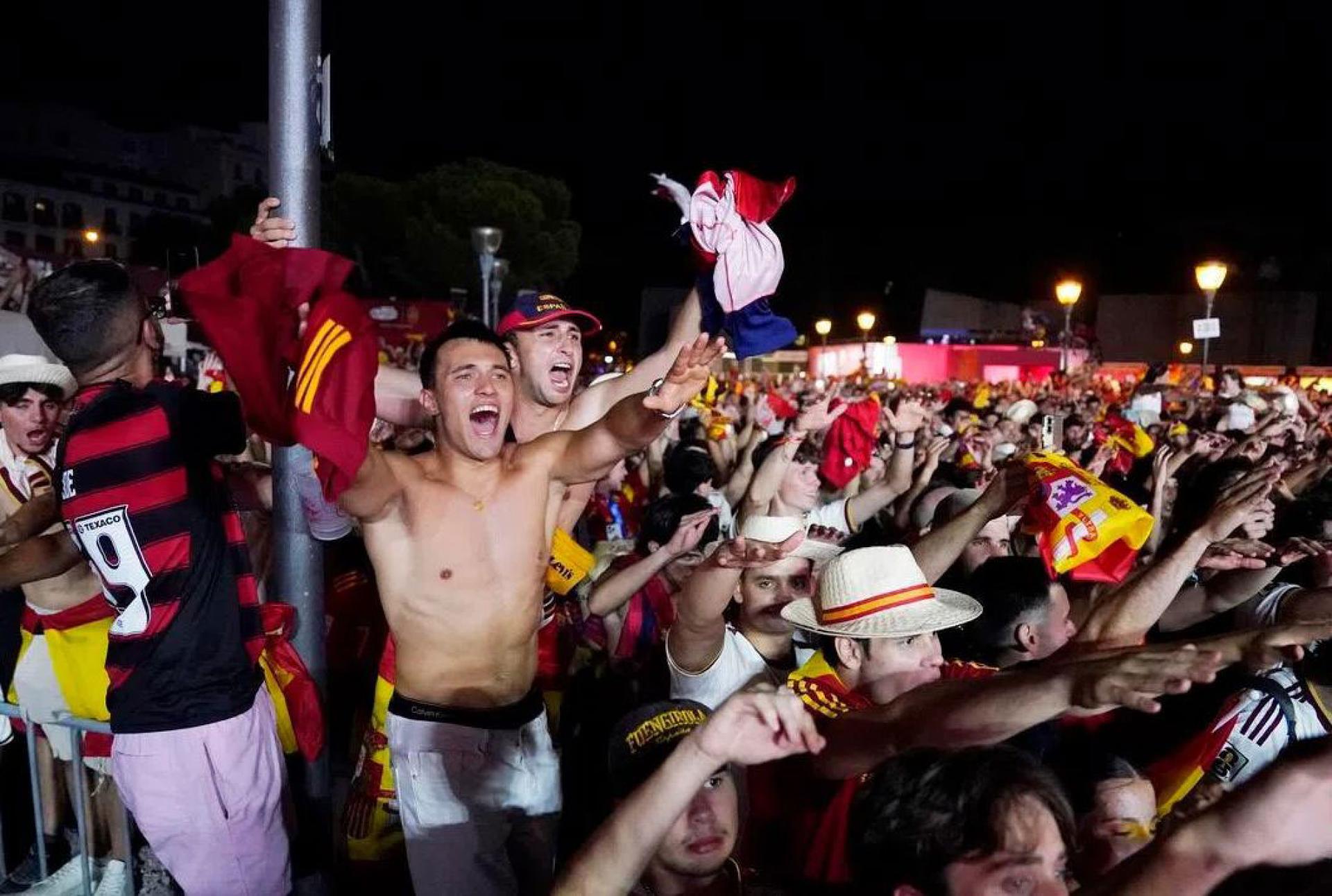
Scientists pointed out on Monday that Spain’s World Cup victory celebrations not only swept across the entire country but were even felt deep underground.
In the early hours of Monday (Malaysia time), Torres scored in extra time to help Spain secure their second World Cup trophy in history. The eruption of joy from fans that followed caused ground tremors, with seismographs across Spain recording these seismic signals.
This victory sparked a nationwide celebration frenzy, and fans celebrated throughout the night. Even after dawn, Madrid’s main thoroughfare, Paseo de la Castellana, still bore the traces of the overnight revelries, with rubbish, beer cans, and shards of glass scattered across the street.
Researchers from the Barcelona Center for Earth Sciences said in a statement that, by analyzing data from the Spanish National Geographic Institute and the Cartographic and Geological Institute of Catalonia, they discovered that abnormal seismic signals closely linked to the celebrations were recorded during fan festivities in cities including Algeciras, Barcelona, Cádiz, and Granada.
Sensors detected three significant spikes in seismic activity during the match: the first occurred after Torres scored; the second followed a goal later ruled out by the Video Assistant Referee (VAR); and the strongest recorded vibration happened after the final whistle ended the match.
Scientists noted that such ground motion was caused by tens of thousands of fans simultaneously jumping, cheering, and reveling—an exemplary case of 'induced seismic activity' caused by human actions.
Similar vibrations were detected by sensors during Spain’s victory over England in the 2024 European Championship final. At that time, goals by Nico Williams and Oyarzabal triggered measurable ground tremors in Madrid and Barcelona.