Chinese President Xi Jinping is expected to visit the United States on September 24. According to analysis, it is anticipated that Xi will also visit Canada at the same time, with one of the reasons being to avoid appearing "too deferential" to the US by visiting only America.
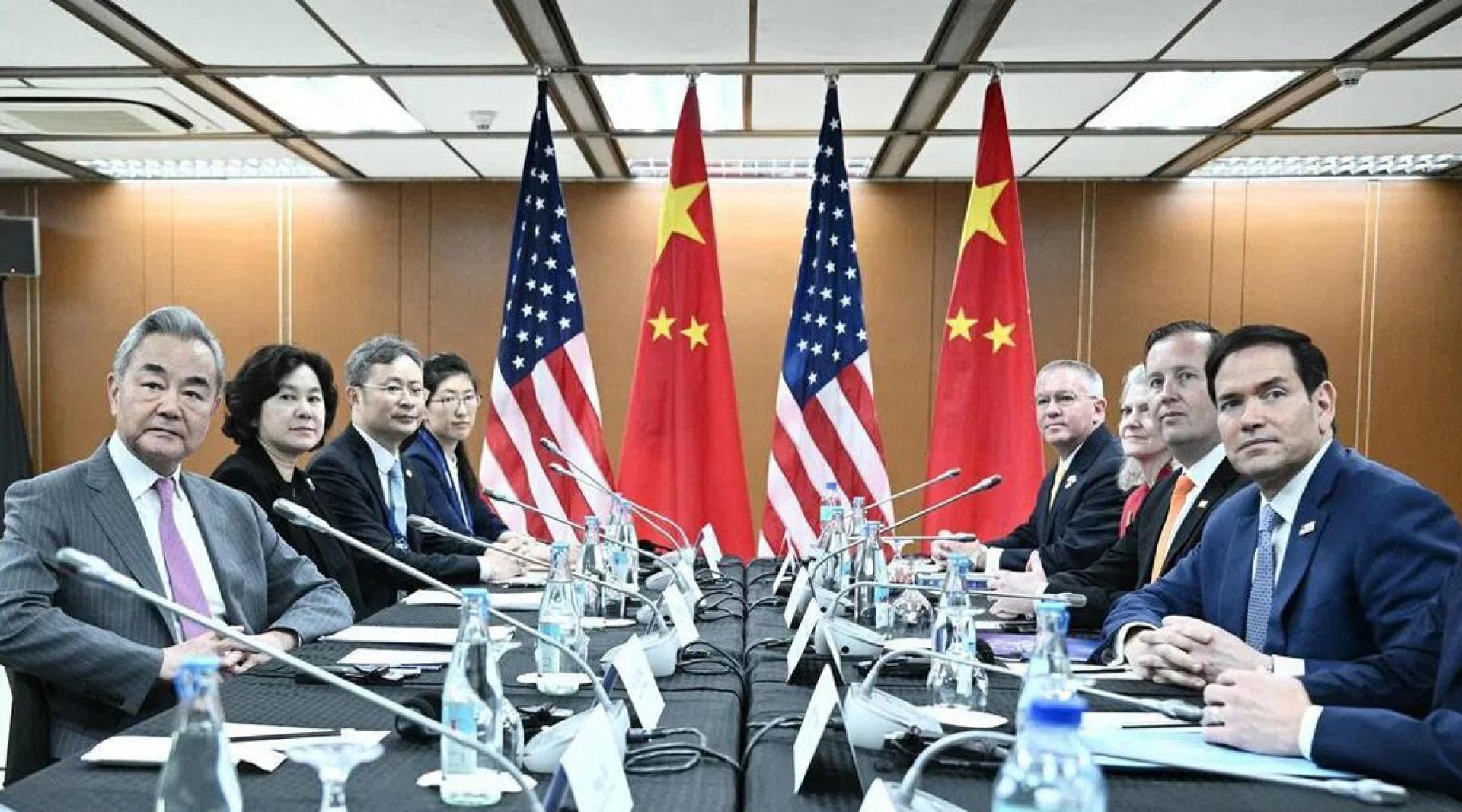
Hong Kong's Ming Pao reported on Thursday that US Secretary of State Rubio and Chinese Foreign Minister Wang Yi met in Manila on Wednesday. According to Xinhua News Agency, both sides agreed to "make good preparations for the next phase of high-level exchanges."
Meanwhile, during Canadian Prime Minister Carney's visit to China in January, he also invited Xi Jinping to visit Canada; Wang Yi, when meeting with Canadian Foreign Minister Anand recently, said that China is willing to work with Canada to "make good preparations for the next phase of high-level exchanges, and enhance political mutual trust."
The article points out that Wang Yi mentioned "making good preparations for the next phase of high-level exchanges" to both Rubio and Anand, which leads people to associate this with Beijing preparing for President Xi's visit to Canada.
The article analyzes that since the US and Canada are neighboring countries, it is natural for Xi Jinping to visit Canada while visiting the US. Moreover, this can avoid the impression of being "overly deferential" to the US by visiting only America; if the rumors are true, this will be Xi's first visit to Canada since taking office, and the first visit by a Chinese head of state to Canada in 16 years.
It was pointed out that China-Canada relations had generally been good, but plummeted in December 2018 after Canada detained Huawei executive Meng Wanzhou at the US's request. Although Meng was released in 2021, political mutual trust between the two countries has not been restored, and there have been frequent trade frictions. It was not until last spring, when Carney became Prime Minister of Canada, that China-Canada relations began to improve.
In addition, the US and Chinese foreign ministers held a one and a half hour meeting. After the meeting, Rubio told the media that he and Wang Yi discussed the necessity of identifying areas of cooperation, laying the foundation for Xi Jinping's "positive visit" to the US in September.
Rubio acknowledged that there are some "major differences" between China and the US, and both sides must work hard to resolve these differences; there are also potential areas for cooperation between the two countries.
Rubio also said that the two sides did not discuss allegations of election interference, but did discuss the Taiwan issue, bilateral trade issues, and the establishment of a US-China trade council.
The two countries are in the process of establishing the US-China Trade Council. "This is one of the tangible results we can achieve before President Xi's visit to the US in September."
He emphasized that it is crucial for the two countries to engage in dialogue transcending differences. "Given the impact of the US and China on the global economy and the world, not establishing relations would be reckless and irresponsible."
During his visit to China in May this year, US President Trump invited Xi Jinping to visit the US on September 24. Chinese Vice Foreign Minister Ma Zhaoxu is reportedly visiting the US this week to pave the way for Xi's trip to America.
Wang Yi, for his part, said he had explained Beijing's position on a series of "recent negative words and deeds" from the US, and asked the US to "respect China's core interests, abide by the one-China principle, effectively manage differences and disputes, and address China's legitimate concerns."
Wu Xinbo, Dean of the Institute of International Studies and Public Affairs at Fudan University, explained to Lianhe Zaobao that in addition to Trump's accusations of Beijing interfering in elections, the "negative words and deeds" referred to by Wang Yi may also include recent remarks by AIT Director Sandra Oudkirk regarding cross-strait relations, as well as Washington's statements on the South China Sea dispute.