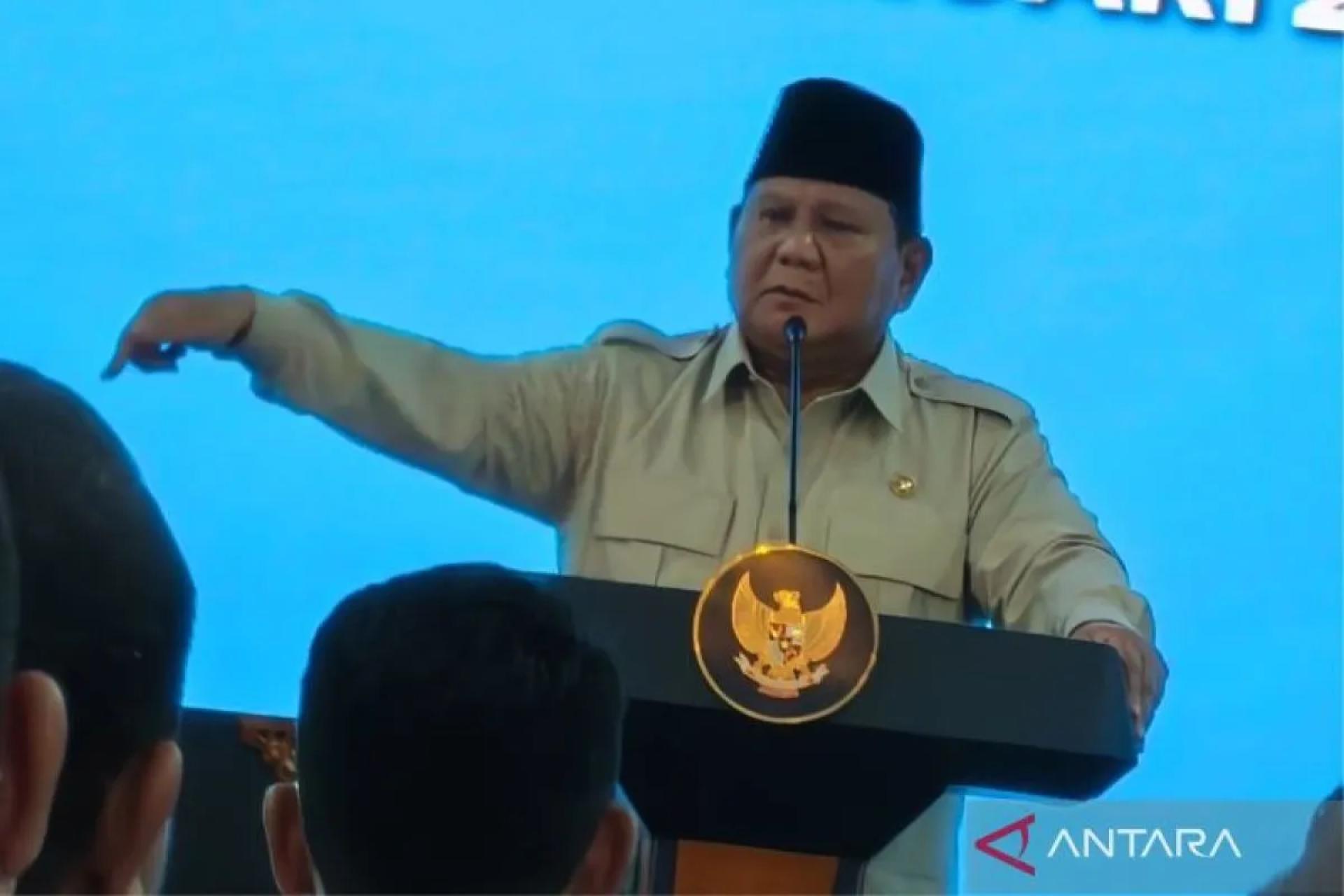
Indonesian President Prabowo Subianto reaffirmed that the government will continue its commitment to eradicating poverty and addressing the issue of childhood stunting, with the "Free Nutritious Meals" (MBG) program being a core and key initiative.
On Friday, while officiating the launch and groundbreaking ceremony for 1,179 MBG kitchens and food security warehouses managed by the police in Jakarta, he pointed out that this national priority program is a strategic tool to enhance the quality of the nation's human resources from early childhood.
Prabowo stated that the root cause of childhood stunting lies in poverty, a long-standing and serious challenge in Indonesia. In the past, the national rate of stunting among children reached as high as 25%, an issue that cannot be ignored; therefore, concrete actions such as the MBG program must be implemented to resolve it.
He pointed out that the MBG program is a government intervention that directly targets disadvantaged groups, including children, pregnant women, the elderly, and economically challenged populations. Similar policies have been implemented in dozens of countries, and he cited India as an example: even though its per capita income is lower than Indonesia's, it has still managed to provide meals for its people for more than a decade.
In response to criticism that the program wastes resources and burdens the national budget, Prabowo emphasized that the MBG is a legitimate and justified national plan that has already benefited millions of people across the country.
He explained that the related funds mainly come from the government's budget efficiency policy, reallocating resources by cutting unnecessary expenses from meetings, seminars, and official overseas trips to ensure the basic needs of low-income groups are met.
Prabowo stressed that budget efficiency not only enabled the implementation of the MBG program, but is also seen as an important strategy to prevent misuse of fiscal resources and to eradicate corruption.
Prabowo stated that the root cause of childhood stunting lies in poverty, a long-standing and serious challenge in Indonesia. In the past, the national rate of stunting among children reached as high as 25%, an issue that cannot be ignored; therefore, concrete actions such as the MBG program must be implemented to resolve it.
He pointed out that the MBG program is a government intervention that directly targets disadvantaged groups, including children, pregnant women, the elderly, and economically challenged populations. Similar policies have been implemented in dozens of countries, and he cited India as an example: even though its per capita income is lower than Indonesia's, it has still managed to provide meals for its people for more than a decade.
In response to criticism that the program wastes resources and burdens the national budget, Prabowo emphasized that the MBG is a legitimate and justified national plan that has already benefited millions of people across the country.
He explained that the related funds mainly come from the government's budget efficiency policy, reallocating resources by cutting unnecessary expenses from meetings, seminars, and official overseas trips to ensure the basic needs of low-income groups are met.
Prabowo stressed that budget efficiency not only enabled the implementation of the MBG program, but is also seen as an important strategy to prevent misuse of fiscal resources and to eradicate corruption.