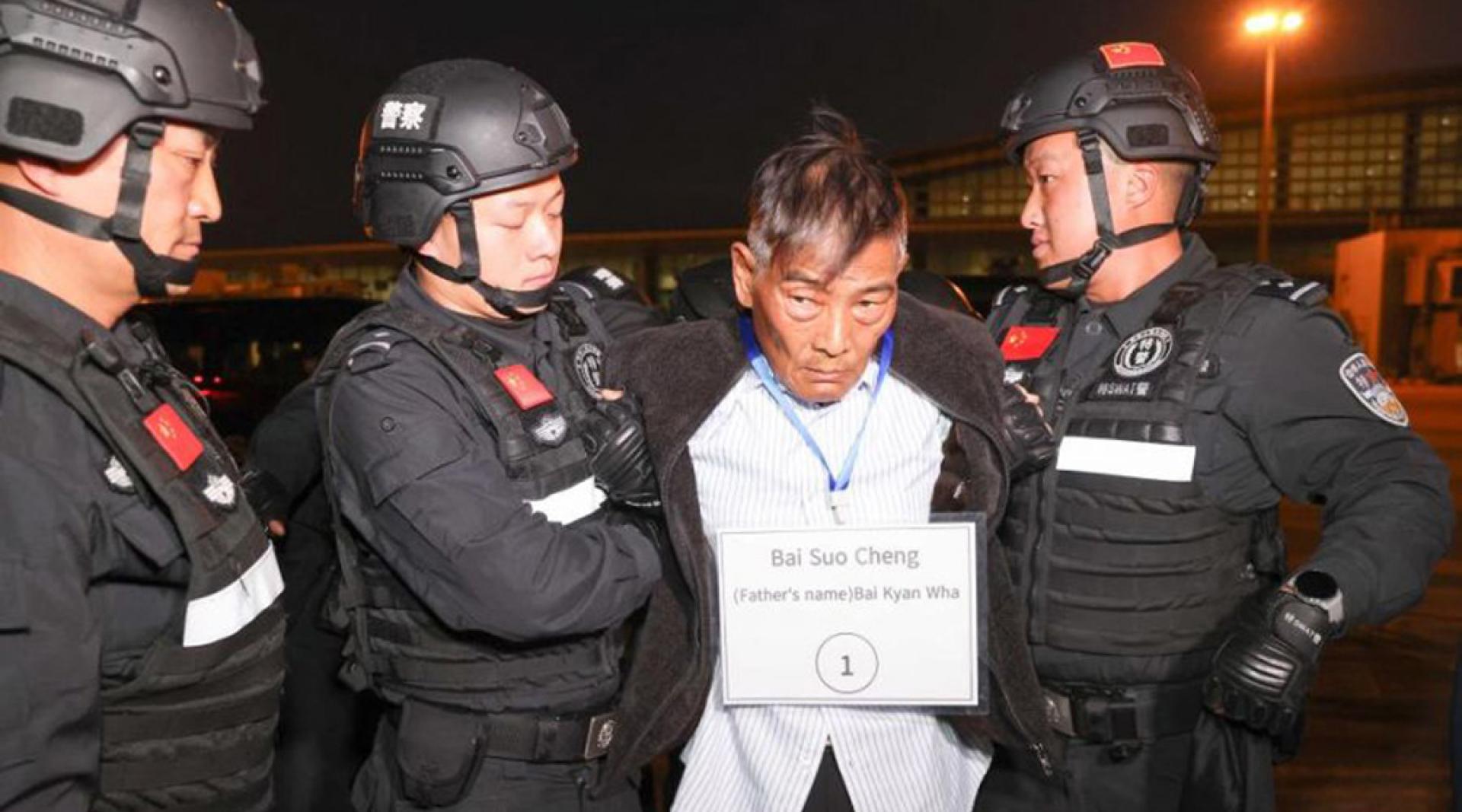
At the 2nd plenary session of the 14th National People's Congress of China, the President of the Supreme People's Court, Zhang Jun, delivered the Supreme People's Court work report.
The report pointed out that in 2025, the people's courts will effectively safeguard public security. 46,000 cases of serious violent crimes such as intentional homicide involving 53,000 people were concluded, a year-on-year decrease of 7.3% in the number of cases. 41,000 cases of telecom and cyber fraud involving 85,000 people were concluded, a year-on-year increase of 1.2% in the number of cases. Sixteen principal offenders from the ‘four major families’ criminal groups in northern Myanmar were sentenced to immediate execution in accordance with the law, and crimes harming our citizens from overseas were strictly punished according to the law.
In 2025, the people's courts concluded 36,000 cases of corruption, bribery, and other duty-related crimes involving 40,000 people, with the number of cases increasing by 22.4% year-on-year; 57 former centrally managed cadres, including Tang Renjian and Luo Baoming, were punished according to the law. Bai Tianhui, who took bribes of an especially large amount and caused particularly significant losses to the country and the people's interests, was sentenced to death and the sentence was carried out in accordance with the law. New and hidden types of corruption crimes such as expected gains, agreed shareholding on behalf of others, and the ‘revolving door’ between government and business were punished according to law.
Zhang Jun pointed out that in 2025, the people's courts will continue to regulate the phenomenon of enterprises "bullying the small with the big." In 709 cases, large enterprises making receipt of third-party payments a contract condition for payment was found invalid, helping small and medium-sized enterprises recover accounts receivable of 1.9 billion yuan (1.087 billion ringgit). The courts resolutely corrected illegal cross-regional law enforcement and profit-driven law enforcement, strengthened judicial supervision over compulsory measures such as sealing, seizure, and freezing of assets, and rectified 367 issues including improper penalties involving enterprises. Determined action was taken to prevent and correct the use of criminal measures to interfere in economic disputes; it was determined that 69 already prosecuted cases should not be handled as crimes; upon retrial, 6 enterprises and 12 business operators were acquitted.