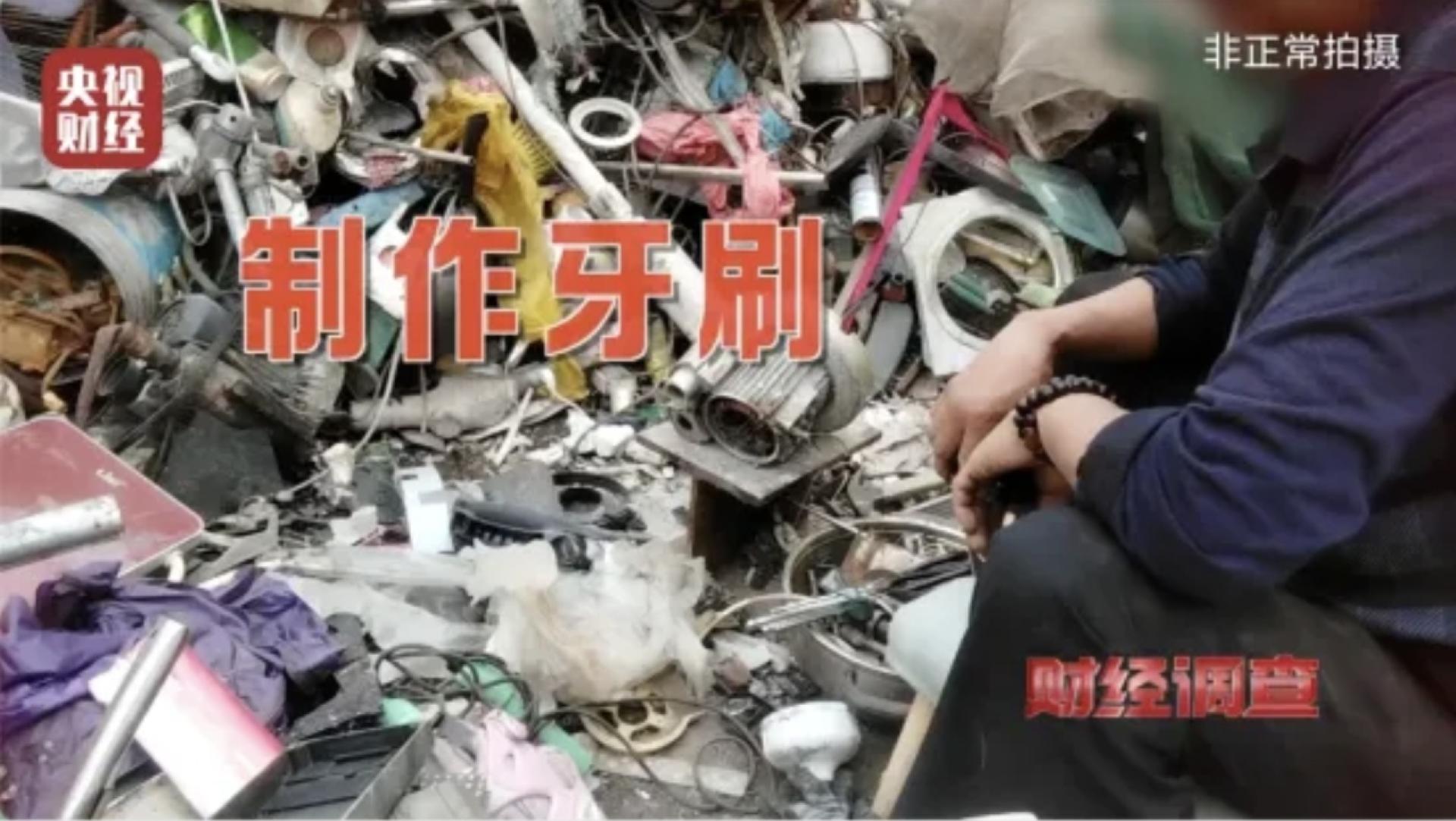
China's CCTV "Financial Investigation" recently exposed serious hygiene and safety risks in the production chain of disposable toothbrushes. Some manufacturers are suspected of using recycled plastics from chemical waste barrels, old toothbrush handles, mask scraps and even discarded slippers to produce toothbrushes, which then enter the hotel and homestay markets, sparking consumer concern.
According to the report, after receiving reports from consumers and insiders, "Financial Investigation" conducted an undercover investigation and found that several recycling stations in Jiangdu District, Yangzhou, Jiangsu, have been purchasing various types of waste plastics for a long time. These include plastic barrels used for detergents, urea and other chemical products, as well as discarded home appliance casings, old fan parts and damaged footwear.
The investigation found that most of these waste plastics are not cleaned or disinfected, but are only simply crushed before being sent to plastic processing plants to be made into recycled plastic pellets.
Industry insiders admitted that by simply adding colorant, stains and impurities in the raw materials can be covered up.

Discarded Masks and Garbage Bags Used as Material
The investigation further revealed that some family-run workshops process discarded disposable masks, scraps of protective suits, plastic sheeting, woven bags, garbage bags and plastic ropes into so-called "recycled materials."
These materials, coming from complicated sources, are hardly cleaned or disinfected before processing; they are only melted at high temperature and simply filtered, then made into plastic pellets for sale. Due to the mixed ingredients, the processed pellets have uneven colors, so manufacturers usually dye them black before selling.

According to industry insiders, such "recycled materials" are much cheaper than new plastic, so many toothbrush factories will mix them with new materials in proportion to significantly reduce production costs.
Additionally, investigators found that some processors use discarded slipper scraps from shoe factories to produce plastic pellets, which are then supplied directly to toothbrush manufacturers.
Ultra-cheap Toothbrushes Cost Only 0.06 Yuan Each
The investigation showed that Hangji Town in the Guangling District of Yangzhou has many hotel supply manufacturers. To cut costs, some small companies use a mix of recycled and new plastics to produce disposable toothbrushes.
Some ultra-low-priced products have an ex-factory price of only RMB 0.06 per piece (about 3.5 sen in MYR), with materials made from straw mixed with recycled plastic.
One producer admitted that recycled plastic comes from complex sources, including chemical waste barrels, old toothbrushes, slipper scraps, garbage bags, etc. Even if high temperature processing can destroy bacteria, it cannot eliminate the potential chemical risks in the plastic itself.
Since many recycled plastic pellets come from unqualified small workshops and are "three-no products" (no production date, manufacturer, or quality certificate), factories cannot guarantee that every batch meets standards.

Expert: Harmful Substances May Enter the Human Body via the Mouth
The investigation showed that these low-cost toothbrushes have widely entered hotels, guesthouses, and wholesale markets.
Several hotel supply wholesalers in Hefei and Zhengzhou admitted that disposable toothbrushes made with "recycled materials" are of poor quality and tend to break easily during use.
Pang Xiaochuan, an expert with years of research in preventive medicine and environmental science, pointed out that after plastics are recycled multiple times, their composition becomes more complex, and new toxic and harmful substances may also be produced during high-temperature melting.
He warned that disposable toothbrushes directly touch the oral mucosa, and with surfactants in toothpaste, harmful components in plastic are more likely to enter the human body. Long-term use of such products may pose potential health risks.
CCTV's "Financial Investigation" pointed out that as the market demand for hotel and travel supplies continues to grow, regulatory authorities need to strengthen supervision of the raw material sources and production processes of disposable products to safeguard consumer rights and public health.