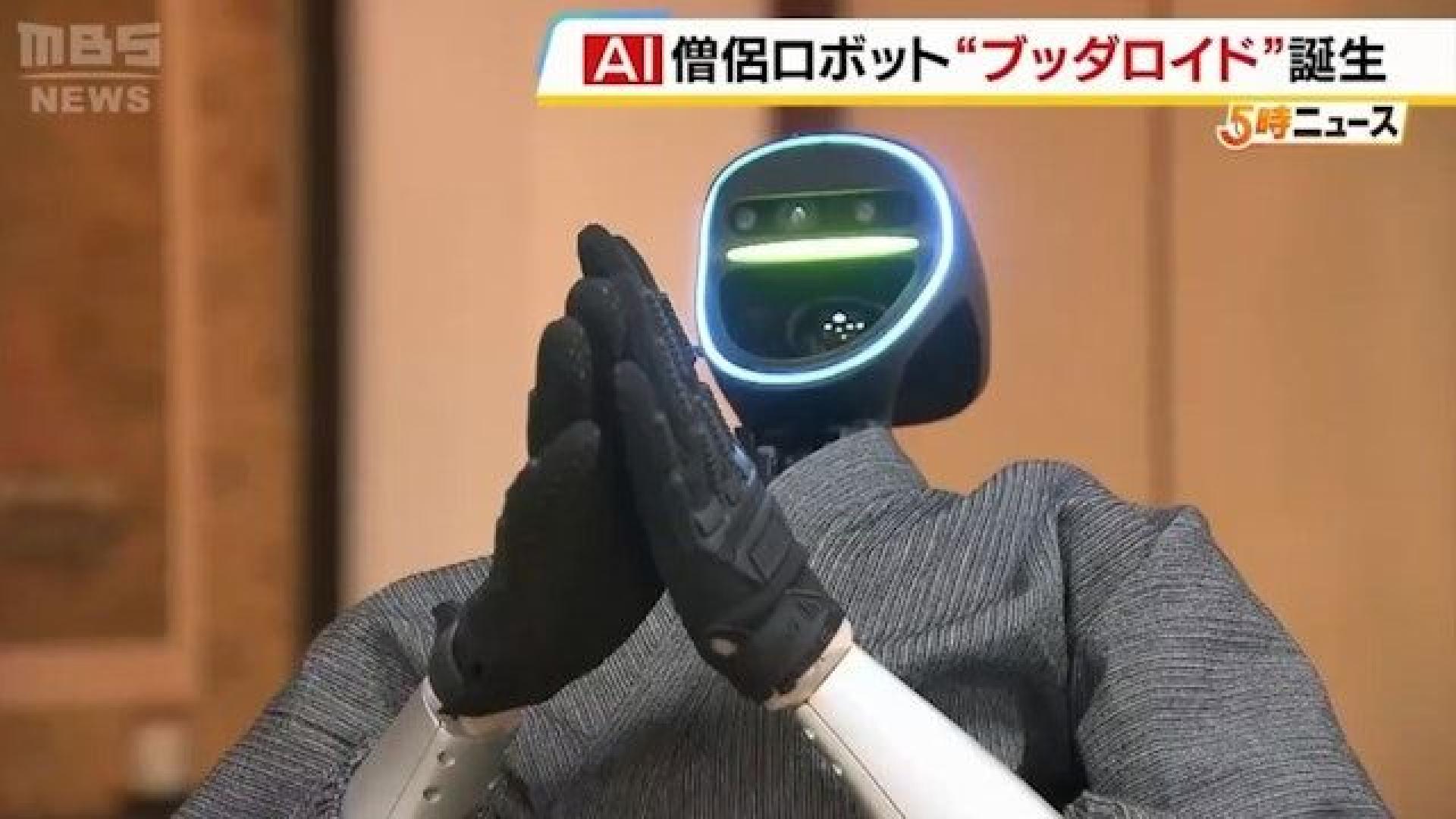
On February 24, a research team from Kyoto University in Japan announced the launch of a humanoid robot called the 'Buddha Robot.' Equipped with generative AI, it has learned Buddhist scriptures and can converse with people in relatively natural language, even mimicking the hand-joining and bowing gestures of monks. Japanese media were excited—this was seen as an attempt to combine Japanese traditional culture with artificial intelligence.
Three days later, however, Japanese netizens noticed a detail. The robot’s 'body' came from the G1 humanoid robot made by China’s Unitree Robotics. They believed the software was developed in Japan, but the hardware was made in China.
Japanese netizens complained: 'This is how Japanese culture gets replaced bit by bit. Even the temple that has been worshipped at in my hometown for generations—turns out the young female head priest there also comes from "over there." When I learned about this, I felt dizzy, almost as if I had a mild blackout.'
'So the hardware used is China’s Unitree G1. China really is impressive.'
'Now I have no reason to go to the temple.'
'Actually, whether it’s the Tendai school, Shingon, or the three Zen schools, the 'underlying system' of Japanese Buddhism originally came from China, so I don’t mind this at all.'
Some Japanese netizens also added, the software is ChatGPT... American made.
Some people see the whole thing as a joke, while others read into it a certain symbolic meaning. But if you put emotions aside for a moment, this very structure is actually more worth examining than the debate itself.
This robot, named 'Buddha,' consists of hardware from a Chinese company, a large language model reliant on American technology, and an application scenario designed by a Japanese team. This is not a coincidental patchwork, but rather a microcosm of the current industrial landscape.
If we turn back time to ten or even twenty years ago, Japan was always viewed as the 'kingdom of robots.' Honda’s ASIMO and Sony’s AIBO were iconic images at global technology shows. Back then, when humanoid robots were mentioned, people almost instinctively thought of Japan. This was not just a demonstration of technology, but also a symbol of industrial confidence.
But today, the logic of competition has changed. Humanoid robots are shifting from being 'showcase results' to 'engineered products.' The core issue is no longer whether they can walk or talk, but whether they can be mass-produced, whether costs can be reduced, and whether a stable advantage in the supply chain can be formed.
This is where the significance of the Unitree G1 lies. It represents a scalable hardware capability, not just an experimental prototype. Motor control, joint drive, dynamic balance systems—these seemingly unglamorous technical details determine whether robots can truly enter the market.
Japanese netizens complained: 'This is how Japanese culture gets replaced bit by bit. Even the temple that has been worshipped at in my hometown for generations—turns out the young female head priest there also comes from "over there." When I learned about this, I felt dizzy, almost as if I had a mild blackout.'
'So the hardware used is China’s Unitree G1. China really is impressive.'
'Now I have no reason to go to the temple.'
'Actually, whether it’s the Tendai school, Shingon, or the three Zen schools, the 'underlying system' of Japanese Buddhism originally came from China, so I don’t mind this at all.'
Some Japanese netizens also added, the software is ChatGPT... American made.
Some people see the whole thing as a joke, while others read into it a certain symbolic meaning. But if you put emotions aside for a moment, this very structure is actually more worth examining than the debate itself.
This robot, named 'Buddha,' consists of hardware from a Chinese company, a large language model reliant on American technology, and an application scenario designed by a Japanese team. This is not a coincidental patchwork, but rather a microcosm of the current industrial landscape.
If we turn back time to ten or even twenty years ago, Japan was always viewed as the 'kingdom of robots.' Honda’s ASIMO and Sony’s AIBO were iconic images at global technology shows. Back then, when humanoid robots were mentioned, people almost instinctively thought of Japan. This was not just a demonstration of technology, but also a symbol of industrial confidence.
But today, the logic of competition has changed. Humanoid robots are shifting from being 'showcase results' to 'engineered products.' The core issue is no longer whether they can walk or talk, but whether they can be mass-produced, whether costs can be reduced, and whether a stable advantage in the supply chain can be formed.
This is where the significance of the Unitree G1 lies. It represents a scalable hardware capability, not just an experimental prototype. Motor control, joint drive, dynamic balance systems—these seemingly unglamorous technical details determine whether robots can truly enter the market.