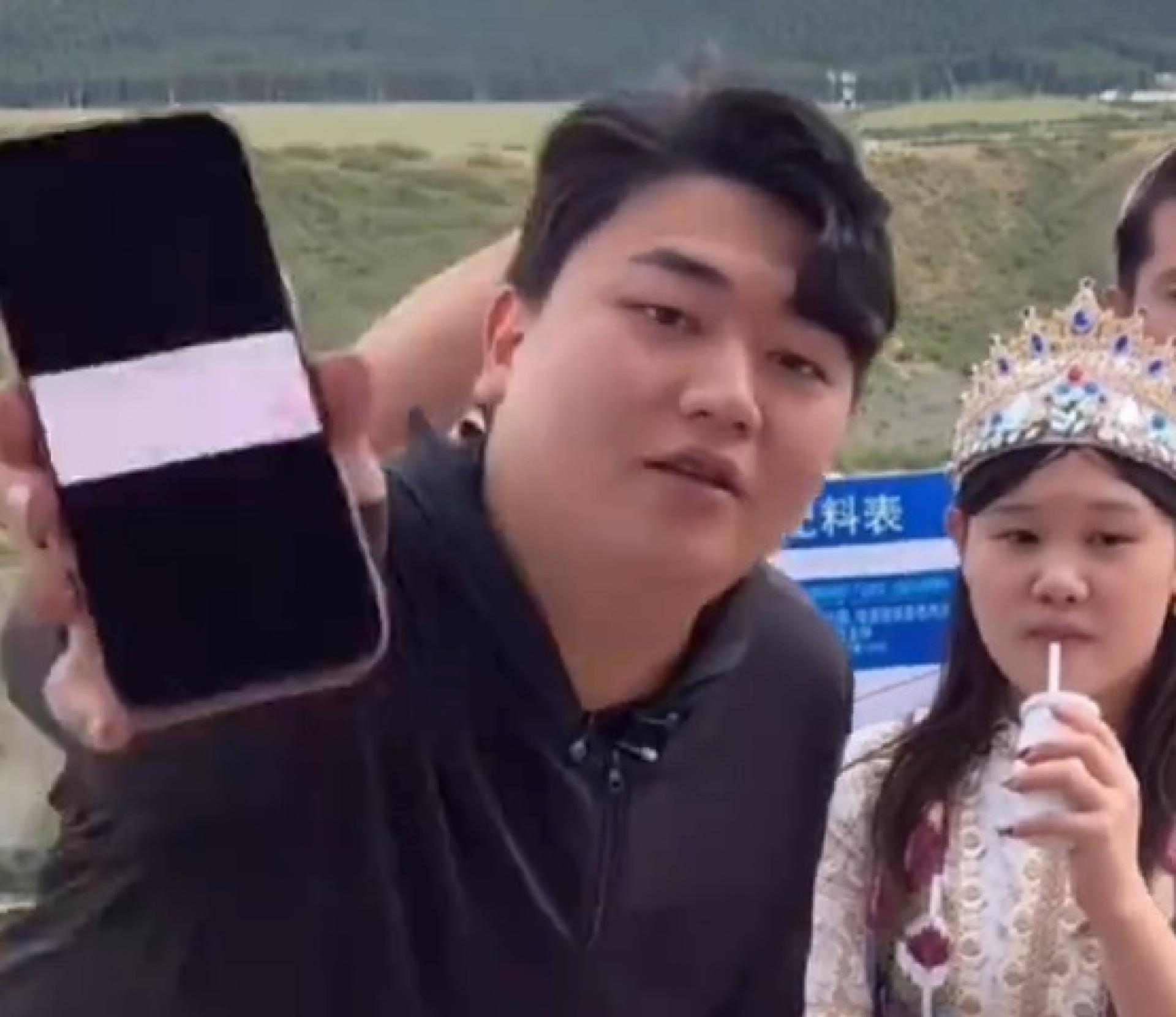
Guangxi, China, has recently been hit by torrential rain, causing severe flooding. Quan Jinhua, the brother of Olympic diving champion Quan Hongchan, donated 30,000 yuan (RMB, about 18,000 ringgit) to support the disaster area in his personal capacity. However, the donation amount was questioned by some netizens as being “too little.” Some even believe that, given Quan Hongchan’s fame, “he should have at least donated 300,000 (about 180,000 ringgit).” The incident continues to ferment online and has drawn commentary from several Chinese official media outlets, calling for society to stop the culture of “forced donations.”
According to “Elephant News”, after the Guangxi disaster, Quan Jinhua was in Xinjiang doing live streaming to assist farmers. Even though local temperatures approached 40℃, he insisted on helping farmers promote their produce and did not take any commission. At the same time, he quietly completed the 30,000 yuan disaster relief donation and did not proactively publicize it.
However, during the livestream, many netizens repeatedly asked whether he had donated. Quan Jinhua, left with no choice, publicly displayed the transfer record, confirming he had completed the donation days earlier, hoping to quell external doubts.
Unexpectedly, after the donation proof was revealed, criticism continued to emerge. Some netizens commented that, given Quan Hongchan is an Olympic champion, her family should donate more, even claiming that he “lacks vision.”

In addition, some people during the livestream shifted their criticisms toward Quan Hongchan herself, who is currently training with the national team, demanding that she step up to donate. Even fellow diver and livestream participant Zhang Jiaqi was also implicated.
The report pointed out that in recent years, Quan Jinhua has been engaged in livestreaming to help farmers, and has long assisted farmers in selling products commission-free. His income is not as substantial as the public imagines. Quan Hongchan, in the past, also donated over 40,000 yuan received from an accidental livestream reward, and even spent nearly 800,000 yuan out of her own pocket to improve roads in her hometown, but neither act was publicly promoted.
Furthermore, the report mentioned that Chinese national team athletes do not keep all their commercial endorsement income; according to the “5122” allocation rule, portions must be distributed to coaches, provincial teams, and training units. After deducting various fees and taxes, the actual earnings are quite different from what the public expects.
In response to the online “forced donation” controversy, several Chinese official media outlets stated that charitable giving should be based on the principle of voluntariness. The amount should not be used to judge goodwill, and public welfare should not become a tool for comparison or moral pressure. The public is urged to view donations rationally.