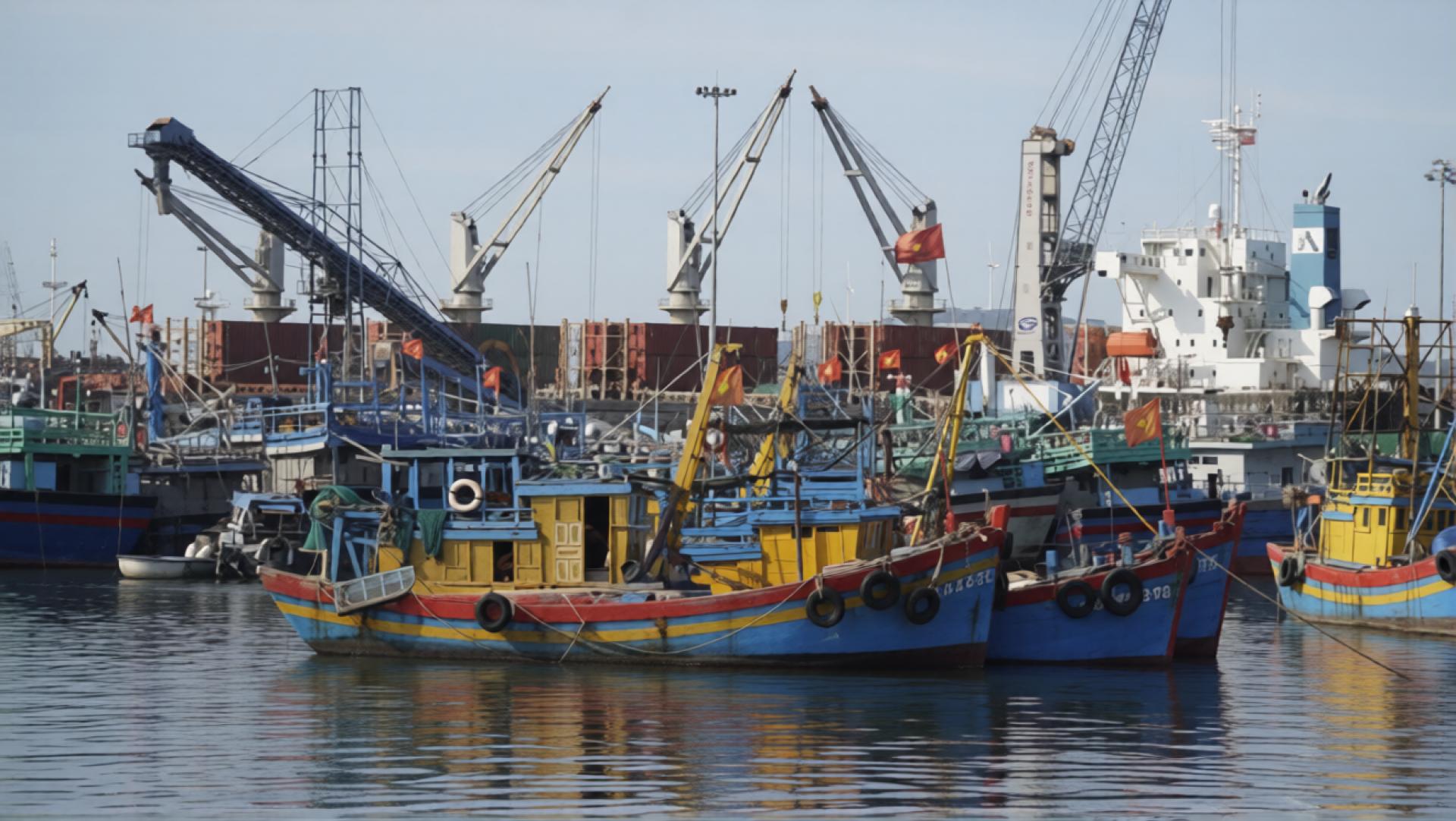
(Hanoi, 7th) While intensifying the crackdown on Illegal, Unreported, and Unregulated (IUU) fishing and striving to have the EU “yellow card” warning lifted, Vietnam is actively promoting the restructuring and transformation of its fisheries sector. The aim is to gradually reduce fishing intensity, streamline the size of fishing fleets, and develop aquaculture and deep-processing industries in order to build a sustainable fisheries system and enhance the reputation of Vietnamese seafood products in international markets.
Several regions in Vietnam have successively implemented related policies, shifting from fishing methods that significantly impact marine ecosystems to more environmentally friendly practices, while also phasing out certain fishing vessels to balance fleet size with marine resource reserves. These measures are also intended to improve fishing efficiency, ensure stable livelihoods for fishermen, and strengthen regulation and discipline against IUU fishing practices.
In Ho Chi Minh City, authorities are promoting a fisheries transition plan to adjust fleet composition and reduce environmentally damaging operations. The local government guides inshore and nearshore fishing vessels toward aquaculture, fisheries logistics services, or other legal industries, while encouraging offshore vessels to adopt fishing methods with less ecological impact.
According to the plan, by 2030, about 6% of fishing vessels in Ho Chi Minh City will shift to new industries, with a focus on the trawler fleet. All inshore shrimp trawlers and hairtail trawlers will switch to line fishing; 50% of nearshore trawlers will convert to gillnets; and 20% of offshore trawlers will transition to line fishing, gillnets, encircling nets, or trap methods. The government will also provide support for fishermen through subsidies for fishing gear, vessel refurbishment, equipment investment, and vocational training to safeguard their livelihoods during the transitional period.
In Da Nang, the city supports fishermen to shift from trawling to other non-prohibited fishing methods through a fisheries development support resolution for the period 2026–2030, while handling fishing vessels that do not meet operational requirements. The local government will subsidize up to 50% of fishing gear purchases and vessel modifications to assist the fishermen’s transition.
Meanwhile, Quang Ngai Province continues to promote fleet restructuring, gradually reducing the number of inshore fishing vessels under 15 meters. The proportion of trawling operations has dropped from over 31% in 2020 to around 25% now, with enhanced fisheries logistics services, and promotion of vocational training and new livelihood development initiatives to protect the marine ecosystem.
In Dong Thap Province, the government implements vessel scrapping and industry shift support policies for owners willing to stop fishing activities, especially those using methods severely damaging to aquatic resources, alongside strict enforcement of fishing management and anti-IUU regulations to ensure the legality and transparency of fisheries activities.
Vietnam’s Prime Minister noted that these policies are not only in response to EU recommendations for removing the “yellow card” warning, but more importantly to advance sustainable fisheries development, progressively reduce high-risk fishing, vigorously develop aquaculture and deep-processing industries, increase the added value of aquatic products, and ensure the long-term livelihoods of coastal communities.
In Ho Chi Minh City, authorities are promoting a fisheries transition plan to adjust fleet composition and reduce environmentally damaging operations. The local government guides inshore and nearshore fishing vessels toward aquaculture, fisheries logistics services, or other legal industries, while encouraging offshore vessels to adopt fishing methods with less ecological impact.
According to the plan, by 2030, about 6% of fishing vessels in Ho Chi Minh City will shift to new industries, with a focus on the trawler fleet. All inshore shrimp trawlers and hairtail trawlers will switch to line fishing; 50% of nearshore trawlers will convert to gillnets; and 20% of offshore trawlers will transition to line fishing, gillnets, encircling nets, or trap methods. The government will also provide support for fishermen through subsidies for fishing gear, vessel refurbishment, equipment investment, and vocational training to safeguard their livelihoods during the transitional period.
In Da Nang, the city supports fishermen to shift from trawling to other non-prohibited fishing methods through a fisheries development support resolution for the period 2026–2030, while handling fishing vessels that do not meet operational requirements. The local government will subsidize up to 50% of fishing gear purchases and vessel modifications to assist the fishermen’s transition.
Meanwhile, Quang Ngai Province continues to promote fleet restructuring, gradually reducing the number of inshore fishing vessels under 15 meters. The proportion of trawling operations has dropped from over 31% in 2020 to around 25% now, with enhanced fisheries logistics services, and promotion of vocational training and new livelihood development initiatives to protect the marine ecosystem.
In Dong Thap Province, the government implements vessel scrapping and industry shift support policies for owners willing to stop fishing activities, especially those using methods severely damaging to aquatic resources, alongside strict enforcement of fishing management and anti-IUU regulations to ensure the legality and transparency of fisheries activities.
Vietnam’s Prime Minister noted that these policies are not only in response to EU recommendations for removing the “yellow card” warning, but more importantly to advance sustainable fisheries development, progressively reduce high-risk fishing, vigorously develop aquaculture and deep-processing industries, increase the added value of aquatic products, and ensure the long-term livelihoods of coastal communities.