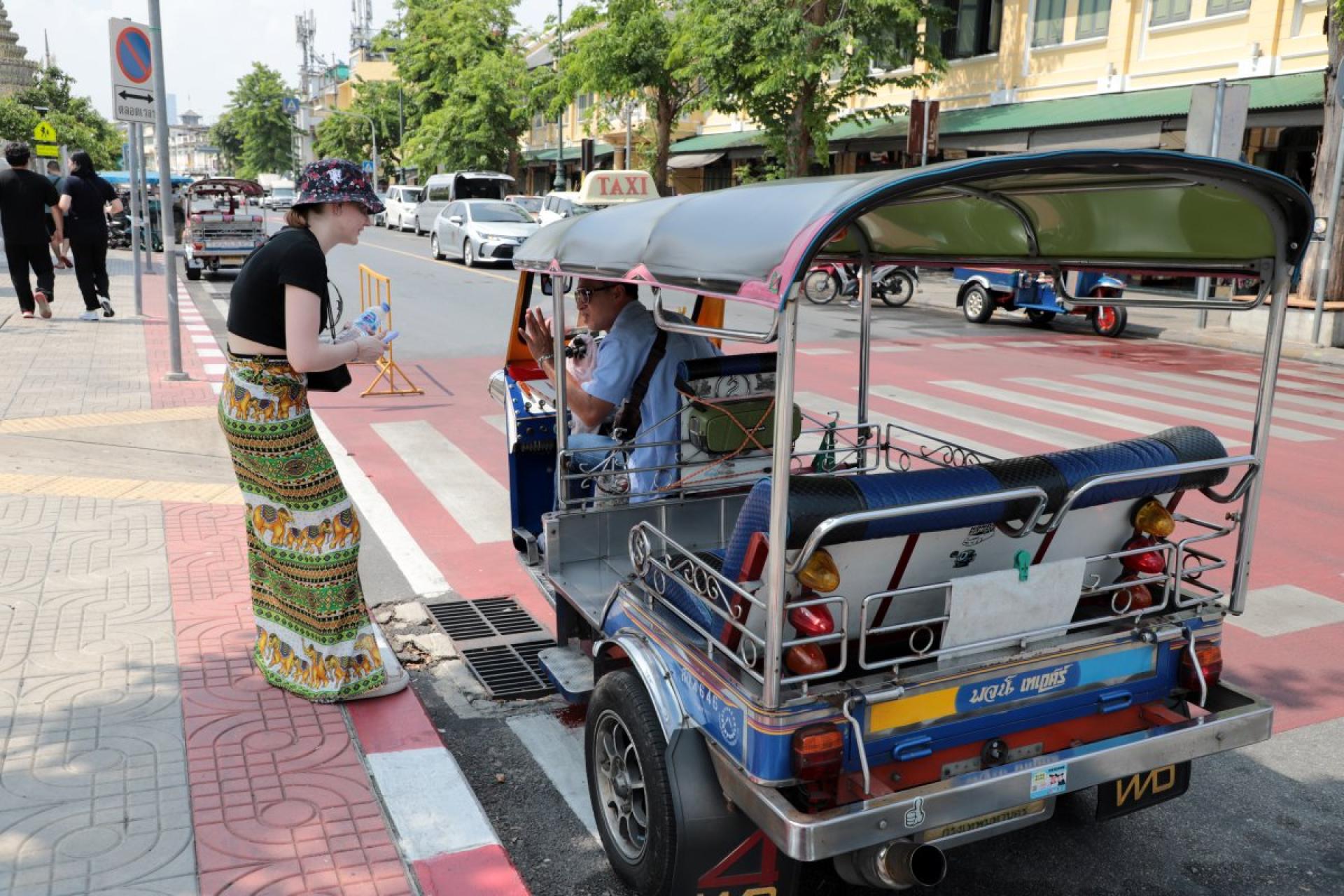
(Bangkok Daily News) The Department of Land Transport (DLT) of Thailand has stated that recent reports about "traditional fuel-powered Tuk-tuks soon to be banned from central Bangkok" are premature. The relevant measures are still at the public consultation stage, and the government has yet to make a final decision.
DLT Director-General Sorapong Phaitoonpong pointed out that the draft ministerial regulations have not yet been submitted for government approval, and the specific implementation details have also not been determined.
Currently, the DLT is seeking public feedback through online consultations, which will continue until August 27. The consultation covers whether to restrict gasoline-powered three-wheelers from entering Bangkok’s inner city, in order to reduce air and noise pollution.
According to the draft, if the measure is approved in the future, only electric tuk-tuks may be allowed to operate within the designated areas. However, traditional fuel-powered tuk-tuks may still be permitted during specific time periods regulated by traffic police.
Sorapong said that the department is formulating long-term plans to prepare for the possible introduction of relevant measures in the future.
He said that currently, most tuk-tuks in Bangkok still use internal combustion engines, with vehicle ages ranging from 10 to 50 years, thus raising safety and emission concerns.
The draft indicates that Bangkok’s historic city area, including Wat Phra Si Rattana Satsadaram (the Temple of the Emerald Buddha), royal temples, and other national cultural heritage sites, are key zones where stricter pollution controls are needed to improve environmental quality and further support tourism development.
If implemented, the measures will have certain impacts on operators. As of June 30, 2026, there are a total of 8,582 registered tuk-tuks in Bangkok; in comparison, as of the end of May this year, there are only 1,056 registered electric tuk-tuks nationwide.
The authorities stated that all public feedback will be fully evaluated before deciding whether to proceed with the relevant draft regulations. The public can submit feedback via the DLT’s online consultation platform.