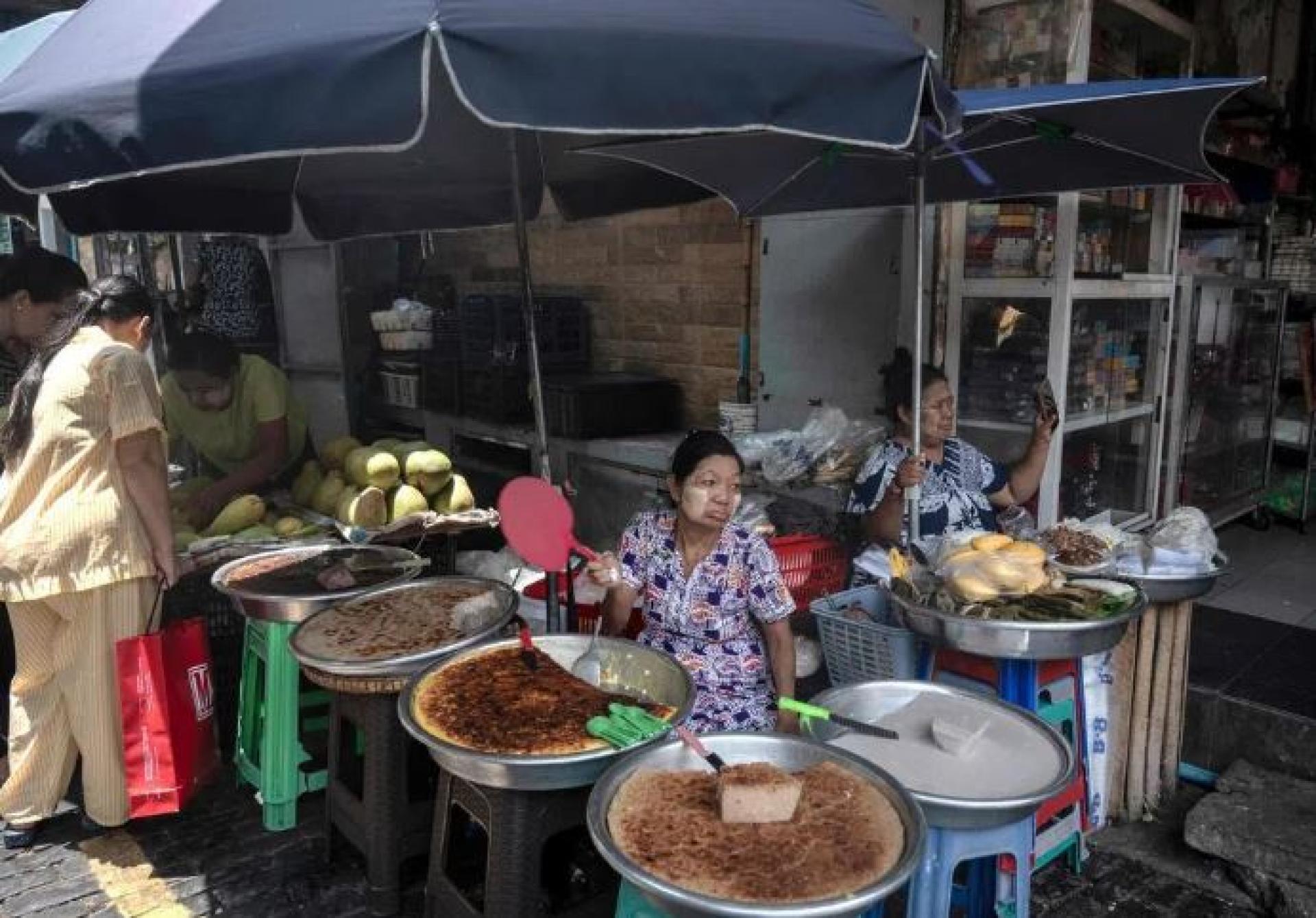
The latest World Bank report indicates that the fuel price shock triggered by the US-Iran war, coupled with the ongoing impact of civil war, has further intensified inflationary pressure in Myanmar, with the inflation rate climbing to 24.6% in April this year.
The report released by the World Bank on Tuesday shows that for the 12 months ending in March this year, Myanmar's inflation rate was 21.1%, which further rose to 24.6% in April.
The report points out that about 90% of Myanmar's fuel is imported. Although the local economy has recently shown brief signs of stabilization, the new round of fuel shocks has amplified the country’s longstanding structural problems, making the economy more vulnerable to external disruptions.
In light of the continued deterioration of the external environment, the World Bank has lowered its economic growth forecast for Myanmar in the 2026-2027 fiscal year from the previous 3% to 2%.
World Bank senior economist Mansare stated that the fuel shock has pushed inflationary pressures higher again, further eroding household purchasing power.
“The fuel shock has reignited inflationary pressures, which means household purchasing power keeps declining, and many families already lack a buffer, with poverty levels also quite high.”
The report shows that Myanmar’s poverty rate will have risen to 29.9% in 2025, much higher than the level before the military took power in 2021.
Since the 2021 coup, Myanmar has been mired in civil war, with the country’s roughly 55 million people facing long-term economic instability and declining living standards. As inflation worsens, the burden on people’s daily lives has further increased.
A 28-year-old Yangon resident, who wished to remain anonymous, said that due to the rising cost of living, some families are even unable to afford their children’s education expenses.
“Because we are struggling even to buy food, some children can no longer go to school.”
Another Yangon shop owner, a 45-year-old woman, said that continuous price increases have severely impacted both family livelihoods and business operations.
She said: “Our income and expenses no longer match. We can only live one day at a time. Prices only go up—they never come down. No matter how much money you make now, it's still not enough.”
The World Bank warns that with high fuel prices, ongoing civil war, and unresolved structural economic issues, Myanmar’s economic outlook still faces grave challenges.