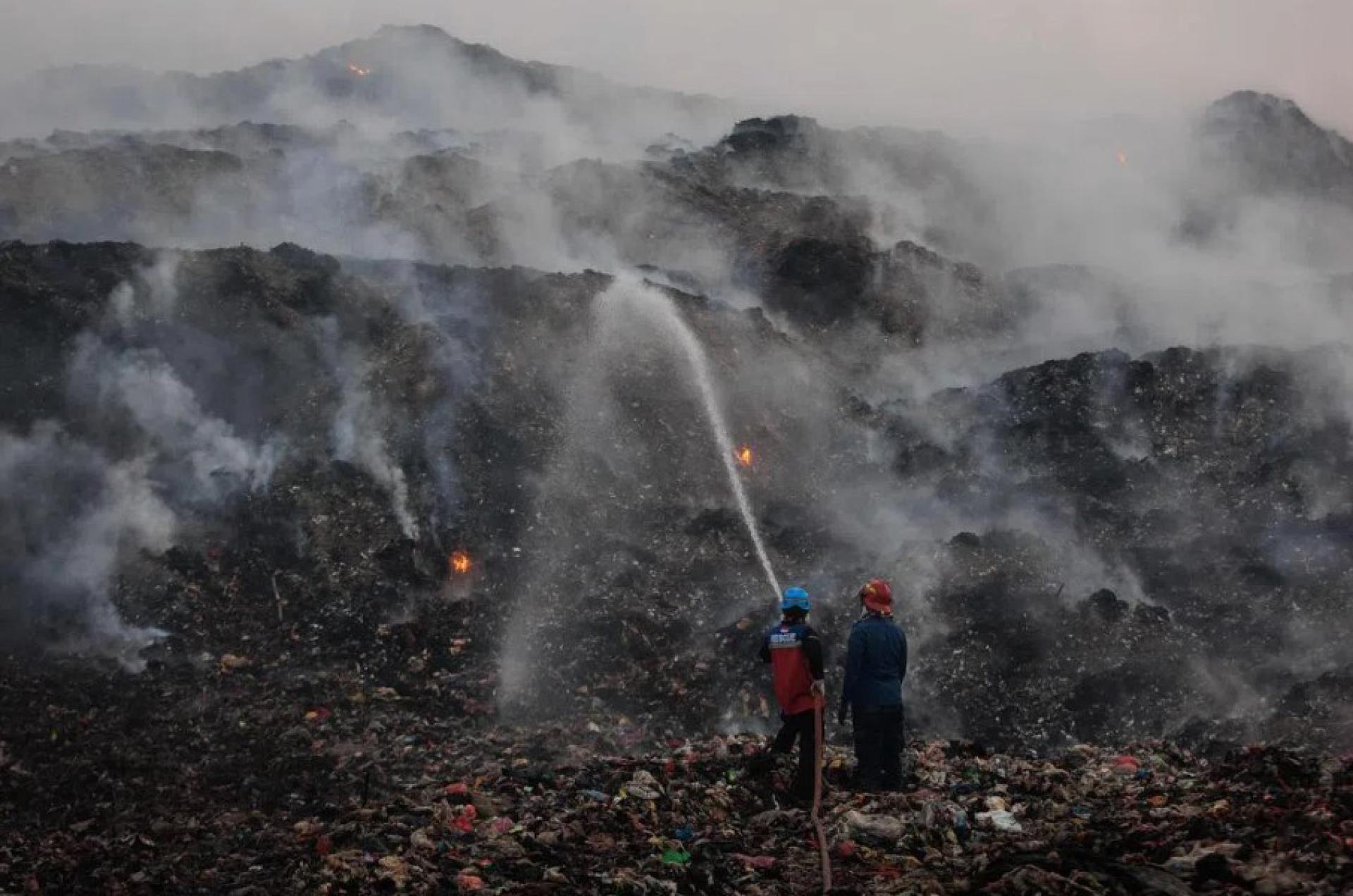
(Jakarta, 5th) The El Niño phenomenon continues to intensify, causing severe worsening of drought in many parts of Indonesia. On Friday (July 3), Indonesia's National Disaster Management Agency issued a stern warning, announcing that more than 8,000 households nationwide are facing severe drinking water shortages, and several regions have officially declared a 90-day drought emergency.
According to The Jakarta Post, the Indonesian Meteorology, Climatology, and Geophysics Agency forecasts this year's dry season will peak between July and September. Driven by El Niño, this year's dry season may develop into an “extreme drought,” with over 80% of the country expected to receive rainfall below the annual average, significantly increasing the risk of prolonged drought and crop reductions.
As of June, around 38% of Indonesia has already entered the dry season, and 47% of areas have rainfall below normal levels.
The Meteorology, Climatology, and Geophysics Agency urges the public to immediately take relief measures to reduce the risk of crop losses caused by insufficient water supply. Deputy director Adasenna said: “Several measures must be taken immediately, including adjusting planting schedules, optimizing the use of drought-resistant early-maturing crop varieties, and achieving crop diversification.”
The Meteorology, Climatology, and Geophysics Agency urges the public to immediately take relief measures to reduce the risk of crop losses caused by insufficient water supply. Deputy director Adasenna said: “Several measures must be taken immediately, including adjusting planting schedules, optimizing the use of drought-resistant early-maturing crop varieties, and achieving crop diversification.”
In a statement, disaster management agency spokesperson Abdul said: “The disaster management agency urges all local governments and the public to strengthen drought prevention, address drinking water shortages, and prepare for forest and land fires.”
He also called on the public to conserve water and never burn land or garbage to avoid triggering wildfires during the dry season.
Indonesia is a major population country in Southeast Asia, and experts are concerned that prolonged drought will directly impact national food security, possibly driving rice prices to historic highs.
He also called on the public to conserve water and never burn land or garbage to avoid triggering wildfires during the dry season.
Indonesia is a major population country in Southeast Asia, and experts are concerned that prolonged drought will directly impact national food security, possibly driving rice prices to historic highs.
On Friday, Indonesia's Minister of Agriculture, Andi, sought to calm public concerns, emphasizing that the ministry had launched drought-response plans in advance. “We are accelerating multiple mitigation measures, including expanding the use of irrigation pumps to ensure sufficient water sources and unaffected food production.”
Andi also stressed that Indonesia's current national rice reserves are at a “historic high,” enough to meet nationwide market demand until 2027.
Agung, director of the Department of Livestock and Animal Health at the Ministry of Agriculture, said the ministry is expanding the planting of drought-resistant legume crops and high-protein fodder crops that can withstand prolonged dry conditions, in order to ensure stable animal feed supply and reduce farmers’ dependence on natural pasture, which often becomes scarce during long dry seasons.
Bagas, a researcher at the water policy think tank Indonesian Water Resources Foundation, said that although the current focus is on emergency water supply, Indonesia must also make long-term investments in water infrastructure, especially in areas lacking clean water resources and vulnerable to drought.
Bagas pointed out that recurrent droughts are not only affected by climate factors, but also result from environmental degradation due to human activity, including land use changes and depletion of groundwater resources, making many areas increasingly vulnerable. “The government should see the El Niño phenomenon as an opportunity to strengthen restrictions on land use changes, especially in catchment areas, but not limited to them.”